










| Updated:


On Christmas day in 1950, Scottish nationalists stole the Stone of Destiny from Westminster Abbey, recalls Eliot Wilson
The winter of 1950-51 was cold and savage for Britain, still tending its wounds from the Second World War. At the general election in February 1950, Clement Attlee’s reforming Labour government had remained in office – but only just. The Prime Minister was 67, his senior ministers worn out.
Britain was running on empty. The National Debt stood at 200 per cent of GDP and there were still 700,000 soldiers, sailors and airmen deployed across the globe. Then in June, the Korean War had broken out, and by Christmas the United Nations Command, including 5,000 British personnel, was on the verge of defeat.
Closer to home, the Scottish Covenant Association had been formed in 1942 by John MacCormick, co-founder of the Scottish National Party. He favoured Home Rule by a devolved Scottish legislature, and had quit the SNP when it declared its goal of full independence. In October 1950 he had been elected Rector of the University of Glasgow, and his victory sparked something extraordinary.
Ian Hamilton, a 25-year-old law student, had managed MacCormick’s campaign. He was a member of the SCA and an active debater at the Glasgow University Union. MacCormick’s electoral success gave him an idea. He approached an electrical engineering student from Aberdeenshire called Gavin Vernon, another SCA member, with a daring plan to promote the Home Rule cause: they would steal the Stone of Scone from Westminster Abbey and bring it back to Scotland in a symbolic restoration of national sovereignty.
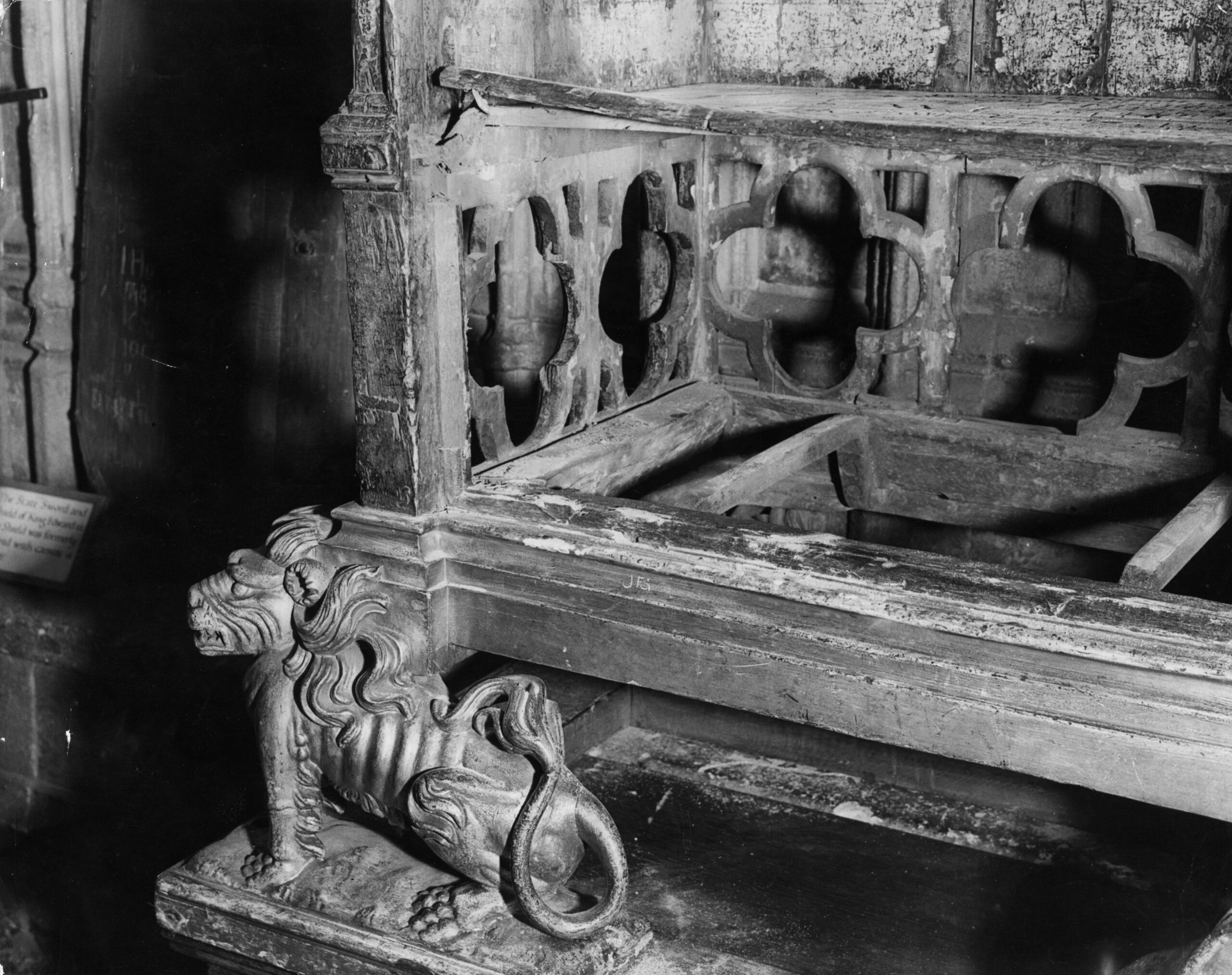
The Stone of Scone, or the Stone of Destiny, was – and still is – a block of red sandstone weighing 336lbs, used at the coronations of Kings of Scots since the early Middle Ages. In 1296, Edward I invaded Scotland to tame the puppet he had installed, John Balliol, and beat him soundly at the Battle of Dunbar. He seized the Stone of Destiny from Scone Abbey as a trophy of war and placed it in his newly commissioned Coronation Chair in Westminster Abbey. English Kings would now literally sit on the Stone of Destiny to demonstrate their overlordship of Scotland.
With financial assistance from Robert Gray, a stonemason and councillor on Glasgow Corporation, Hamilton and Vernon enlisted two other students, Kay Matheson, a domestic science student from Wester Ross, and Alan Stuart, a Glaswegian reading civil engineering.
On 23 December, they undertook the 18-hour drive from Glasgow to London in two Ford Anglias before convening at a Lyons Corner House to decide their next step. Vernon was keen to “have a bash” immediately; the others agreed, so they went to Westminster and Hamilton hid underneath a trolley until the abbey closed. However, he was quickly found by a nightwatchman, briefly quizzed and then sent on his way.
It was Christmas Eve. Hamilton, Vernon and Stuart returned to the abbey and watched the security guards’ routine. Coming back in the early hours of Christmas Day, they found their way through a works yard into Poets’ Corner in the southern transept then entered St George’s Chapel where the Coronation Chair is kept. They removed the Stone of Destiny from underneath the chair and promptly dropped it – at which point it broke.
An Ealing comedy heist movie
It now became an Ealing comedy version of a heist movie. Kay Matheson took the smaller piece of the Stone and drove to a friend in the Midlands, then went back to Scotland by train. Hamilton and Stuart headed for Kent, the larger part of the Stone so heavy that the car’s springs visibly sagged, hid it in a field and made for home. When the theft of the Stone of Destiny was discovered later on Christmas Day, the police must have intuited who was responsible: for the first time in 400 years, the border between England and Scotland was closed. But the Stone was still in a Kentish field.
Early in the New Year of 1951, Hamilton and some friends recovered both parts of the Stone, brought them to Glasgow, and Robert Gray, their stonemason-patron, repaired it; inside he placed a brass rod containing a piece of paper. It is still not known what is written on the paper.
The City of Glasgow Police assumed control of the investigation. Not everyone had seen the larky, pankish side of the theft. The King had been outraged, while others were anxious: by the end of 1950, George VI was in poor health. He was a heavy smoker and would have his left lung removed in 1951. Courtiers fretted about the possibility of his dying and the new Queen facing a coronation without the stone.
Courtiers fretted about the possibility of the King dying and the new Queen facing a coronation without the stone.
In April, the Stone-stealers left it on the high altar in the ruins of Arbroath Abbey, where the 1320 Declaration of Arbroath which asserted Scotland’s eternal independence had been written, then alerted the police. Amid great relief, the Stone of Destiny eventually returned to Westminster Abbey in February 1952, shortly after George V’s funeralI.
Hamilton, Vernon, Stuart and Matheson were all interviewed by the police, and all but Hamilton admitted their involvement. How should the authorities proceed? On 19 April 1951, the Attorney General, Sir Hartley Shawcross, told the House of Commons:
“The clandestine removal of the Stone from Westminster Abbey, the manner of its taking and the manifest disregard for the sanctity of the Abbey were vulgar acts of vandalism which have caused great distress and offence both in England and Scotland and have brought the individuals concerned in them into great disrepute. I do not think, however, that the public interest requires that I should direct criminal proceedings to be taken.”
The stunt was a morale boost for the beleaguered SNP, which had received fewer than 10,000 votes at the 1950 general election, but it did nothing for their causel: in 1951, they won 7,300 votes. In nationalist circles, Hamilton and the others were almost folk-heroes, but within a tiny echo chamber.
Age has taken the sharp edges off the theft. In 1996, with the SNP enjoying 20 per cent of the vote, the Conservative Scottish Secretary, Michael Forsyth, persuaded John Major that the Stone should be returned to Scotland. It was put on display in Edinburgh Castle until 2024, when it was transferred to Perth Museum. Forsyth’s idea benefited him no more than the theft in 1950. At the following May’s election, he and the other nine Conservative MPs in Scotland all lost their seats. Destiny is not always positive.
Eliot Wilson, writer and historian; Senior Fellow for National Security, Coalition for Global Prosperity; Contributing Editor, Defence on the Brink


