












The key to R1’s success was distillation, a technique that makes AI models more efficient. It works by getting a bigger model to tutor a smaller model: You run the teacher model on a lot of examples and record the answers, and reward the student model as it copies those responses as closely as possible, so that it gains a compressed version of the teacher’s knowledge. —Caiwei Chen
10. Sycophancy


As people across the world spend increasing amounts of time interacting with chatbots like ChatGPT, chatbot makers are struggling to work out the kind of tone and “personality” the models should adopt. Back in April, OpenAI admitted it’d struck the wrong balance between helpful and sniveling, saying a new update had rendered GPT-4o too sycophantic. Having it suck up to you isn’t just irritating—it can mislead users by reinforcing their incorrect beliefs and spreading misinformation. So consider this your reminder to take everything—yes, everything—LLMs produce with a pinch of salt. —Rhiannon Williams
11. Slop

If there is one AI-related term that has fully escaped the nerd enclosures and entered public consciousness, it’s “slop.” The word itself is old (think pig feed), but “slop” is now commonly used to refer to low-effort, mass-produced content generated by AI, often optimized for online traffic. A lot of people even use it as a shorthand for any AI-generated content. It has felt inescapable in the past year: We have been marinated in it, from fake biographies to shrimp Jesus images to surreal human-animal hybrid videos.
But people are also having fun with it. The term’s sardonic flexibility has made it easy for internet users to slap it on all kinds of words as a suffix to describe anything that lacks substance and is absurdly mediocre: think “work slop” or “friend slop.” As the hype cycle resets, “slop” marks a cultural reckoning about what we trust, what we value as creative labor, and what it means to be surrounded by stuff that was made for engagement rather than expression. —Caiwei Chen
12. Physical intelligence
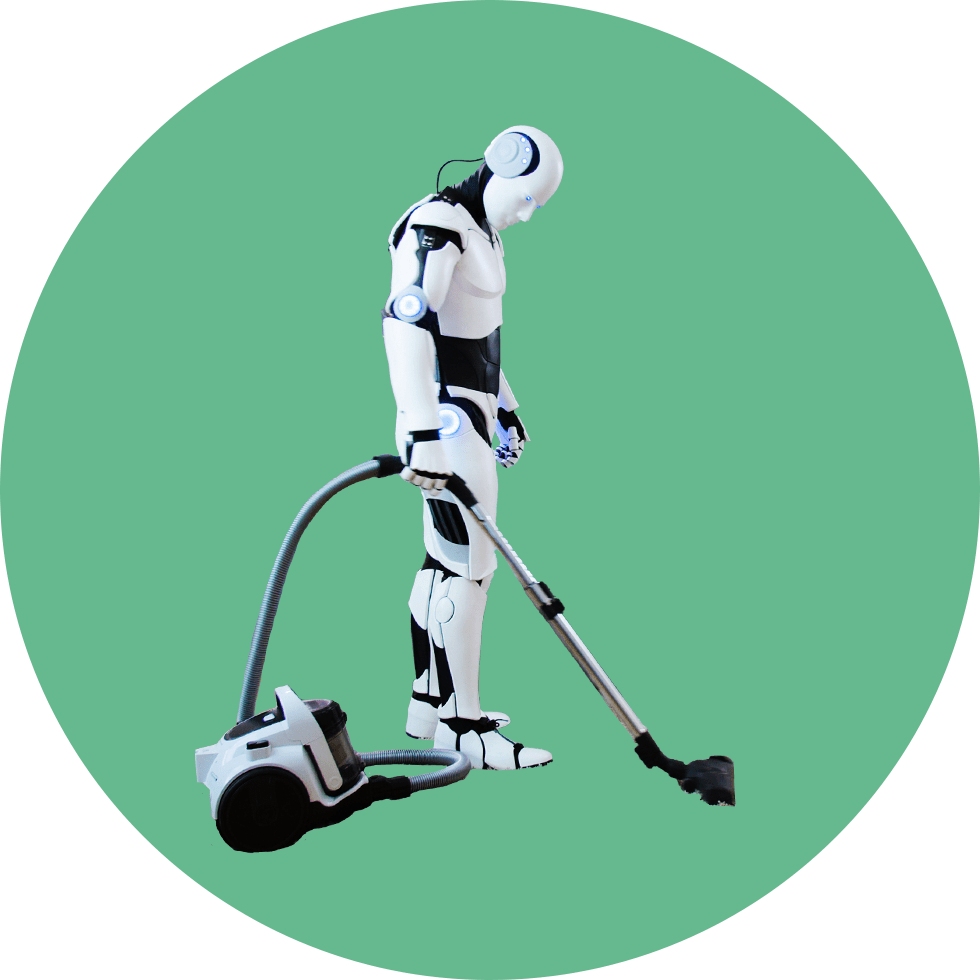
Did you come across the hypnotizing video from earlier this year of a humanoid robot putting away dishes in a bleak, gray-scale kitchen? That pretty much embodies the idea of physical intelligence: the idea that advancements in AI can help robots better move around the physical world.
It’s true that robots have been able to learn new tasks faster than ever before, everywhere from operating rooms to warehouses. Self-driving-car companies have seen improvements in how they simulate the roads, too. That said, it’s still wise to be skeptical that AI has revolutionized the field. Consider, for example, that many robots advertised as butlers in your home are doing the majority of their tasks thanks to remote operators in the Philippines.
The road ahead for physical intelligence is also sure to be weird. Large language models train on text, which is abundant on the internet, but robots learn more from videos of people doing things. That’s why the robot company Figure suggested in September that it would pay people to film themselves in their apartments doing chores. Would you sign up? —James O’Donnell
13. Fair use

AI models are trained by devouring millions of words and images across the internet, including copyrighted work by artists and writers. AI companies argue this is “fair use”—a legal doctrine that lets you use copyrighted material without permission if you transform it into something new that doesn’t compete with the original. Courts are starting to weigh in. In June, Anthropic’s training of its AI model Claude on a library of books was ruled fair use because the technology was “exceedingly transformative.”
That same month, Meta scored a similar win, but only because the authors couldn’t show that the company’s literary buffet cut into their paychecks. As copyright battles brew, some creators are cashing in on the feast. In December, Disney signed a splashy deal with OpenAI to let users of Sora, the AI video platform, generate videos featuring more than 200 characters from Disney’s franchises. Meanwhile, governments around the world are rewriting copyright rules for the content-guzzling machines. Is training AI on copyrighted work fair use? As with any billion-dollar legal question, it depends. —Michelle Kim
14. GEO

Just a few short years ago, an entire industry was built around helping websites rank highly in search results (okay, just in Google). Now search engine optimization (SEO), is giving way to GEO—generative engine optimization—as the AI boom forces brands and businesses to scramble to maximize their visibility in AI, whether that’s in AI-enhanced search results like Google’s AI Overviews or within responses from LLMs. It’s no wonder they’re freaked out. We already know that news companies have experienced a colossal drop in search-driven web traffic, and AI companies are working on ways to cut out the middleman and allow their users to visit sites from directly within their platforms. It’s time to adapt or die. —Rhiannon Williams


