











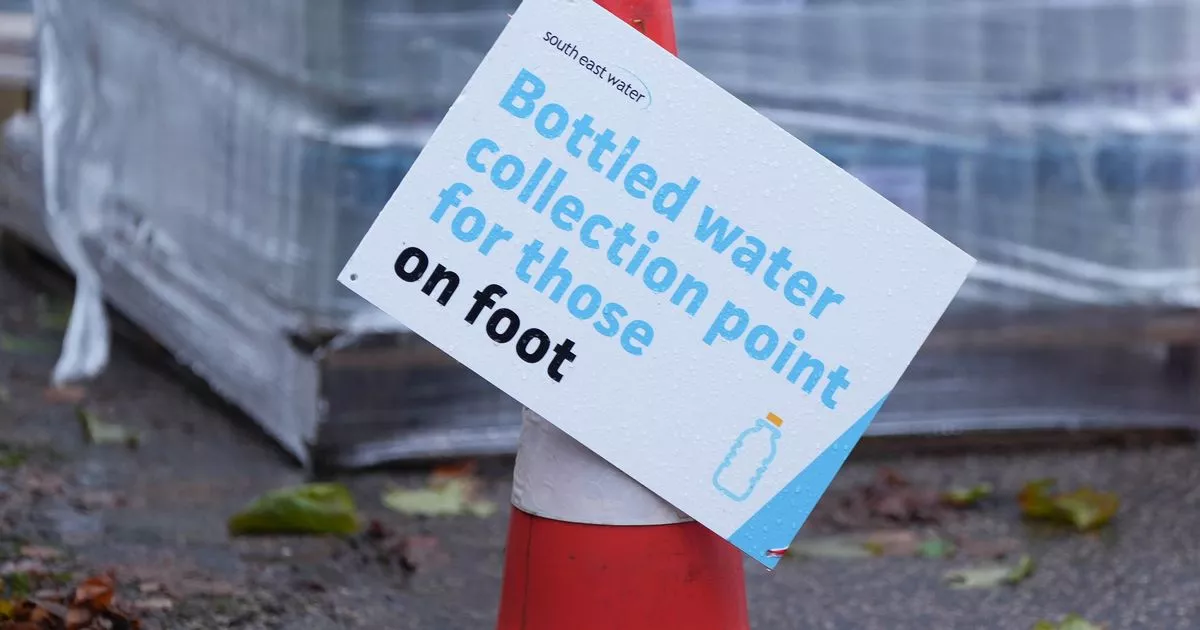
KentLive asked the water company some important questions and here are its answers…


The Tunbridge Wells and Pembury water nightmare before Christmas continues with exasperated locals still hunter-gathering for bottles of water, and boiling the water which comes from their taps. Is there an end in sight to the water supply failure, which began on November 29: one resident was told on Thursday (December 11) at a water station by staff they would be there until Sunday (December 14).
South East Water (SEW) said on November 30 the issue was at Pembury Treatment Works where a “bad” batch of chemicals was to blame. It’s not the first time there have been issues at Pembury.
As we reported yesterday, the Drinking Water Inspectorate (DWI) in September last year received a report from SEW stating there was or had been “a significant risk of supplying water from Pembury water treatment works, and associated assets as applicable, that could constitute a potential danger to human health or could be unwholesome”. An estimated 24,000 households in and around Tunbridge Wells have been hit by this latest water issue, along with GP surgeries, care homes, schools and businesses.
Running water returned to most homes on December 5. SEW began pumping it so people could do necessary things at home, but a boiled water notice was in place.
At least creativity with flushing loos has come to an end: water from rain butts and dehumidifiers, and even six 2L bottles of cheap cider were used to send it down by one selfless Camden Road resident, who didn’t want to take more than one pack from the water station “in case others needed it more”. As we reported yesterday, SEW is being investigated by the DWI for this.
The public water regulator said it will scrutinise SEW’s actions before, during and after the event. And the under-fire company will also be called to give answers to the Environment, Food and Rural Affairs Committee at a public evidence session on January 6.
The committee will grill the water company about “planning, resilience, capacity and communications”. KentLive also wanted answers from SEW, so we put the following questions to the company and have presented them as a Q&A:
Question 1: What is the exact, precise, problem which started this event on November 29?
We regularly test our network to make sure the water we provide is safe to drink. After recharging our network in Tunbridge Wells and the surrounding areas slowly on Wednesday, December 3, we saw a recurrence of water quality issues that caused the initial shutdown of our water treatment works in Pembury.
Because of this, we are currently unable to produce drinking water from the Pembury treatment works that meets the strict regulatory standards required for consumption.*
Question 2: Is it the same problem SEW is dealing with, as above, or has it evolved into a different issue?
There is no evidence the water is contaminated but we cannot currently meet the stringent regulatory requirements required to provide drinking water.
Question 3: When is it likely to end, do you know?
We will advise all affected customers when the tap water is safe to drink again without boiling (and letting it cool). However, this boil water notice is likely to be in place for a minimum of 10 days.
This will allow enough time to: undertake all required work at our Pembury water treatment works, making sure the process is working as it should; carry out rigorous water quality testing across all affected areas, as per our regulatory requirements; and allow all the water that required boiling during this notice period to pass through the network.
Question 4: If people aren’t exactly following rules, what could be the precise harm? Or an easier question might be, what is the harm if we drank the water?
Boiling water is the safest method of purification. As a precaution, customers should boil and then cool their tap water for drinking, preparing food, washing up, brushing teeth and wiping down kitchen surfaces.
As a precaution, customers should boil and then cool their tap water for drinking, preparing food, washing up, brushing teeth and wiping down kitchen surfaces. There is very low risk for healthy individuals, however if you have consumed unboiled water it’s important to contact the NHS about any health concerns.
Question 6: People are starting to talk about cancelling direct debits to SEW and not restarting until they get compensation – and encouraging others to do the same. They are also talking about compensation – if, when, and how much. Can you address this?
We are fully committed to compensating our customers and businesses fairly for this disruption. We want to ensure that every single customer and business receives exactly what they are entitled to.
Customers and businesses can view and download the up-to-date Guaranteed Standards of Service guidance on our website: household customer compensation details and non-household (business) compensation details.
Get more news from KentLive straight to your inbox for free HERE


