



Close Menu
UK Daily: Tech, Science, Business & Lifestyle News UpdatesUK Daily: Tech, Science, Business & Lifestyle News Updates
    What's Hot

    Everything we know so far as targeted vaccine programme to be rolled out at University of Kent in Canterbury

    March 18, 2026

    Top Alternatives To Booking.com For Accommodation And Travel

    March 18, 2026

    Inside Bitcoin’s St. Patrick’s Day Price

    March 18, 2026
    Facebook X (Twitter) Instagram
    Trending
    • Everything we know so far as targeted vaccine programme to be rolled out at University of Kent in Canterbury
    • Top Alternatives To Booking.com For Accommodation And Travel
    • Inside Bitcoin’s St. Patrick’s Day Price
    • Horsham Museum & Art Gallery’s new bronze age gallery open
    • AI’s ‘boys’ club’ could widen the wealth gap for women, says Rana el Kaliouby
    • OpenAI expands government footprint with AWS deal, report says
    • Meet Vurt, the mobile-first streaming platform for indie filmmakers embracing vertical video
    • Sustaining diplomacy amid competition in US-China relations | MIT News
    • London
    • Kent
    • Glasgow
    • Cardiff
    • Belfast
    Facebook X (Twitter) Instagram YouTube
    UK Daily: Tech, Science, Business & Lifestyle News UpdatesUK Daily: Tech, Science, Business & Lifestyle News Updates
    Subscribe
    Wednesday, March 18
    • Home
    • News
      1. Kent
      2. London
      3. Belfast
      4. Birmingham
      5. Cardiff
      6. Edinburgh
      7. Glasgow
      8. Liverpool
      9. Manchester
      10. Newcastle
      11. Nottingham
      12. Sheffield
      13. West Yorkshire
      Featured

      ‘Miniature’ mountain creature with ‘squeaker’-like call discovered as new species

      Science November 9, 2023
      Recent

      Everything we know so far as targeted vaccine programme to be rolled out at University of Kent in Canterbury

      March 18, 2026

      Top Alternatives To Booking.com For Accommodation And Travel

      March 18, 2026

      Inside Bitcoin’s St. Patrick’s Day Price

      March 18, 2026
    • Lifestyle
      1. Celebrity
      2. Fashion
      3. Food
      4. Leisure
      5. Social Good
      6. Trending
      7. Wellness
      8. Event
      Featured

      Their Marriage After Affair Rumors – Hollywood Life

      Celebrity March 18, 2026
      Recent

      Their Marriage After Affair Rumors – Hollywood Life

      March 18, 2026

      What We Know – Hollywood Life

      March 17, 2026

      Get to Know Her Kids – Hollywood Life

      March 17, 2026
    • Science
    • Business
    • Sports

      League Two match report from Priestfield Stadium

      March 17, 2026

      Live updates from Gillingham v Swindon Town in League 2 and Maidenhead United v Ebbsfleet United in National League South

      March 17, 2026

      Kent head coach Adam Hollioake says county brought in ‘faith healer’ to combat long-standing injury problems

      March 17, 2026

      Gillingham manager Gareth Ainsworth looks ahead to Tuesday night’s League Two match against Swindon Town at Priestfield Stadium

      March 17, 2026

      Vote for your star man in KentOnline’s team of the week

      March 16, 2026
    • Politics
    • Tech
    • Property
    • Press Release
    UK Daily: Tech, Science, Business & Lifestyle News UpdatesUK Daily: Tech, Science, Business & Lifestyle News Updates
    Home » Lincoln Lab unveils the most powerful AI supercomputer at any US university | MIT News

    Lincoln Lab unveils the most powerful AI supercomputer at any US university | MIT News

    bibhutiBy bibhutiDecember 11, 2025 Tech No Comments4 Mins Read
    Facebook Twitter LinkedIn WhatsApp Telegram
    Share
    Facebook Twitter LinkedIn Telegram WhatsApp


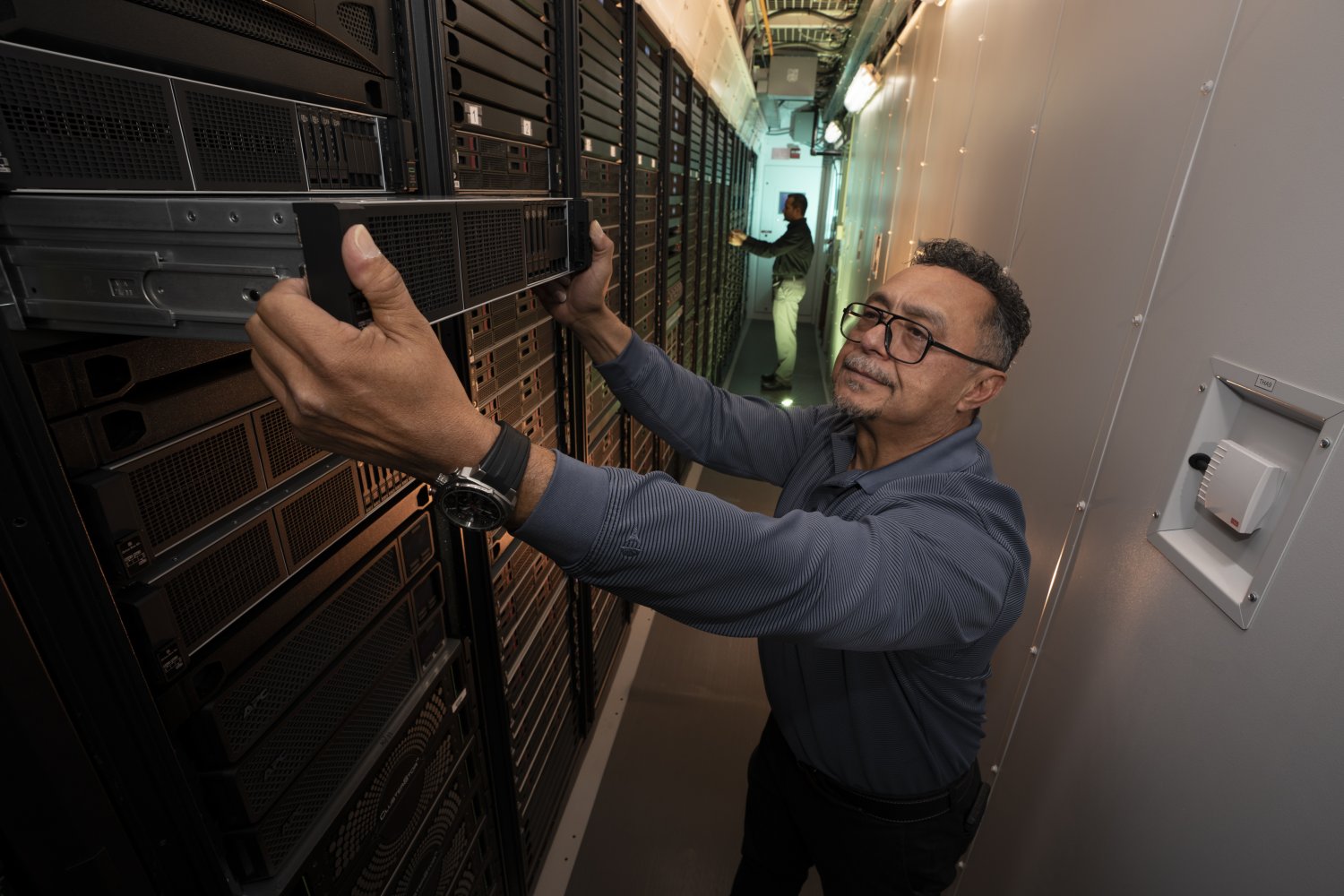
    The new TX-Generative AI Next (TX-GAIN) computing system at the Lincoln Laboratory Supercomputing Center  (LLSC) is the most powerful AI supercomputer at any U.S. university. With its recent ranking from  TOP500, which biannually publishes a list of the top supercomputers in various categories, TX-GAIN joins the ranks of other powerful systems at the LLSC, all supporting research and development at Lincoln Laboratory and across the MIT campus. 

    “TX-GAIN will enable our researchers to achieve scientific and engineering breakthroughs. The system will play a large role in supporting generative AI, physical simulation, and data analysis across all research areas,” says Lincoln Laboratory Fellow Jeremy Kepner, who heads the LLSC. 

    The LLSC is a key resource for accelerating innovation at Lincoln Laboratory. Thousands of researchers tap into the LLSC to analyze data, train models, and run simulations for federally funded research projects. The supercomputers have been used, for example, to simulate billions of aircraft encounters to develop collision-avoidance systems for the Federal Aviation Administration, and to train models in the complex tasks of autonomous navigation for the Department of Defense. Over the years, LLSC capabilities have been essential to numerous award-winning technologies, including those that have improved  airline safety,  prevented the spread of new diseases, and  aided in hurricane responses. 

    As its name suggests, TX-GAIN is especially equipped for developing and applying generative AI. Whereas traditional AI focuses on categorization tasks, like identifying whether a photo depicts a dog or cat, generative AI produces entirely new outputs. Kepner describes it as a mathematical combination of interpolation (filling in the gaps between known data points) and extrapolation (extending data beyond known points). Today, generative AI is widely known for its use of large language models to create human-like responses to user prompts. 

    At Lincoln Laboratory, teams are applying generative AI to various domains beyond large language models. They are using the technology, for instance, to evaluate radar signatures, supplement weather data where coverage is missing, root out anomalies in network traffic, and explore chemical interactions to design new medicines and materials.

    To enable such intense computations, TX-GAIN is powered by more than 600 NVIDIA graphics processing unit accelerators specially designed for AI operations, in addition to traditional high-performance computing hardware. With a peak performance of two AI exaflops (two quintillion floating-point operations per second), TX-GAIN is the top AI system at a university, and in the Northeast. Since TX-GAIN came online this summer, researchers have taken notice. 

    “TX-GAIN is allowing us to model not only significantly more protein interactions than ever before, but also much larger proteins with more atoms. This new computational capability is a game-changer for protein characterization efforts in biological defense,” says Rafael Jaimes, a researcher in Lincoln Laboratory’s Counter–Weapons of Mass Destruction Systems Group. 

    The LLSC’s focus on interactive supercomputing makes it especially useful to researchers. For years, the LLSC has pioneered software that lets users access its powerful systems without needing to be experts in configuring algorithms for parallel processing.  

    “The LLSC has always tried to make supercomputing feel like working on your laptop,” Kepner says. “The amount of data and the sophistication of analysis methods needed to be competitive today are well beyond what can be done on a laptop. But with our user-friendly approach, people can run their model and get answers quickly from their workspace.”

    Beyond supporting programs solely at Lincoln Laboratory, TX-GAIN is enhancing research collaborations with MIT’s campus. Such collaborations include the Haystack Observatory, Center for Quantum Engineering, Beaver Works, and Department of Air Force–MIT AI Accelerator. The latter initiative is rapidly prototyping, scaling, and applying AI technologies for the U.S. Air Force and Space Force, optimizing flight scheduling for global operations as one fielded example.

    The LLSC systems are housed in an energy-efficient data center and facility in Holyoke, Massachusetts. Research staff in the LLSC are also tackling the immense energy needs of AI and leading research into various power-reduction methods. One software tool they developed can reduce the energy of training an AI model by as much as 80 percent.

    “The LLSC provides the capabilities needed to do leading-edge research, while in a cost-effective and energy-efficient manner,” Kepner says.

    All of the supercomputers at the LLSC use the “TX” nomenclature in homage to Lincoln Laboratory’s Transistorized Experimental Computer Zero (TX-0) of 1956. TX-0 was one of the world’s first transistor-based machines, and its 1958 successor, TX-2, is storied for its role in pioneering human-computer interaction and AI. With TX-GAIN, the LLSC continues this legacy.


    Source link

    Featured Just In Top News
    Share. Facebook Twitter LinkedIn Email
    Previous ArticleNorway Steps Back From CBDC Launch as Norges Bank Pauses Plans
    Next Article Expect disruption on 11 December
    bibhuti
    • Website

    Keep Reading

    Everything we know so far as targeted vaccine programme to be rolled out at University of Kent in Canterbury

    Horsham Museum & Art Gallery’s new bronze age gallery open

    AI’s ‘boys’ club’ could widen the wealth gap for women, says Rana el Kaliouby

    OpenAI expands government footprint with AWS deal, report says

    Meet Vurt, the mobile-first streaming platform for indie filmmakers embracing vertical video

    Sustaining diplomacy amid competition in US-China relations | MIT News

    Add A Comment
    Leave A Reply Cancel Reply

    Editors Picks

    89th Utkala Dibasa Celebration Brings Odisha’s Vibrant Culture to London

    April 8, 2024

    US and EU pledge to foster connections to enhance research on AI safety and risk.

    April 5, 2024

    Holi Celebrations Across Various Locations in Kent Attract a Diverse Range of Community Participation

    March 25, 2024

    Plans for new Bromley tower blocks up to 14-storeys tall refused

    December 4, 2023
    Latest Posts

    Subscribe to News

    Get the latest sports news from NewsSite about world, sports and politics.

    Advertisement

    Recent Posts

    • Everything we know so far as targeted vaccine programme to be rolled out at University of Kent in Canterbury
    • Top Alternatives To Booking.com For Accommodation And Travel
    • Inside Bitcoin’s St. Patrick’s Day Price
    • Horsham Museum & Art Gallery’s new bronze age gallery open
    • AI’s ‘boys’ club’ could widen the wealth gap for women, says Rana el Kaliouby

    Recent Comments

    1. Register on Anycubic users say their 3D printers were hacked to warn of a security flaw
    2. Pembuatan Akun Binance on Braiins Becomes First Mining Pool To Introduce Lightning Payouts
    3. tadalafil tablets sale on The market is forcing cloud vendors to relax data egress fees
    4. cerebrozen reviews on Kent director of cricket Simon Cook adapting to his new role during the close season
    5. Glycogen Review on The little-known town just 5 miles from Kent border with stunning beaches and only 600 residents
    The News Times Logo
    Facebook X (Twitter) Pinterest Vimeo WhatsApp TikTok Instagram

    News

    • UK News
    • US Politics
    • EU Politics
    • Business
    • Opinions
    • Connections
    • Science

    Company

    • Information
    • Advertising
    • Classified Ads
    • Contact Info
    • Do Not Sell Data
    • GDPR Policy
    • Media Kits

    Services

    • Subscriptions
    • Customer Support
    • Bulk Packages
    • Newsletters
    • Sponsored News
    • Work With Us

    Subscribe to Updates

    Get the latest creative news from FooBar about art, design and business.

    © 2026 The News Times. Designed by The News Times.
    • Privacy Policy
    • Terms
    • Accessibility

    Type above and press Enter to search. Press Esc to cancel.

    Manage Cookie Consent
    To provide the best experiences, we use technologies like cookies to store and/or access device information. Consenting to these technologies will allow us to process data such as browsing behavior or unique IDs on this site. Not consenting or withdrawing consent, may adversely affect certain features and functions.
    Functional Always active
    The technical storage or access is strictly necessary for the legitimate purpose of enabling the use of a specific service explicitly requested by the subscriber or user, or for the sole purpose of carrying out the transmission of a communication over an electronic communications network.
    Preferences
    The technical storage or access is necessary for the legitimate purpose of storing preferences that are not requested by the subscriber or user.
    Statistics
    The technical storage or access that is used exclusively for statistical purposes. The technical storage or access that is used exclusively for anonymous statistical purposes. Without a subpoena, voluntary compliance on the part of your Internet Service Provider, or additional records from a third party, information stored or retrieved for this purpose alone cannot usually be used to identify you.
    Marketing
    The technical storage or access is required to create user profiles to send advertising, or to track the user on a website or across several websites for similar marketing purposes.
    • Manage options
    • Manage services
    • Manage {vendor_count} vendors
    • Read more about these purposes
    View preferences
    • {title}
    • {title}
    • {title}