












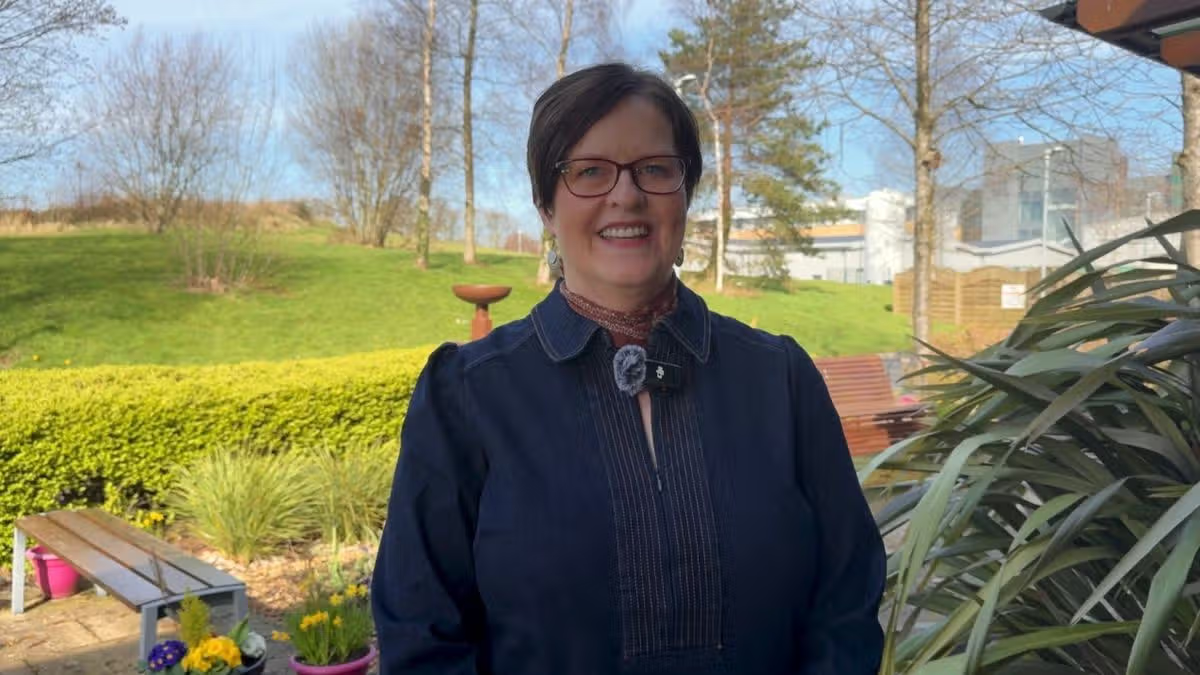
Ahead of Head and Neck Cancer Awareness Day on Monday, July 27, she has shared her experience to help others and raise awareness
When Katie McKay went to get her bloods done, she had no idea how her worls was about to be turned upside down.
The Co Antrim woman had gone to her GP surgery for blood tests when the nurse noticed a lump on her neck and pushed for her to be seen by the doctor.
Katie, from Rathkenny, was diagnosed with thyroid cancer. She had no symptoms but thanks to her nurse’s quick thinking, the cancer was detected.
Ahead of Head and Neck Cancer Awareness Day on Monday, July 27, she has shared her experience to help others and raise awareness.
Katie had initially gone to her GP surgery for blood tests and had noticed no other symptoms before finding out she had thyroid cancer.
Although considered to be quite rare, rates of thyroid cancer have increased significantly in recent years. The small, butterfly-shaped endocrine gland sits at the front of your neck and produces hormones that regulate metabolism, heart rate, body temperature and energy levels.
Head and neck cancers can affect many areas including the mouth, throat, voice box, tongue, salivary glands and sinuses. Early diagnosis can significantly improve treatment outcomes, making awareness of symptoms particularly important.
Looking back on her experience, Katie said: “I didn’t have any initial symptoms. I was getting bloods done at my GP’s and the nurse noticed a lump on my neck, and she insisted that I got it looked at by the doctor.”
Soraya Manoucheri, the Northern Trust’s Head and Neck Cancer Clinical Nurse Specialist, explains that while thyroid cancer is usually found by accident, like in Katie’s case, there are some symptoms that we all should be aware of:
“Much of the time we find a thyroid cancer in someone incidentally, without any symptoms.,” she said.
“However, in some cases patients can have a lump in their neck, that is persistent and unexplained, and a change in their voice quality, that is again persistent and unexplained.”
Katie has this advice for anyone who might be worried: “Definitely go and get your symptoms looked at by a doctor.
“You may feel that there is nothing wrong with you, but you just never know. It could change your life, for the better, not always for the worst,” she said.
For Soraya, awareness and early action can make a significant difference: “The main takeaway is to know your own body and if you notice any changes, to act on those as quickly as possible and get seen by your GP.
“If they have any worries or concerns, they can refer you on to an ENT specialist for further investigation,” she said.
For more information and support for those living with thyroid cancer, or any other types of head and neck cancer, visit Head and neck cancer | Macmillan Cancer Support.
For all the latest news, visit the Belfast Live homepage here and sign up to our daily newsletter here.


