











When you think of famous filming locations, cities such as Los Angeles, New York or London come to mind – but a regular feature in Hollywood blockbusters is much closer to home.
Whether it’s the dramatic natural landscapes of the Seven Sisters and Beachy Head, Dark Ages castles or grand stately homes, film productions have used Sussex as a launching pad to immerse audiences in their cinematic worlds for more than 125 years. The biggest names in movies including Harry Styles in My Policeman, Ariana Grande in Wicked and Tom Hanks in The Da Vinci Code have filmed in Sussex in recent years. The increased attention as a result of online platforms such as Instagram, Tik Tok and Facebook has made everyone aware of Sussex as a world-class filming location, but this is certainly not a new phenomenon.
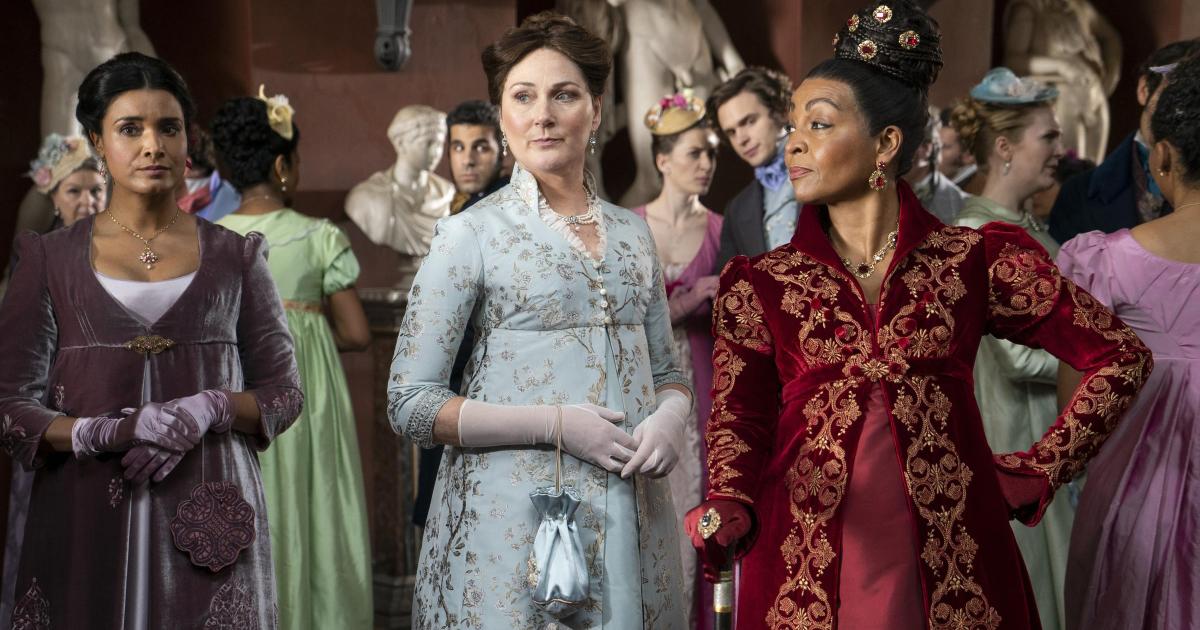
Petworth House was used as a lavish setting for Bridgerton. (Image: Cr. Liam Daniel/Netflix)
Sussex is arguably one of the most influential filming locations in cinematic history. In 1897 the first known movie shot in Sussex was by filmmaker George Albert Smith, part of the Hove Pioneers, who filmed the silent comedies The Miller and the Sweep and Hanging Out the Clothes in Brighton. Sussex was the preferred filming location for many British filmmakers as it provided the natural light that a foggy and industrial 19th-century London couldn’t provide. George became one of the most innovative filmmakers of the time and helped shape the way in which people made movies – pioneering the close-up shot in his 1900 movie As Seen Through a Telescope and the first film to be shown in colour in A Visit to the Seaside, which captured everyday life at Brighton beach.
Even when Hollywood became the movie capital of the world and technology advanced at big film studios such as Metro-Goldwyn-Mayer, Paramount Pictures and Warner Bros, filmmakers were still consistently drawn to the authentic charm and sumptuous scenery Sussex provided.
Leonardslee House and Gardens, in Lower Beeding, recreated the Himalayas in the 1947 psychological thriller Black Narcissus starring Deborah Kerr. Directors Michael Powell and Emeric Pressburger transformed Sussex into an Indian landscape with the help of the gardens – drawn to exotic plants including rhododendrons, azaleas and camellias.
Classic movies in the 1970s such as Bedknobs and Broomsticks starring Angela Lansbury, the British comedy Monty Python and the Holy Grail and Barbra Streisand in On a Clear Day You Can See Forever not only showcased the versatility of Sussex as a filming location but also shone a spotlight on the county’s natural beauty.
But the film of that era that became synonymous with Sussex is the 1979 drama Quadrophenia starring Phil Daniels and Sting. Based on The Who’s 1973 rock opera of the same name, the movie was filmed across Brighton and featured East Street and Brighton seafront, among other locations in the city. Even to this day, fans of all ages come to Brighton to retrace the steps of Jimmy and the Mods and Rockers. Perhaps the most loved location is Quadrophenia Alley – tucked between 10 and 11 East Street. It has become a pilgrimage site for the Mods as fans travel from far-and-wide to scrawl their names, tags and slogans from the film on the walls.
Also filmed in Brighton was the 1999 adaptation of former city resident Graham Greene’s The End of the Affair, starring Ralph Fiennes and Julianne Moore. In an attempt to rekindle their passion and romance, the protagonists, Maurice and Sarah, spend a weekend in the city. During this trip, they visit the Royal Pavilion and spend a night in a hotel at 9 Eastern Terrace. Although the hotel was a private address, it was transformed to look like a run-down hotel from the 1940s.
Sussex wasn’t content just being the star of the big screen though. As music videos became popular, many were filmed here, including the most expensive ever made at the time: David Bowie’s Ashes to Ashes, shot in 1980 by David Mallett in Hastings. The video feels like a fever dream as Bowie’s Pierrot the Clown walks along the stretch of Pett Level Beach between Winchelsea Beach and Cliff End with the domineering cliffs towering overhead. The director had used the location before to film Justin Hayward performing the War Of The Worlds’ song Forever Autumn. Bowie’s video for the number one single followed on from former Beatle Sir Paul McCartney’s 1979 Wonderful Christmastime which was shot at The Fountain Inn, in Ashurst, near Horsham. In the video, Sir Paul is seen drinking a pint and playing a piano in the 16th-century pub with his wife Linda and friends. Now you can get married at the inn – and use it as a backdrop for your wedding video.
Nearly 50 years on from those early videos, the rich heritage and cinematic impact of Sussex remains continues to attract major Hollywood productions to the county.
The dramatic cliffs of Beachy Head have played a prominent part in Hollywood movies over the years, perhaps most memorably in Harry Potter and the Goblet of Fire when the titular protagonist uses a portkey, represented as a ‘manky old boot’ in the scene, to get to the 422nd Quidditch World Cup, set in Dartmoor but filmed in Sussex as the boy wizard soars over the highest cliffs in the country. For a brief moment it was hoped that Sussex would play an even bigger part in the Harry Potter franchise, as film producers scouted Lancing College in West Sussex, the largest school chapel in the world, as the potential setting for Hogwarts Castle. However, it wasn’t meant to be and Alnwick Castle in Northumbria was chosen instead.
The Seven Sisters cliffs recently featured in the global hit Wicked, which made over $758.8m worldwide. One of the most dramatic and cinematographic moments is when Cynthia Erivo’s Elphaba runs to the cliff edge singing The Wizard and I and the camera pans out to show the unmistakable chalk landmark. The cliffs were a dramatic backdrop for Now is Good, filmed here in 2012 and starring Dakota Fanning as Tessa, a young girl dying of leukamia who compiles a bucket list and embarks on a romance with Adam, played by Jeremy Irvine.
And while the rich history of Sussex has captured the imagination of Hollywood filmmakers over the years it is the county’s grand stately homes that help transport the audiences back in time. Petworth House, which sits within 700-acres of parkland in West Sussex, complete with roaming fallow deer, and landscaped gardens designed by Capability Brown, will seem incredibly familiar, having been the setting for a plethora of period films and TV series. Long before the Netflix smash hit Bridgerton was filmed here, the Grade I-listed National Trust-managed stately home, which houses works of art by JMW Turner, Van Dyck and Gainsborough, featured in films including Elizabeth: The Golden Age – where the Queen Cate Blanchett goes riding across the rolling hills with Clive Owen’s Walter Raleigh; Mr Turner – about the celebrated British artist who was a frequent visitor to Petworth House; and Maleficent starring Angelina Jolie where it doubled up as an enchanted forest in the retelling of Sleeping Beauty.
Napoleon was filmed by director Ridley Scott at Petworth House and starred Joaquin Phoenix (Image: Apple TV+)
The 17th-century house in West Sussex also featured in Ridley Scott’s Napoleon starring Joaquin Phoenix and Vanessa Kirby. The Hollywood A-listers and 120 supporting artists and 200 crew descended upon Petworth and filmed pivotal scenes in the movie here including the Victim’s Ball where Napoleon meets Josephine for the first time. On set during the filming of the scene was Sue Rhodes, visitor operations and experience manager of Petworth House. ‘It was astonishing to see the Victim’s Ball being filmed,’ she recalls. ‘Part of it was done in one shot, with the camera moving through rooms all dressed for the period and atmospherically lit. The house looked gorgeous, much as it would have when it hosted balls and events like this hundreds of years ago.’ During the second season of Netflix’s Regency-era global phenomenon Bridgerton, the house was used as a stand-in for an art gallery. Filming took place in the lavish surroundings of the North Gallery which houses collection items such as a Molyneux Globe and James Northcote’s A Lion Hunt painting.
Over at Goodwood, near Chichester, the house was transformed into Ravenscroft Institute for Tom Hardy’s Venom: Let There Be Carnage in 2020.
Meanwhile while filming Gladiator II, starring Denzel Washington and Paul Mescal, Ridley Scott – who seems to love making movies in Sussex – brought an army to Devil’s Dyke Farm on the South Downs to shoot A-lister Pedro Pascal leading the Roman legion back toward Rome.
With the help of 700 crew, 60 horses and one farmer, the Sussex farm was transformed into the Italian capital for a bloody battle scene.
‘It’s one thing turning Morocco and Malta into Rome,’ Time Out wrote at the time. ‘But it takes a little extra movie magic to transform England’s South Downs into the scrubby, sunbaked outskirts of the Eternal City.’
Ridley was no doubt helped by the farmer who did a lot of the set preparation himself before the crew arrived by recreating a Roman road from cow manure. And even working airports feature on the big screen – Shoreham (officially Brighton City) Airport stood in for Le Bourget in the 2006 Tom Hanks’ blockbuster The Da Vinci Code when he flees France.
And this year is set for another bumper crop of movies made in Sussex as Hollywood productions descend upon the county with major A-list celebrities – and others are released. The remake of Pride and Prejudice, starring Olivia Colman, Emma Corrin and Jack Lowden, was filmed in Rye last September. The town was given a 19th-century makeover and shopfronts were transformed to immerse the audience in Jane Austen’s Regency Era. Before filming took place, people were able to walk through the set to see for themselves how their hometown had changed, an exciting and surreal experience for locals.
Over in West Sussex, the seaside town of Worthing has become a popular location – being the setting for the Olivia Colman-led movies Empire of Light and Wicked Little Letters, as well as My Policeman starring Harry Styles. Sir Ian McKellen and Roger Allam were seen filming on Worthing beach in October for the film adaptation of Frank & Percy, which originally ran as a stage play in London. Although no confirmed date has been announced, the film’s likely to be released late this year.
The town is no stranger to the small screen – having recently been the backdrop, along with Brighton, to the Matt Smith-led The Death of Bunny Munro. The star particular enjoyed filming on the south coast. ‘I loved Brighton,’ Matt says. ‘It’s one of the few places outside London that I’d go and live. We filmed up on the Downs, which was amazing. I just loved being there. And it’s weird – we sort of became a character of Brighton, in a way. People would go: “Oh, they’re doing that Bunny show”.’
His co-star Nick Cave agrees. ‘It’s rich in locations that are amazing to film,’ he said. ‘And it’s not only got nature and the seaside and all of that sort of stuff, but it can be extremely, extremely beautiful.’
With so many blockbuster movies being shot here it’s no wonder that local and independent film-makers on small budgets want Sussex as their backdrop, too. There’s even a Made in Sussex Film Festival, to champion and showcase their work, which held its inaugural event in April 2025 at the Depot Cinema in Lewes. To be eligible, films must be either made in Sussex, have a solid and identifiable connection to Sussex, or be made by a filmmaker who resides in Sussex. And Brighton’s annual CineCity festival, returning in autumn for its 23rd year, has two competitions for local directors.
It’s not just film-makers that see the benefit of filming in a county positively vibrating with heritage and charm though. Tax incentives are luring Hollywood execs to Sussex. Culture Secretary Lisa Nandy explains: ‘As part of the government’s Plan for Change, we are putting film and the creative industries at the heart of our growth plans.’
With the new Audio-Visual Expenditure Credit (AVEC) – a government tax incentive replacing older reliefs for films and TV projects – productions are given a 25.5 per cent cash rebate on what they spend while filming in the UK.
This is a major boost for the British – and Sussex – economy as local hotels, restaurants, cafés and shops all benefit from the trade. Helping local businesses maximise opportunities from the film industry is the Sussex Film Office, which helps connect film productions with local suppliers. Since 2016, the Sussex Film Office has overseen 6,500 productions and generated more than £120m for the local economy.
With countless more films, music videos and TV shows in production right now, get ready to see familiar scenes on your doorstep on a big – and small – screen near you for years to come..
Visit the sets
You’ve seen the movies – now see for yourself where they were filmed across the county
Seven Sisters
From Atonement to Anatomy of a Scandal, Robin Hood: Prince of Thieves to Wicked, these stunning chalk cliffs have played host to film industry royalty. Harry Potter flew over them in the Quidditch World Cup in the Goblet of Fire and Ben Affleck crashed his Spitfire along the Seven Sisters coastline in Pearl Harbour. Chitty Chitty Bang Bang flew into the air from here back in the 1960s. Now part of the Seven Sisters Country Park, the South Downs Way – the 100-mile National Trail – runs through here so you can walk along the dramatic scenery.
De La Warr Pavilion, Bexhill
Poirot can be spotted taking afternoon tea in the De La Warr’s Art Deco setting in The ABC Murders. The nearby Colonnade Pavilion featured in Richard III starring Sir Ian McKellen. Now host to events, concerts and exhibitions, you can enjoy everything from comedian Russell Kane to the Royal Philharmonic Orchestra at the De La Warr. dlwp.com
Bognor Regis
From Wish You Were Here – where Emily Lloyd cycles along the Art Deco seafront before shouting ‘up your bum!’ – to the sitcom Steptoe and Son, the British seaside charm has been shown on screen by the bucket and spade full.
Worthing
With a pier, beach and The Connaught Theatre where the likes of Roger Moore, Patricia Routledge and David Suchet made their mark, Worthing was made for the big screen. The seafront appeared in Wish You Were Here and Wicked Little Letters, while the titular comics Stan and Ollie judged a beauty competition in the Lido. On the small screen an episode of Men Behaving Badly was set in the town.
Rye
With the country’s most photographed street, historic buildings and scenic setting, easy-on-the-eye Rye is a truly versatile film location. Helena Bonham-Carter went back to the 1970s here as Princess Margaret in Season Three of The Crown while the dystopian sci-fi Black Mirror starring Breaking Bad’s Aaron Paul was filmed in the town. The cobbled streets, old-world architecture and sea were the perfect backdrop for the retrofuturistic series set in 1969. Visit Mermaid Street which is catnip to tourists eager to post on Instagram but was once the rough part of town. Step inside The Mermaid Inn which dates back to the 13th century and was the haunt of the notorious Hawkhurst Gang of smugglers in the 1700s.
Brighton’s Royal Pavilion
With its domes and intricate carvings, and lush gardens, the palace has been the setting of films such as The Madness of King George, On a Clear Day You Can See Forever, a 1970 comedy starring Barbra Streisand, and The End of the Affair. Harry Styles was spotted filming here for My Policeman set in 1950s Brighton. Now you can take a guided tour every Saturday at 2pm (£25), indulge in an afternoon tea fit for a king (from £65) and even get married in Regency splendour.
brightonmuseums.org.uk/visit/royal-pavilion-garden
Source link
[Featured]
[Just In]


