











Councillor says “I don’t feel the current policy makes provision for such groups, and is designed more for individuals”


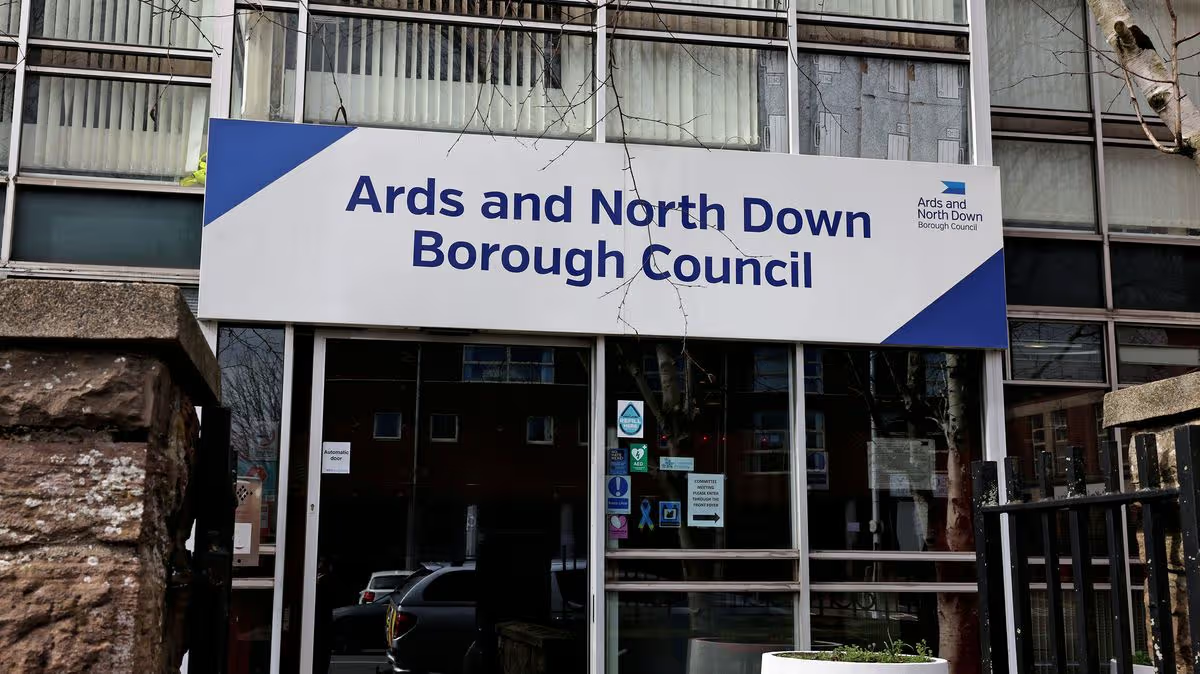
Ards and North Down Borough Council offices, Newtownards(Image: Justin Kernoghan/Belfast Live)
Local elected representatives have agreed to look at making a memorial bench for the Ulster Defence Regiment in a North Down cemetery, after a local assocation failed four times in getting a bench plaque using the local council scheme.
Councillors at a committee meeting at Ards and North Down Borough Council this week approved a notice of motion submitted by Independent unionist Councillors Wesley Irvine and Steven Irvine, who represent Bangor and Newtownards respectively.
The North Down branch of the Regimental Association of the UDR has failed on four occasions to get a memorial bench at the cemetery. Ards and North Down Borough Council operates a strict annual memorial bench scheme with a quota of 20 new benches per year.
READ MORE: Ards and North Down goes for youth as it votes new Lord Mayor and deputy
READ MORE: Council ‘acknowledges’ threat to community in Holywood from the film industry
Applications typically open on April 1st and are allocated on a highly competitive, first-come, first-served basis. The council motion could effectively fast-track the UDR memorial past the normal policy.
The UDR was at its peak the largest infantry regiment in the British Army, relying heavily on local-recruited part-time volunteers. It was created in 1970 to replace the disbanded Ulster Special Constabulary B Specials, and was designed to be a non-sectarian force to protect residents during the Troubles.
It was on continuous active duty for 22 years, longer than any other unit in British military history. The UDR conducted patrols and checkpoint duties in support of the police, but weren’t used for riot or crowd control in cities, unlike the regular British Army. It lost 198 soldiers in the Troubles
While the UDR was largely supported by the protestant community, it was viewed with suspicion by the catholic community, who believed it was a sectarian group. At the start, catholics accounted for 18 percent of the regiment, but within two years, by 1972, catholics accounted for 3 percent. This figure never rose again.
The demographic imbalance, accusations of ties to controversial disbanded forces such as the B Specials, and collusion with loyalist paramilitaries dogged the regiment throughout its lifespan.
At Ards and North Down Council’s June meeting of its Environment Committee, elected representatives unanimously passed the motion. It will have to be ratified by the full council later this month, where it is expected to pass.
The motion states the council: “recognises the service and sacrifice of members of the Ulster Defence Regiment, including those from the borough and surrounding areas who served with dedication during a difficult period in Northern Ireland history.”
The motion tasked council officers to bring back a report on facilitating a memorial bench within Clandeboye Cemetery, Bangor, dedicated to the memory and service of members of the Ulster Defence Regiment. The motion states: “The proposed bench should provide a dignified place for remembrance and reflection for families, veterans, and members of the wider community.”
Councillor Wesley Irvine told the council: “Members of the North Down branch of the Regimental Association of the UDR CGC had come to me. We have a policy for memorial benches, and they tried on at least four occasions.
“When they spoke to me earlier this year, I directed them to the ballot which takes place on April 1 each year, and they came back to tell me they weren’t successful. I spoke to council officers about their frustration, and asked what other avenues would be open to them. It was suggested we come forward with a notice of motion.”
He added: “The North Down branch is one of the official local branches of the UDR Association Northern Ireland. The association’s aims include comradeship, welfare support, remembrance activities, maintaining contact with former members and their families, and supporting the UDR Benevolent Fund, and also the Royal Irish Regiment.
“There are around 40 members of the association buried at Clandeboye Cemetery. I don’t feel the current policy makes provision for such groups, and is designed more for individuals.
“The bench would provide a fitting and respectful space of remembrance for those from our local community who served in the UDR. Many local families continue to value the contribution made by their relatives and friends, and a memorial bench would offer a permanent place where their services can be acknowledged and remembered.”
For all the latest news, visit the Belfast Live homepage here and sign up to our daily newsletter here.


