










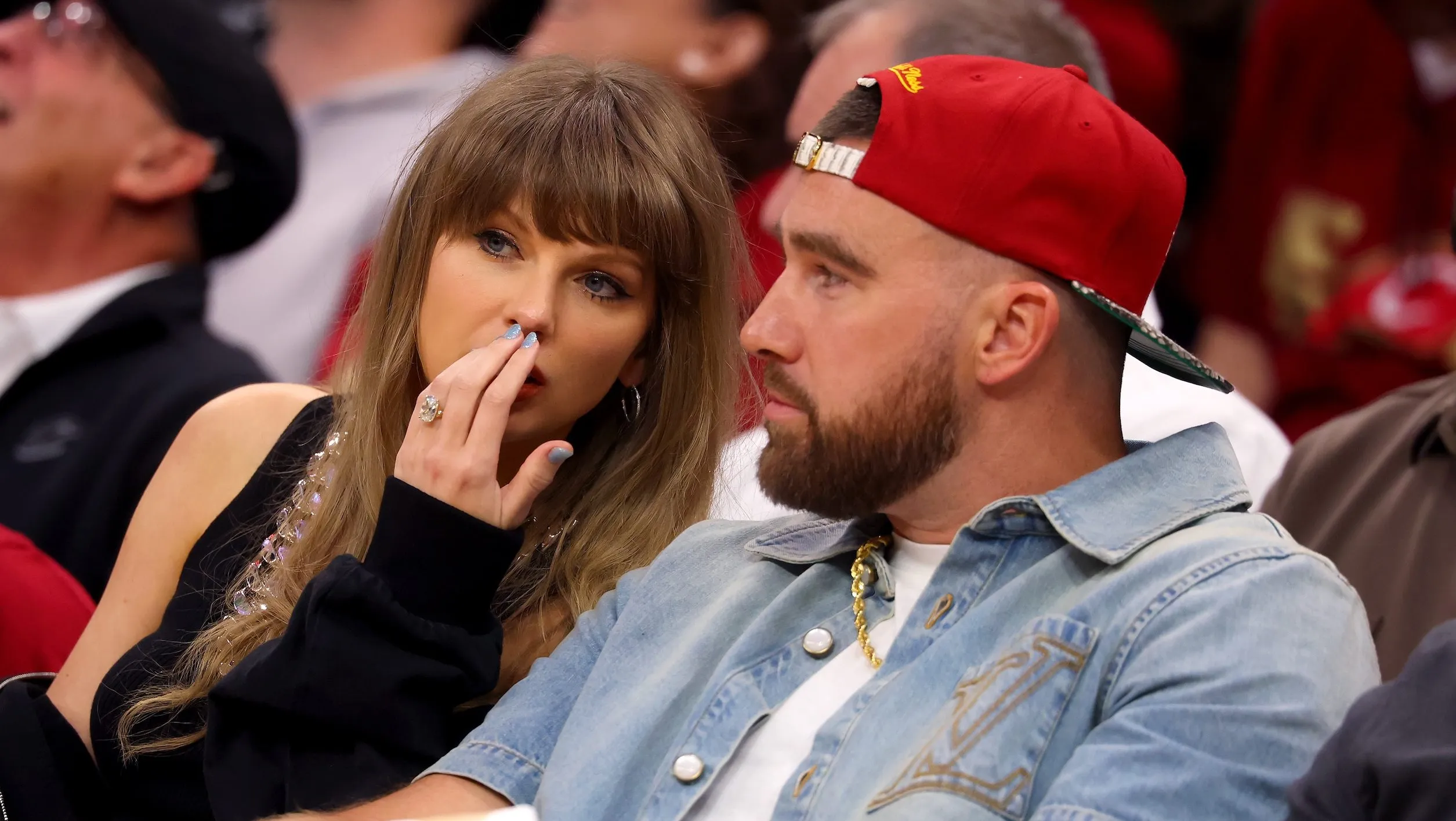
Taylor Swift and Travis Kelce are getting married this summer, and the entire internet has lost its mind over who got an invite. Selena. Patrick and Brittany. Ed. Every hour, another name leaks. Every hour, another headline asks who got snubbed.
Here is what nobody is talking about.
A wedding of this scale isn’t a party. It’s a pressure cooker. The world has decided that two beautiful, brilliant, wildly successful people finally finding each other should look like a flawless pop song from start to finish. And that expectation, more than any guest list drama, is the actual storyline I’d be watching if I were sitting next to Taylor right now.
Because biology doesn’t care that you booked the venue of the century.
The Fairy Tale Setup Nobody Warns You About
In my opinion, from the cradle to the grave, humans are an interdependent species. Your nervous system is constantly asking your partner two quiet questions. Are you there for me? And am I enough for you?
In the early days of a romance like Taylor and Travis’s, the answers feel like a continuous, effortless yes. I call this the “dance battle” phase. One partner steps onto the floor and busts out a breakdance. The other answers with a flawless moonwalk. Their nervous systems decide, instantly, that they were made for each other.
The trap is mistaking that initial sync for the whole relationship.
When you’re planning the wedding of the decade, the unconscious assumption is that because everything looks perfect on the outside, you’re supposed to feel perfectly secure on the inside. You’ve arrived. You’re done. The fairy tale is locked in.
Then a normal, human moment of disconnection happens. A miscommunication about the rehearsal dinner. A weird silence in the car. A tone that lands wrong. And because the expectations are sky high, that ordinary rupture hits like an earthquake. Our sensitivity to being hurt actually increases when the stakes get this big.
I see this every Tuesday in my San Francisco office. Brilliant, high-achieving couples who treat their relationship like a project they’re failing at. They’re great at describing the mango. They can break down their partner’s flaws in vivid detail, color, origin, texture, for a full hour. But describing the mango is completely different from the messy act of actually tasting it. They’re terrified of the raw vulnerability underneath the analysis.
The Waltz of Pain Happening Behind Every Big Wedding
When the pressure of a perfect event cracks the effortless connection, a predictable dynamic shows up.
One partner, whom I call the “Relentless Lover,” feels a small drop in attention. Their nervous system reads it as the threat of abandonment, so they protest through criticism or demand. They’re up in the emotional Penthouse banging on the floor, wondering why they’re carrying everything alone.
The other partner feels the weight of that criticism and retreats into the Basement. They shut down, intellectualize, go quiet. I call them the Reluctant Lover. Some people would call this stonewalling, but underneath it is usually just terror of being a disappointment.
These two strategies collide in what I call the Waltz of Pain. One, two, three. One, two, three. The Relentless Lover reaches and criticizes. The Reluctant Lover defends and disappears. The harder one reaches, the deeper the other hides.
They’re both throwing boomerangs at the same time. What you throw out guts your partner, then circles back and hits you in the face. Two people end up locked in separate suffering bubbles, completely convinced the person next to them is the enemy.
If you’re reading this and recognizing yourself, you can discover your attachment dynamic in about five minutes. Naming the pattern is the first piece of getting out of it.
Why Tabloid Logic Gets Love Completely Backwards
Here’s the part the gossip columns will absolutely refuse to print.
If Taylor and Travis have a tense paparazzi moment or a leaked argument, the culture will scream that the fairy tale was a lie. That the relationship is doomed. That somebody should have seen it coming.
I’d argue the exact opposite. Disconnection is a feature of love, not a bug. Conflict is biology doing its job.
If they fight, it means they matter to each other. When a partner becomes that important, your nervous system gets hyper sensitive to any whiff of distance. The protests and the withdrawals are not malicious choices. They’re survival strategies, wired in long before anyone knew what a Super Bowl ring looked like. The same nervous system architecture drives the science behind unrequited love, the long pining, the chasing, the freeze. All of it is attachment doing its loud, clumsy job.
There are no bad guys here. Just two frightened humans in adult bodies, using the tools they have.
We live in a culture that treats love like fiat currency. People think they can print empty promises or stage a flawless public event to guarantee security. Love doesn’t work that way. Love is proof of work. It’s the grueling, calorie burning humility of crossing the bridge into your partner’s reality after a rupture, and repairing the bond.
What Actually Works When the Pressure Hits
If a couple like this sat in my office, exhausted by perfect-life expectations, the first thing I’d do is stop the argument. You can’t negotiate seating charts when your nervous systems are screaming threat. You can’t fix a limbic problem with a cognitive solution.
I’d tell them they’re both acting as the world’s leading expert on their partner’s problems. If I hosted a global conference tomorrow on what’s wrong with your spouse, you’d be the keynote speaker. So would they. I need both of you to step off the podium.
The grueling shift is from the Story of Other to the Experience of Self. Turn the flashlight of awareness away from your partner’s mistakes and point it inward.
Trace a C curve. The top is your reactivity, the anger, the urge to lecture. Ride it down to the bottom, the raw vulnerability underneath. Locate the part of you that’s terrified of being abandoned, or terrified of not being enough. Then complete the curve. Look your partner in the eyes and speak from that place, without a single drop of criticism attached.
The Line I Hope Somebody Sends Them
The world wants Taylor and Travis to be the proof that love can be effortless if you just find the right person. They will not be that proof, because nobody is.
What I hope for them, and for anyone planning a summer of impossible expectations, is something quieter. The grace to stumble in private. The willingness to be scared together. The slow, ordinary courage of earning safety over time.
That’s not the wedding photo. That’s the marriage.
_______________________________________________________________________________________________
Figs O’Sullivan, LMFT and his wife, Teale, are couples therapists in San Francisco, relationship experts to the Stars and Silicon Valley, founders of Empathi, and built the Figlet platform, an AI relationship coach trained on their clinical work.


