













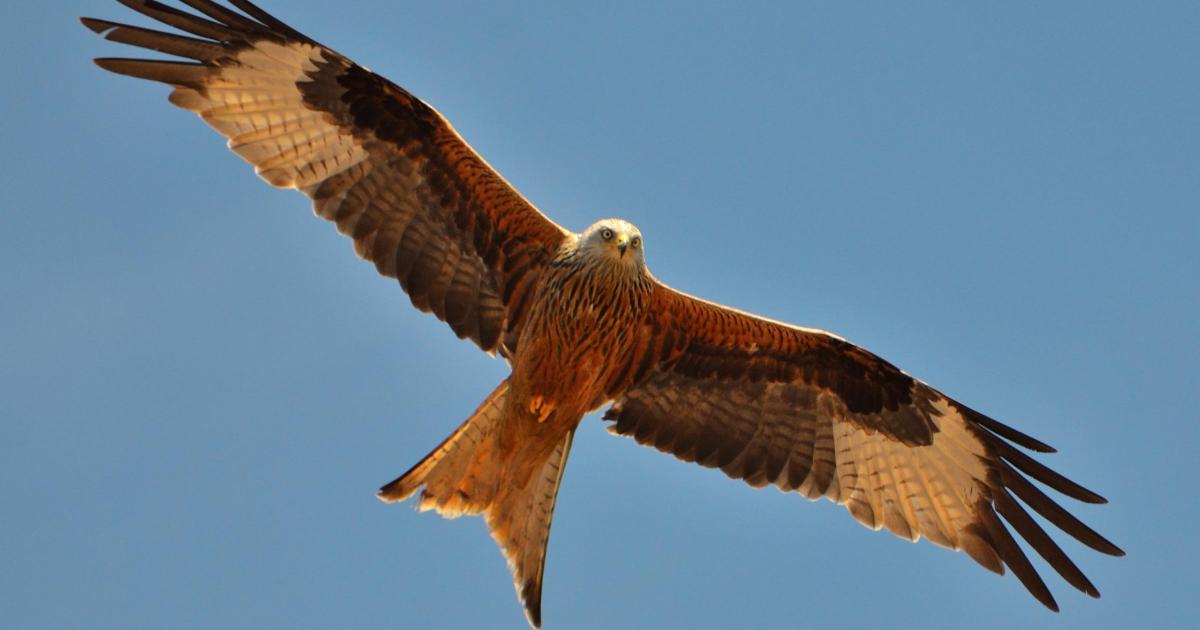
The red kite—a majestic raptor with a wingspan of nearly six feet—has made a remarkable comeback across the region, according to Rye Harbour Nature Reserve, which recently captured a group of five of the birds on camera at the reserve.
“The Red Kite is an increasingly familiar sight in the skies above Sussex, soaring effortlessly with an almost-six-foot wingspan,” the reserve said in a recent Facebook post.
It is a recovery that would have seemed unthinkable just half a century ago.
The red kite was once a common sight on the streets of London (Image: Reinhold Möller Ermell)
Rye Harbour Nature Reserve said that “just 50 years ago there were only a handful of Red Kites left, clinging on to their last remaining stronghold deep in the wilds of Wales.”
The species’ decline was centuries in the making.
According to the reserve’s social media post, red kites were once as ubiquitous in British towns and cities as pigeons, even roaming the streets of London.
Their role as scavengers—keeping filthy streets clean—was so highly valued that they were once protected by royal decree.
But that goodwill did not last.
The reserve said that “attitudes shifted over time and the Red Kite was mistakenly viewed as a threat to livestock and gamebirds.”
With a bounty placed on its head, the species was driven to extinction in both England and Scotland by 1879.
Conservation efforts were slow to follow.
Red kites are now a common sight at Rye Harbour Nature Reserve (Image: Hans Hillewaert)
Rye Harbour Nature Reserve said that “rather belated conservation efforts began in 1903 but by then every surviving bird was descended from a single Welsh female.”
The population faced a devastating genetic bottleneck, compounded by harsh weather, food shortages caused by myxomatosis in rabbits, and eggshell thinning linked to organochlorine pesticides.
The turning point came in 1989, when a bold reintroduction programme was launched.
A spokesperson for the reserve said that “the first reintroductions were made in 1989, when six Swedish birds were released in Scotland and a further four (plus one Welsh) in Buckinghamshire.”
The red kite has made a remarkable recovery (Image: Noel Reynolds)
The programme proved a rapid success: by 1992 the birds were breeding, and just two years later the first wild-reared kites had raised young of their own.
By 2006, a red kite was spotted over London for the first time in 150 years—a moment Rye Harbour Nature Reserve described as part of “an incredible success story.”
The reserve added that “though some hazards remain, there’s every indication the Red Kite will thrive into the future”—a prospect that will delight wildlife lovers across Sussex, where the skies are increasingly shared with one of Britain’s most striking birds of prey.
Source link
[Featured]
[Just In]


