














The London Government Act 1963 created Greater London and its 32 London boroughs plus the City of London, redrawing the map and pulling in large chunks of historic Kent under new boroughs such as Bromley, Bexley, Greenwich and Lewisham.
Overnight, places that had long been Kentish market towns, dockyard communities or villages suddenly found themselves branded as London suburbs.
Their residents became Londoners on paper – but on the ground, many still insist they feel more Kent than capital.
Here are some south east London places that used to be in Kent – and where the old county ties are still hard to shake.
Woolwich
Woolwich was once a Kentish riverside town, long before it became synonymous with London’s Docklands and regeneration.
For centuries it sat firmly in north west Kent and was one of the most strategically important places on the Thames.
In the 19th century, maps listed Woolwich as part of Kent, not London, even as industrial growth pulled it closer to the capital’s orbit.
That changed in 1889, when the new County of London absorbed Woolwich and nearby parishes as London’s boundaries crept eastwards.
Today, Woolwich is very clearly within the Royal Borough of Greenwich, served by the Elizabeth line, packed with new towers and riverside developments.
Eltham
Eltham looks and feels like classic outer south east London suburbia, but its past lies firmly in Kentish soil.
Historically, Eltham was a parish of Kent, part of the old Lathe of Sutton‑at‑Hone, with links to neighbouring places like Greenwich, Lee and Mottingham.
Eltham Palace was once a royal residence, giving the area a status far beyond that of a typical village.
The surrounding settlement grew up as a Kentish town on the route between London and the Medway towns.
Eltham was gradually absorbed into London through a series of administrative changes.
It became part of the County of London in 1889, was placed in the Metropolitan Borough of Woolwich in 1900, and later joined the Royal Borough of Greenwich when Greater London was established in 1965.
Lewisham and Deptford
Inner south east London’s Lewisham and Deptford might feel firmly metropolitan today with its busy traffic and tower blocks, but much of this area used to be in Kent.
Historically, most of what is now the London Borough of Lewisham lay in the Blackheath Hundred of Kent.
Deptford was once a vital Kentish dockyard town, home to a royal dock founded under Henry VIII, while Lewisham itself has written records dating back to the ninth century.
In the late 19th century, as London’s population exploded, these communities were drawn into the expanding metropolis.
They became part of the County of London, losing their official Kent status as the inner city boundary shifted south and east.
Bromley
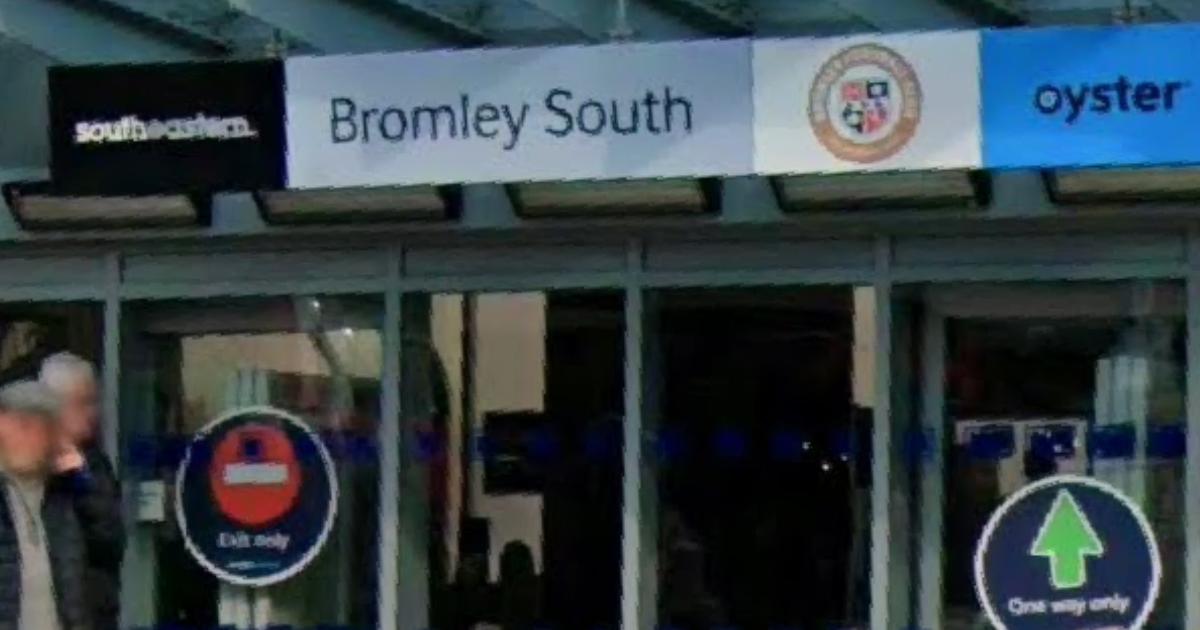
For most of its history, Bromley was a Kent market town, and that identity has clung on far beyond the administrative changes of the 1960s.
Bromley became part of the London Borough of Bromley in 1965, when Greater London was created and several former Kent districts, including Bromley, Beckenham, Orpington and Chislehurst, were merged into a single outer London borough.
Bromley shifted from being a Kent town to the centre of London’s largest borough by area.
Despite that, Bromley has held tightly to its Kentish heritage.
The town still has the feel of a traditional suburban centre, with a high street, shopping centres and houses fanning out into leafier, more rural‑feeling edges.
Bexleyheath and Crayford
To the east, Bexleyheath and Crayford are another example of towns whose hearts lie in Kent, even though their governance now sits squarely with London.
The modern London Borough of Bexley was formed out of the Kentish towns of Bexley, Erith and Crayford, plus surrounding areas, in 1965.
For generations before that, these communities looked to Kent for their county identity and local administration.
Bexleyheath grew up along the historic London–Dover road, turning into a major commercial centre, while Crayford developed around the River Cray, with industry, housing and local commerce built on its Kentish foundations.
Today, both lie fully within Greater London, and Bexleyheath in particular functions as a classic London suburban town centre, with shopping streets and dense housing around it.


