













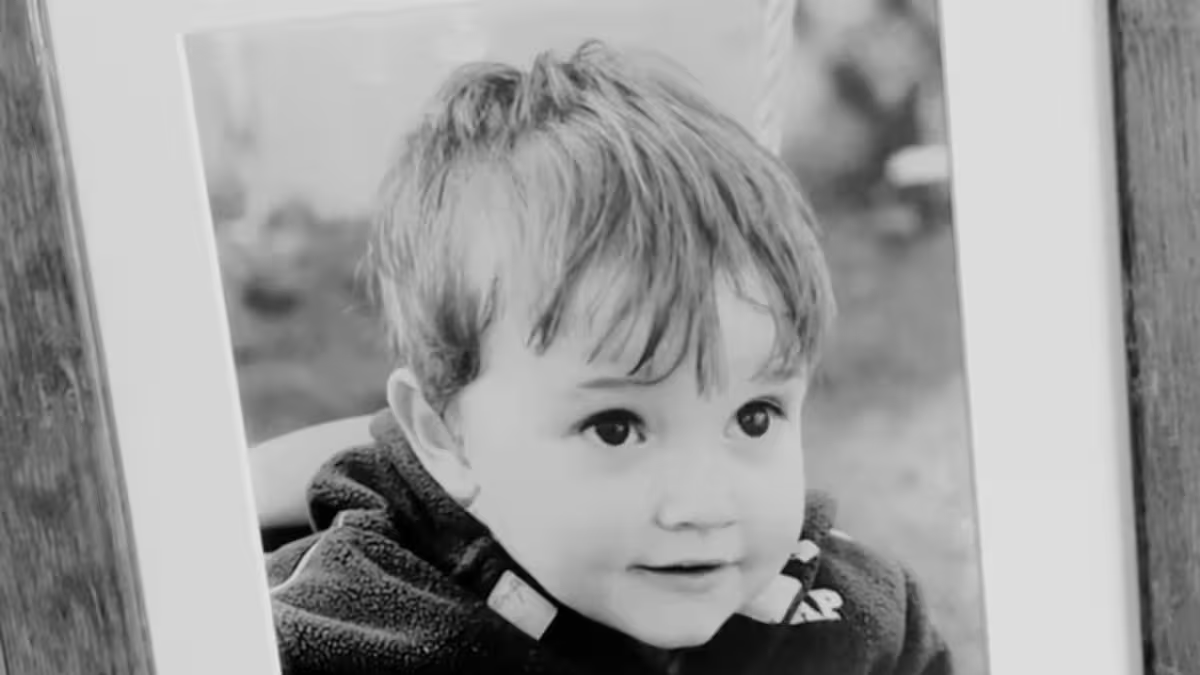
As she kissed her son after he uttered the words ‘sore thumb mummy’, Maureen Ellson had no idea this would be the last thing he ever said to her.
David was just two when he suddenly became unwell overnight and his loving parents rushed him to hospital. But their world was shattered forever when doctors told them their toddler had meningitis.
In the early hours of the next morning, February 16, the Dundonald boy died from meningococcal septicaemia.
That was in 2002, before a vaccine for Meningococcal B was available. Months after his death, Maureen spoke to the consultant who had treated David that day and he said the only thing that could have saved David’s life would have been a vaccination.
Now Maureen is urging parents to get their children vaccinated and protect them from this deadly disease.
“It’s a very serious disease. It’s very rapidly progressive in some children and without vaccination it could be serious, or like my son David, they could die from meningitis,” she said.
Speaking about what happened to David, Maureen details how her son had been perfectly fit and healthy in the days before his death, and although she and her husband both knew the signs of meningitis, David did not display any of those symptoms and doctors could do nothing to save him.
“That Thursday he had gone to nursery as usual and he came home, as we thought perfectly fit and well,” she said.
“He went to bed as usual on the Thursday night, no colds, no sniffles, nothing wrong with him. But during the night he woke a few times, firstly complaining of a sore leg. I just gave it a rub assuming he had got it caught in his cot, then about an hour later he woke again and he said he was thirsty, he had a little bit of milk and then he was sick. We turned the lights on and checked for symptoms of anything more serious, but genuinely thought he was okay.
“The next morning, he just wasn’t himself. At about eight o’clock in the morning when we were getting his older brother ready for nursery we noticed that his lips were starting to turn a little blue. He had asthma and we just assumed he had a stomach bug that was affecting his asthma.
“We decided to take David to the Ulster Hospital. Because he has asthma, we didn’t have to go through the Emergency Department, and we brought him straight into the paediatric rapid response unit. My husband noticed when he lifted him out of the car seat he went limp in his arms.
“As soon as the nurse saw him and we said what was wrong with him they brought us into a side ward and they immediately started to treat him. But he was seriously ill. One of the doctors that appeared said we’re treating him for meningitis.
“They did a thumb prick test and David said ‘sore thumb Mummy’, I gave it a kiss and told him it would be all better. They were the last words he ever said to me.
“Very quickly they realised he was seriously ill and they told us they would be transferring him to the Royal. But to do that they would have to anaesthetise him. So, they got him to theatre and we said our goodbyes. It was probably about another four or five hours later before we got to see him again.
“When we did get to see him in the Royal they told us they did struggle to stabilise him after the journey, and later that night in the early hours of the Saturday morning he died from meningitis.”
Maureen is now supporting the Public Health Agency (PHA) call this World Immunisation Week (24-30 April) for people to be aware of the importance of vaccination in fighting deadly diseases and for all those who are eligible for vaccination to take up the offer.
Maureen, who is an Ambassador for Meningitis Research Foundation, urged others to make sure they get their children vaccinated.
“At that stage there were no vaccines for MenB. Both my husband and I were aware of meningitis signs and symptoms. But he didn’t show any of the signs we thought we knew of meningitis,” she said.
“Several months later I went back to the hospital and spoke to the consultant that treated David that day and he said he was really very ill and the only thing that could have saved David’s life would have been a vaccination.
“On the 1 May 2015 they introduced the vaccine for MenB into the childhood immunisation programme and I think it’s very important that parents do vaccinate their children against meningitis.”
There are other types of meningitis that are not covered by vaccines, so it is important to still watch out for the signs and symptoms even if someone has been vaccinated.
Geraldine Mallon, Immunisation Project Operations Manager at the PHA, said: “All children in Northern Ireland are eligible for the MenB vaccine as part of the free childhood immunisation programme. The MenB vaccine is given at 8 and 12 weeks and just after their first birthday and helps protect against Meningococcal B disease, the most common type of meningococcal disease, which can cause serious illnesses, including meningitis and sepsis. All infants are eligible for the meningococcal B vaccine up until they are 2 years of age.”
Meningitis Research Foundation has produced clear and accessible guidance for the public on signs and symptoms, and when to seek urgent medical advice.
Caroline Hughes, Support Services Manager at Meningitis Research Foundation, said: “Maureen’s heart-breaking story is a powerful reminder to all of us to help protect ourselves and those we love about by keeping up to date with the vaccines available. Vaccines offer protection at the times in our life when we’re most vulnerable, and following the recommended schedule is essential. If you ever have questions, need advice, or simply want to talk about meningitis vaccines, our Support Service team is always here to help.”
Geraldine added: “In addition to the MenB vaccine, it is really important that vaccine uptake for other serious diseases remains high in Northern Ireland to help prevent many serious diseases returning.
“After clean water, vaccination is the most effective public health intervention in the world for saving lives, promoting good health and preventing serious illness.
“During 2024 and 2025, Northern Ireland saw the return of measles cases, increasing the risk of serious infection for children who had missed their vaccines.
“Other serious childhood infectious diseases such as polio or diphtheria may rarely be heard of these days. However, they can return from parts of the world where they still occur if vaccination rates continue to decrease as they have been over the last few years. If this happens, children who are not vaccinated will be at risk of these infections and potentially life-changing complications – even death.
“The PHA strongly recommends that babies and children are vaccinated according to the Routine Childhood Immunisations Schedule. It is important vaccination coverage is improved as soon as possible to help prevent the spread of avoidable, serious and sometimes deadly diseases.
“If you are unsure if your child is up to date with vaccinations, the easiest way to check is to look at your child’s red book or speak to your health visitor or GP surgery. If your child has missed a vaccination, please contact your GP practice to book an appointment as soon as you can to make sure they have maximum protection against disease.”
To find out more about childhood vaccines see www.pha.site/immunisation-vaccines orfor more information about the disease or to access Meningitis Research Foundation’s Support Services, visit www.meningitis.org.
For all the latest news, visit the Belfast Live homepage here and sign up to our daily newsletter here.


