












5 Reasons Why Your Body Needs It Daily
This is true. Stretching definitely matters. However, stretching often plays second fiddle to more high-intensity activities,such as running, weight-lifting, or spinning. Many times, we begin a workout and say things like, “Oops, I forgot to stretch!”, and see this as no big deal. I know that I have been guilty of this so many times.
Stretching can seem tedious and inconsequential. It can also be a little painful… or a lot painful, depending on how flexible you are.
We tend to think of it as the domain of ballerinas, who need to lift their legs high; or gymnasts, who do elaborate backbends. However, stretching is essential and should not be left out from any health and wellness routine. Joseph Pilates, the founder of the Pilates movement, said: “You are as young as your spine is flexible.”
There are many benefits to stretching, which is one of the reasons why formal stretching classes are so popular worldwide. Expert Market Research says that the Pilates studios market was valued at $152.30 Billion in 2024 and is projected to hit $417,11 Billion by 2034.
Here are 5 scientific reasons why the benefits of stretching reach far beyond the mat.
1. Flexibility and Range of Motion
You would have also noticed as you have grown older that it becomes harder and harder to touch your toes. However, this doesn’t mean that you should stop trying. A regular stretching routine can increase flexibility, in spite of your ageing.
As we age, our muscles naturally tighten and shorten, which can reduce mobility in the joints and increase the risk of injuries.
Regular stretching helps maintain a full range of motion. It can also help to restore range of motion in the joints. This is particularly important for athletes and older adults, as well as for anyone who sits for long hours at a desk.
“Stretching lengthens tight muscles and enhances joint mobility, which helps us move more efficiently,” explains Dr Rachel Tavel, New York-based physical therapist and medical writer.

2. Injury Prevention and Muscle Recovery
Stretching also plays a key role in preventing injuries. When muscles are tight and inflexible, they’re more prone to strains, tears, and overuse injuries. Dynamic stretching before exercise helps to prepare the muscles and joints for activity. It does this by increasing blood flow and enhancing elasticity.
Post-workout, static stretching can also aid in muscle recovery by promoting relaxation and reducing the build-up of lactic acid.
Studies have shown that athletes who regularly stretch after training sessions report less muscle soreness and improved performance over time.
3. Improved Posture and Alignment
Think of a ballerina walking across the stage. She balances an invisible crown on her head. Her posture is perfect.
No doubt, one of the reasons for her beautiful posture is her lifestyle of stretching.
In our modern lifestyles dominated by screens and sedentary habits, poor posture has become an epidemic. Prolonged sitting leads to tight hip flexors, rounded shoulders, and a forward head posture. All of these contribute to muscular imbalances and chronic pain.
Stretching helps correct these issues by releasing tension in overworked muscles and strengthening underused ones. Regularly stretching areas like the chest, back, hips, and hamstrings can dramatically improve posture, spinal alignment, and overall body mechanics.
“Postural imbalances often come from tightness in specific muscle groups,” says Dr Karen Litzy, a physical therapist and host of the Healthy Wealthy & Smart podcast. “Stretching can help bring the body back into balance.”
4. Boosted Circulation and Energy
Stretch therapist Kit Laughlin says, “Flexibility is the key to unlocking your body’s potential.” Simply, stretching is a powerhouse of benefits. It is also a natural way to boost blood flow throughout the body. As muscles lengthen and release, they allow oxygen-rich blood to flow more freely, nourishing tissues and speeding up the healing process. This is why many people feel more awake and refreshed after a good stretch.
Increased circulation also means better delivery of nutrients to the brain, which can result in enhanced focus, energy levels, and mental clarity.
5. Reduced Stress and Enhanced Mental Well-being
When you stretch up your arms and breathe during moments of panic or stress, calmness immediately comes over the body. There’s a reason for this.
Gentle, mindful stretching actually activates the parasympathetic nervous system. This helps to soothe the mind and put your body in the ‘rest and digest’ mode.
When combined with deep breathing, stretching becomes a powerful form of moving meditation.
How To Get Started
The beauty of stretching lies in its simplicity and accessibility. You don’t need a gym membership, fancy equipment, or an hour of spare time. You just need to pause, tune into your body, and move with intention.
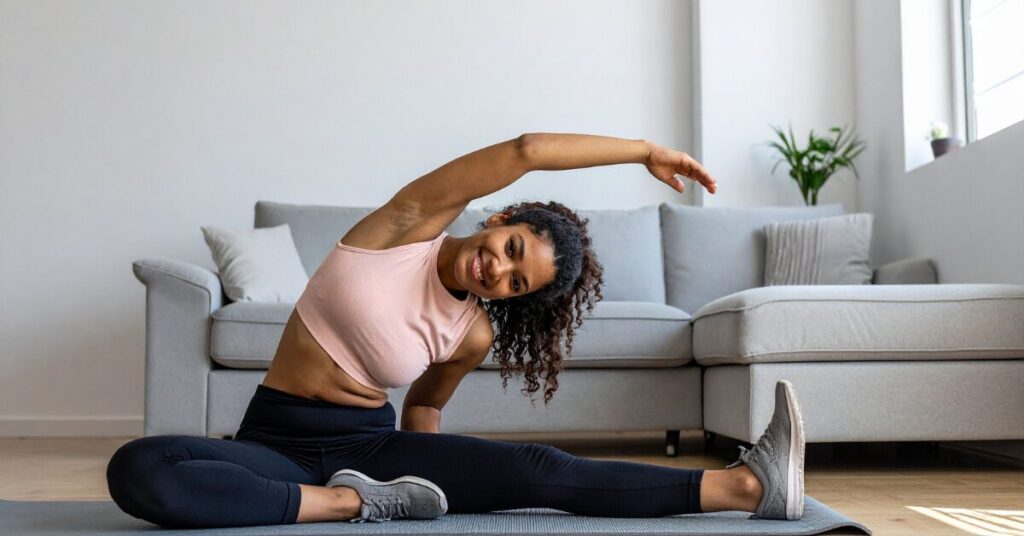
There are several types of stretching, each serving a unique purpose. Static stretching involves holding a stretch for 15 to 60 seconds and is most effective after a workout to help relax and lengthen the muscles.
Dynamic stretching uses controlled, active movements, such as leg swings or arm circles. This form of stretching is used to warm up muscles and joints before physical activity.
PNF (proprioceptive neuromuscular facilitation) stretching is often used in rehabilitation. It involves alternating between contracting and relaxing muscles to increase flexibility.
Passive stretching relies on an external force, such as a strap or a partner, to assist in deepening the stretch. In contrast, active stretching requires engaging opposing muscles to hold a stretch without any outside help, building strength and control in the process.
If you’re just getting started, try a basic daily stretching routine which targets common areas of tension, such as the neck, shoulders, back, hips, hamstrings, and calves. Ten to fifteen minutes a day can make a noticeable difference in your flexibility and comfort levels.
It’s all about self-care and discipline. As heavyweight Mike Tyson said: “Discipline is doing what you hate to do, but nonetheless doing it like you love it.”


