












[CAPE TOWN, SciDev.Net] Chronic obstructive pulmonary disease (COPD) has become one of the world’s most lethal but least prioritised health crises.
Each year, more than 3.5 million people die from COPD, a group of lung conditions, including emphysema and chronic bronchitis, that restrict the airways, causing breathing difficulties. The figure represents 5 per cent of deaths worldwide and makes it the fourth leading cause of death globally.
About 90 per cent of COPD deaths occur in low- and middle-income countries (LMICs) where diagnostic capacity is limited, specialist care is scarce and access to essential medicines remains deeply unequal.
Yet, despite this burden, COPD and other chronic respiratory diseases such as asthma continue to receive limited political attention and funding.
In many LMICs, the number of trained pulmonologists is critically low, primary healthcare systems are overstretched, and recommended combination inhalers are either unavailable or unaffordable.


In an exclusive interview for SciDev.Net, José Luis Castro, the World Health Organization (WHO) director-general special envoy for chronic respiratory diseases, outlines why the burden is concentrated in LMICs, how expert shortages are undermining care and what governments must do to expand access to diagnostics and lifesaving treatment.
Chronic respiratory diseases receive far less political attention and funding than many other global health threats. Why is that, and how much of the burden remains hidden because of weak diagnostic capacity?
One of the main challenges is that these diseases have remained largely invisible both to the public and to policymakers. When diseases are invisible in public discourse, they are also invisible where decisions are made about funding for diagnostics and treatment.
The major risk factors [for COPD] are smoking and air pollution. In Africa, the tobacco epidemic has not advanced as aggressively as in other regions, and it is a younger continent. That creates an opportunity for prevention, but it has also contributed to complacency.
Weak diagnostic capacity makes the burden even more invisible. In many low-income countries, lung function testing is rare so people are sick, but they are not properly diagnosed. By the time they reach care, they are often in advanced stages.
Essential medicines, especially inhalers, remain inaccessible in many low- and middle-income countries. Have governments failed on this front?

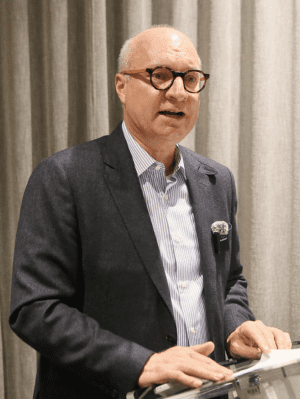
José Luis Castro, WHO Director-General Special Envoy for Chronic Respiratory Diseases speaking during a 2026 media workshop in Cape Town
When diseases are invisible, they are not prioritised. That invisibility affects policy decisions and resource allocation. Governments act when they understand the magnitude of the burden.
The challenge with inhalers is also about treatment quality. For asthma, for example, the recommended therapy is a combination inhaler, a bronchodilator plus a corticosteroid. One opens the airway temporarily and the other treats the underlying inflammation. Too often, patients receive only the reliever inhaler, which provides short-term relief but does not control the disease.
Cost plays a role. Combined inhalers are more expensive. But without proper treatment, patients deteriorate and ultimately cost the health system much more.
WHO will issue its own updated guidelines next year, incorporating input from experts in low- and middle-income countries to ensure they are adaptable and practical.
Africa, Asia and other regions are facing major funding shifts and aid reductions. Will this have an impact on chronic respiratory diseases?
Yes, much foreign aid has focused on infectious diseases. However, that funding also supported health personnel and facilities where chronic conditions were identified and treated. When funding shrinks, clinics close, trained staff move to the private sector, and communities lose access to care.
This depletion of the health workforce is devastating. Chronic diseases require continuity of care. Without personnel and functioning primary health systems, patients go undiagnosed and untreated and mortality rises.
Where do you see the burden in the next five years?
Unfortunately, the burden is growing.
Tobacco use and air pollution continue to drive disease. In some cities, children are born into polluted environments. From birth, their lungs are exposed to contaminated air 24 hours a day.
Unless governments enforce tobacco control measures and clean air policies, the numbers will continue to rise. Indoor air pollution is equally critical, many households still cook with wood or biomass. People spend over 90 per cent of their time indoors. That exposure is constant.
“We have the tools to prevent an entire generation from developing these diseases. The question is whether we will use them.”
José Luis Castro, WHO director-general special envoy for chronic respiratory diseases
We have the tools to prevent an entire generation from developing these diseases. The question is whether we will use them.
There is a shortage of specialists in many LMICs. How can countries build capacity?
There is a crisis in the world in terms of the health workforce and the big question I think in the next four years is who will care for the chronically ill?
I remember 20 years ago in Ethiopia, there was only one pulmonologist in the entire country. Working with the health ministry, led at the time by Tedros Adhanom Ghebreyesus, a pulmonary training programme was established. Over two decades, more specialists were trained, and they trained others in turn.
But training alone is not enough. Governments must create conditions to retain specialists’ competitive salaries, academic positions, integration into the health system. Otherwise, countries lose their investment to medical migration.
At the same time, primary care doctors can be trained to recognise and manage common respiratory conditions. Not every country can immediately produce large numbers of specialists, but they can strengthen frontline capacity.
LMICs are seeing rapid urbanisation. How can cities grow economically without sacrificing public health?
Growth is not the problem. The problem is how growth is managed.
Public health must be part of urban planning. Cities should include green spaces, enforce air quality standards, ensure healthy building designs, and regulate harmful products. We have global examples of cities that cleaned their air and saw measurable health improvements.
Healthy cities are productive cities. Ignoring health undermines economic gains.
What is your message to policymakers in LMICs?
[Respiratory] diseases are preventable, especially COPD. Strong tobacco control laws and air quality standards work. They reduce smoking rates, reduce pollution, and reduce disease.
For those already sick, we must remove stigma. These patients need help, not blame. Tobacco was once marketed everywhere, even in hospitals. We cannot punish people for exposures shaped by policy failures.
Governments must invest in primary health care. When they fail to do so, patients present at very advanced stages, suffering increases, and costs rise dramatically. Primary health care is the foundation of health security. When it works well, countries can detect and contain outbreaks early, provide essential services, and reduce pressure on hospitals.
Investing in primary health care means investing in people, community health workers, nurses, and the digital tools that connect them. That is how we build resilience.
This piece was produced by SciDev.Net’s Global desk.


