




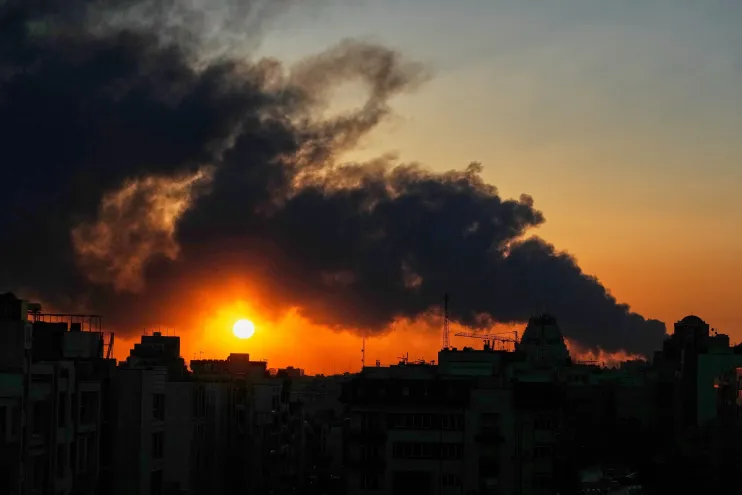
The war in the Middle East could “bring down the economies of the world” as oil prices could surge to $150 per barrel if Gulf energy exporters shut production, Qatar’s energy minister has warned.
Saad al-Kaabi said that restarting the production of liquified natural gas (LNG) – after it shut down the largest plant in the world due to the war – would take “weeks to months”, while challenges facing the country risk being repeated across the Middle East.
He said global competition for a smaller number of gas producers could trigger a price surge while further disruption from America and Israel’s war with Iran could hit oil production and exports.
“Everybody that has not called for force majeure we expect will do so in the next few days,” al-Kaabi said.
“All exporters in the Gulf region will have to call force majeure.
“If they don’t, they are at some point going to pay the liability for that legally, and that’s their choice.”
Chain reaction
He added that the war would damage growth and set of a chain of reaction in global supply of key productions.
“This will bring down the economies of the world,” he said.
“If this war continues for a few weeks, GDP growth around the world will be impacted. Everybody’s energy price is going to go higher. There will be shortages of some products and there will be a chain reaction of factories that cannot supply.”
The warnings appear to be a direct plea for President Trump to bring the war to a swift end amid fears that a settlement with Iran may not be reached for weeks.
War sends energy markets into ‘turmoil’
LNG prices in Europe have jumped by more than 50 per cent since last week while the Brent Crude Oil spot price rose higher on Friday to over $82.
Energy company bosses and government officials are scrambling to lessen the hits of an energy price shock, which could trigger another cost of living crisis.
Speaking to Times Radio on Friday morning, Octopus founder Greg Jackson said markets were “in turmoil”.
The supplier increased fixed-price tariffs and introduced exit fees for them, while analysts said more than half of suppliers across the market had cut the number of fixed deal offered to Brits.
Jackson said: “Fixed tariffs are based on the fact the day you want to take out a fixed tariff, the energy company goes to the wholesale market and buys a year’s worth of energy for you, and because the wholesale market are now reflecting at least some of the cost increases from the effects of the war in the Middle East, new fixed tariffs are then higher.
“Some companies won’t offer them at all because they are not confident in being able to lock in those prices a year in advance.
He added: “In energy terms, Iran has effectively closed the Strait of Hormuz, which transports 20 per cent of the world’s oil and gas supplies, and Qatar has said it cannot honour its contracts to deliver its gas, so the energy markets are in a state of turmoil.
“The wholesale price of gas has roughly doubled since a week ago.”
