




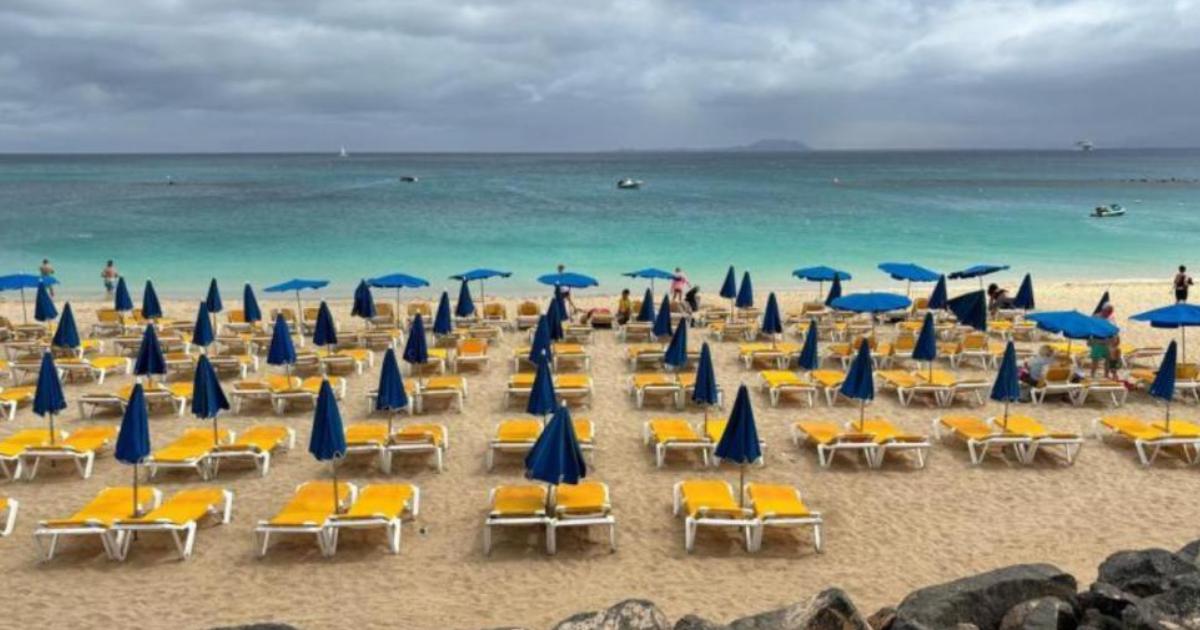

The first closure came at a beach in Playa Blanca, Lanzarote, known as the “small beach,” which was cordoned off on February 24 after water testing revealed high levels of faecal bacteria.
Officials said in a statement that the closure would last for 48 hours while laboratory results were analysed.
The contamination was found to be “intestinal enterococci,” a bacterium commonly present in the gastrointestinal tracts of humans and animals.
Despite the shutdown, neighbouring beaches Playa Dorada and Playa Flamingo remain open.
The Ayuntamiento de Yaiza, the local authority, is expected to release further updates as more information becomes available.
Elsewhere, a popular beach in Majorca has also been closed following a sewage incident.
Cala Millor beach, located on the island’s east coast, was shut after a broken pump caused wastewater to spill from the promenade into the sea at Platja Petita.
The incident was reported earlier this week, and despite claims that the situation is now “under control,” the beach will remain closed for two to three days.
Cala Millor is a major tourist destination, especially among British visitors, thanks to its long Blue Flag beaches and vibrant nightlife.
Residents and tourists reported seeing large volumes of wastewater flowing directly into the sea.
Both Lanzarote and Majorca rely heavily on tourism, with their beaches serving as a primary attraction.
In Lanzarote, Playa Blanca is especially popular during the spring months due to its warm climate.
While the contamination in Lanzarote is expected to be resolved within 48 hours, the situation in Majorca may take longer to fully address.
