




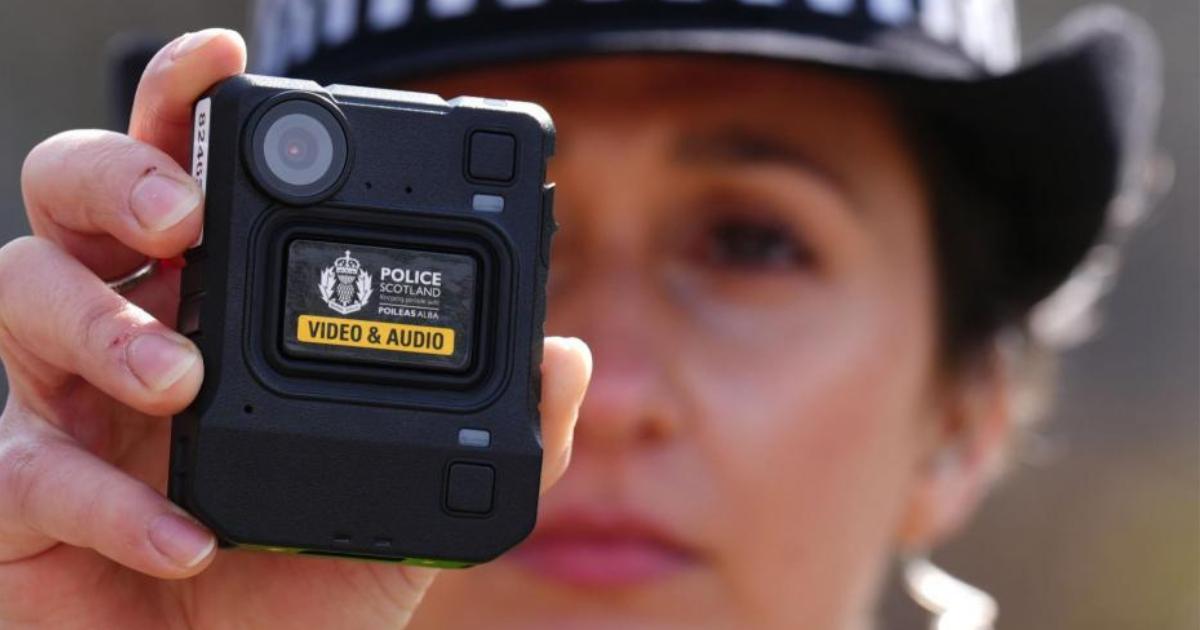

In total, 1100 officers, including those in road policing and custody, will receive the new devices over the coming weeks in a move aimed at improving transparency, evidence gathering, and public trust.
Chief Superintendent Vicky Watson, divisional commander for Lanarkshire, said: “The national roll-out of body-worn video cameras is a key priority for us and is one of the ways that we can work towards our vision of safer communities and less crime across Lanarkshire.
“The cameras and technology will improve the quality of evidence presented in court to deliver faster justice for victims by increasing early guilty pleas and reduce the time spent at court for victims, witnesses and police officers.”
The deployment follows the national introduction of body-worn video (BWV) for frontline uniformed police officers, including Special Constables.
All uniformed officers will be required to wear the cameras while on duty and activate them during the use of police powers, such as stop and search, arrests, or the execution of search warrants.
The equipment can help to de-escalate incidents, improve public trust in policing and reduce complaints, as well as support officer and staff safety, and bring wider benefits to the criminal justice system.
Since the introduction of BWV in Scotland in March 2025, more than 500,000 recordings have been captured, totalling over 100,000 hours of footage.
Of this, over 34,000 media files have been exported to our digital evidence sharing system, DESC.
The roll-out was prioritised by Chief Constable Jo Farrell, who took command of Police Scotland in October 2023.
Footage captured by the cameras may be used as evidence in criminal cases, but officers are still required to follow all existing procedures for gathering information, regardless of whether a recording was made.
The Crown Office and Procurator Fiscal Service (COPFS) will continue to review and determine competence on a case-by-case basis.
Video footage will be uploaded to secure police systems and the evidence will be shared with the COPFS using the new Digital Evidence Sharing Capability (DESC) system.
Chief Supt Watson said: “Body-worn video can significantly enhance public confidence and support officer and public safety by providing effective and transparent evidence of police and public interactions.
“There is strong public and partner support for body-worn video and we will continue to explain our use of this important technology including assurance around data privacy and human rights considerations.”
The cameras complement, but do not replace, other established methods of evidence collection.
Police Scotland has emphasised that the introduction of BWV is not intended to promote the increased deployment of single-crewed officers. Current deployment models and safety protocols will remain in place.
Police staff working in custody suites will also wear cameras when interacting with individuals in their care.
