










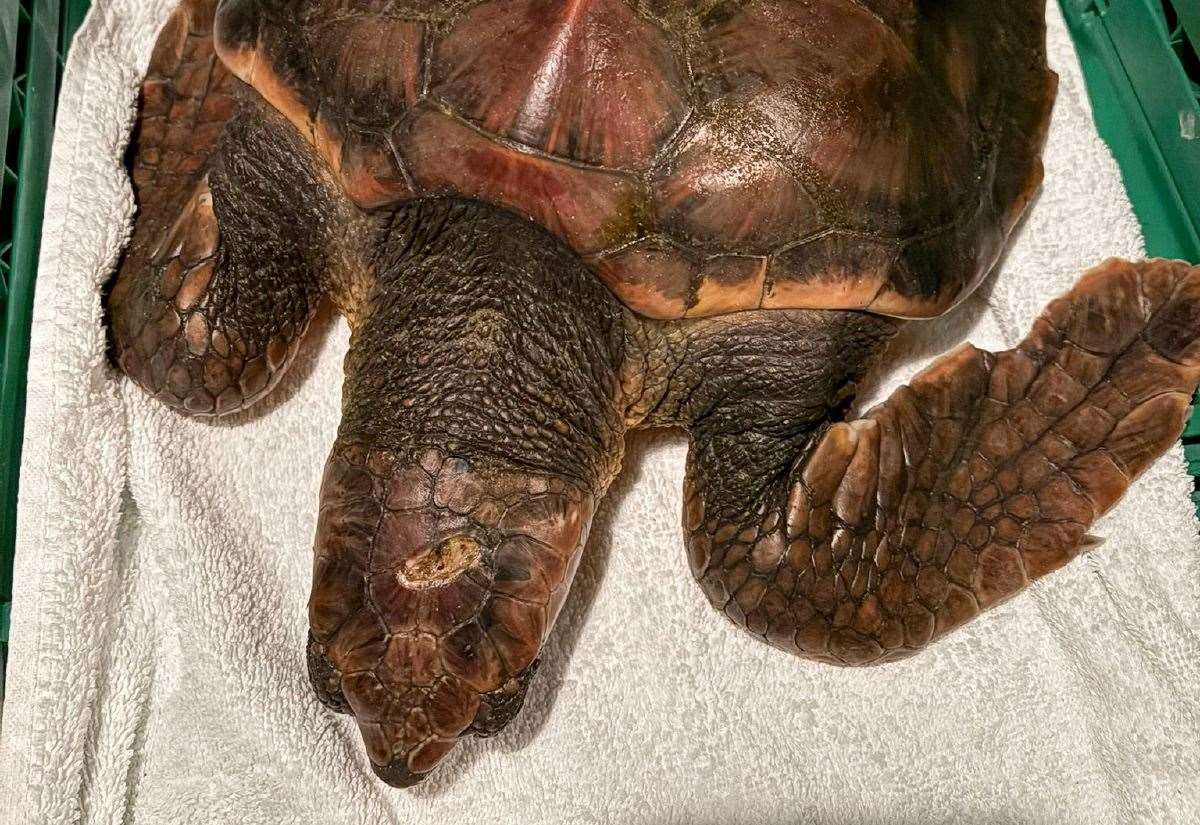
A stranded sea turtle found on the Kent coast has died despite the efforts of rescue teams and specialist vets.
British Divers Marine Life Rescue (BDMLR) received an urgent call on their hotline from a member of the public in Folkestone.


The animal was identified as a juvenile loggerhead turtle, measuring approximately 43cm in length.
Although cold and lethargic, it was still showing signs of life.
Sea turtles are not built for the cold waters around the UK. When exposed to prolonged low temperatures, they can suffer from cold shock, a life-threatening condition that dramatically slows bodily functions.
In this state, they can appear lifeless despite still being alive. Rapid or improper warming can be fatal, making specialist veterinary care essential.
The turtle – later named Moira – was rescued by medics and moved to SEA LIFE Brighton to receive emergency treatment at the end of last month,


On arrival, her internal body temperature was just nine degrees, which is exceptionally low for a species adapted to warm, tropical and subtropical waters.
An aquarist team began the delicate process of a gradual and controlled warming, which must take place over a period of time to prevent shock and organ failure.
Her treatment was overseen by their specialist vet, a member of the International Zoo Veterinary Group, ensuring Moira received the highest standard of care possible.
Despite their efforts, Moira sadly died last Thursday (February 5).
The rapid response from the public, BDMLR medics and expert care provided gave her the best chance she had.


Cold-stunned turtles are among the most fragile marine wildlife patients, and their survival depends on immediate reporting and specialist intervention.
They cannot survive in UK waters, except for the leatherback turtle.
The animals usually arrive on our beaches as a result of human-induced environmental impacts, including a recent increase in storms, which is linked to climate change.
The number of strandings is increasing year after year as a result.
If you encounter a stranded turtle, please contact the BDMLR 24-hour hotline immediately, as quick reporting can make all the difference.


