




[SÃO PAULO, SciDev.Net ] Almost half of the pesticides authorised for use on major agricultural crops in Latin America are banned or not approved in the European Union (EU) due to health and environmental risks, according to researchers.
The study published in Proceedings of the Royal Society B, analysed the legal status of hundreds of pesticide active ingredients used in eight countries—Argentina, Bolivia, Brazil, Chile, Colombia, Costa Rica, Mexico and Uruguay—and compared them with EU regulations, considered among the strictest in the world.
Active ingredients are the specific chemicals in pesticides that kill or control the pests.
“The results reveal a profoundly unequal regulatory framework between the two regions.”
Grecia de Groot, National Scientific and Technical Research Council of Argentina
The researchers reviewed publicly available information on pesticide approvals in Latin America, drawing on government and private-sector documents.
They identified 523 active ingredients approved for use in the region’s ten main crops—soybeans, maize, rice, sugarcane, wheat, apples, avocados, coffee, sunflowers and grapes—up to December 2020. Of these, 256 (48.9 per cent) were banned or not authorised in the EU.
These include acetochlor (a herbicide), bifenthrin (an insecticide) and carbendazim (a fungicide), which are highly toxic to the environment and to animal and human life, according to Grecia de Groot, a postdoctoral researcher at Argentina’s National Scientific and Technical Research Council (CONICET) and lead author of the study.
Costa Rica had the highest number of active ingredients approved for agricultural use that are banned or not authorised in Europe (140), followed by Mexico (135), Brazil (115), Argentina (106) and Chile (99).
“The results reveal a profoundly unequal regulatory framework between the two regions, which is considerably less rigorous in the Latin American countries analysed,” de Groot told SciDev.Net.
High value crops
Using statistical models to assess economic factors that may influence pesticide approvals in Latin America—such as crop production volumes and export values—the study found that crops with the highest production and export value, including soybeans, maize, wheat and rice, contained a higher concentration of substances not permitted in the EU.

“These findings are alarming because these are crops of enormous importance in the region, particularly in countries whose economies depend heavily on agricultural exports,” de Groot added.
Latin America is the region with the highest growth in pesticide use, the study says. Consumption increased about 500 per cent between 1990 and 2019, according to the researchers’ analysis of UN Food and Agriculture Organization data.
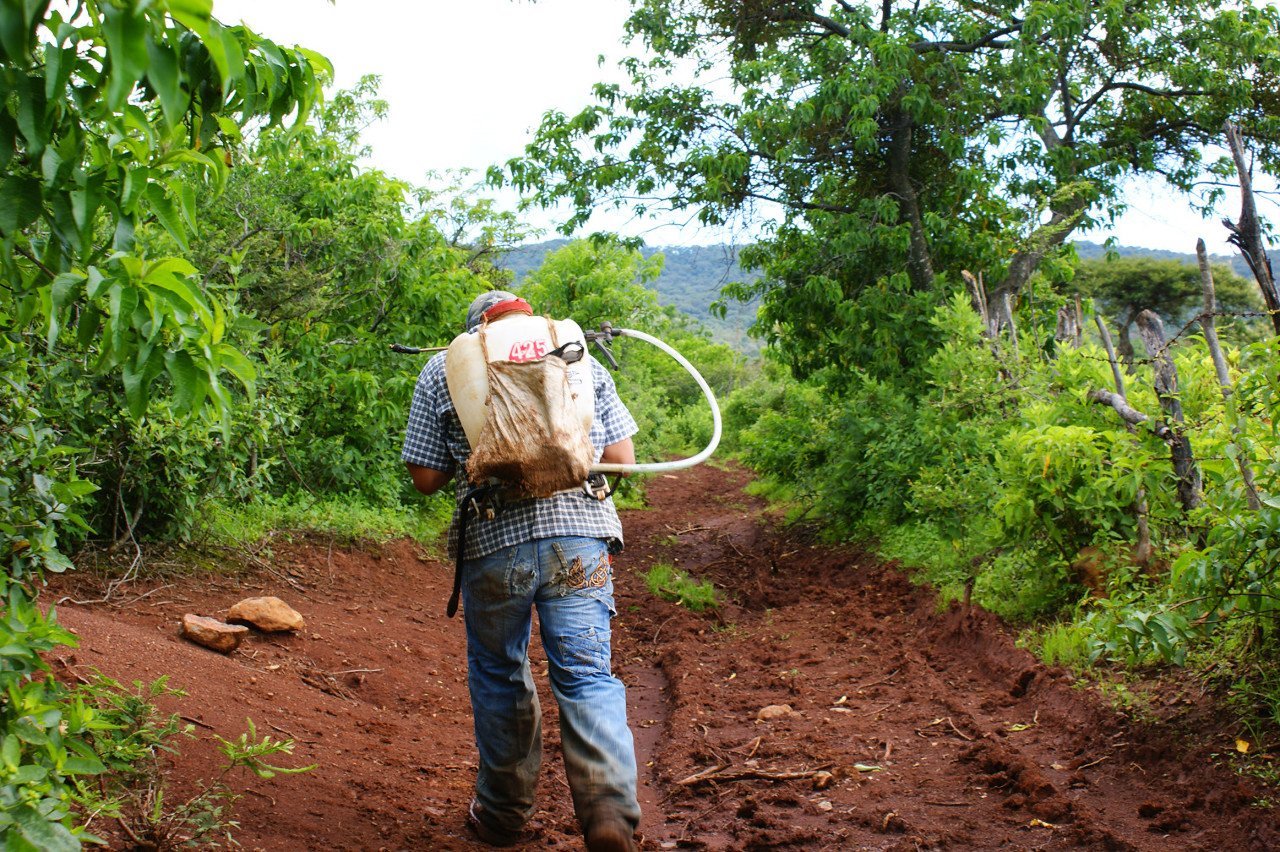
Rural workers and communities living near agricultural areas are directly affected by exposure to pesticides, while indirect exposure affects the general population through pesticide residues in food, water, air and soil.
Cancer risks
Research involving women diagnosed with breast cancer in Paraná state, Brazil, found that chronic occupational exposure to pesticides is associated with more aggressive tumours.
Carolina Panis, the researcher from the State University of Western Paraná who conducted that study and was not involved in the Proceedings B study, said many of the women worked in soybean and maize fields.
“Many are employed as assistants to pesticide applicators and come into contact with these substances while decontaminating protective equipment such as gloves, masks and goggles,” she told SciDev.Net.
Similarly, a 2024 study published in the Journal of Public Health detected pesticides in breast milk in at least ten Latin American countries.
“These compounds can reach breast milk because they accumulate in the environment and, once in the body, can cause hormonal disruption, infertility or cancer,” said Rafael Junqueira Buralli, a professor at the University of São Paulo’s School of Public Health, who was not involved in the Proceedings B study.
“The region remains permissive towards these substances despite evidence of their impacts on health and the environment, so although the findings of the Proceedings B study are robust, they are not surprising,” Panis said.
Closing gaps
To address regulatory disparities between Latin America and Europe, the study’s authors recommend an immediate ban on the production, sale and use of all active ingredients classified as highly hazardous.
Regulatory gaps must be closed so that countries with weaker legislation no longer bear the consequences of global trade in these toxic compounds, says de Groot.
The study also highlights the need for improved local and regional risk-management systems, including pesticide approval processes based on updated evaluation protocols and monitoring programmes tailored to specific contexts.
According to Panis, a free trade agreement signed in January between the South American trade bloc Mercosur and the EU could help introduce standards that restrict the use of these substances.
This article was produced by SciDev.Net’s Latin America and Caribbean desk
