




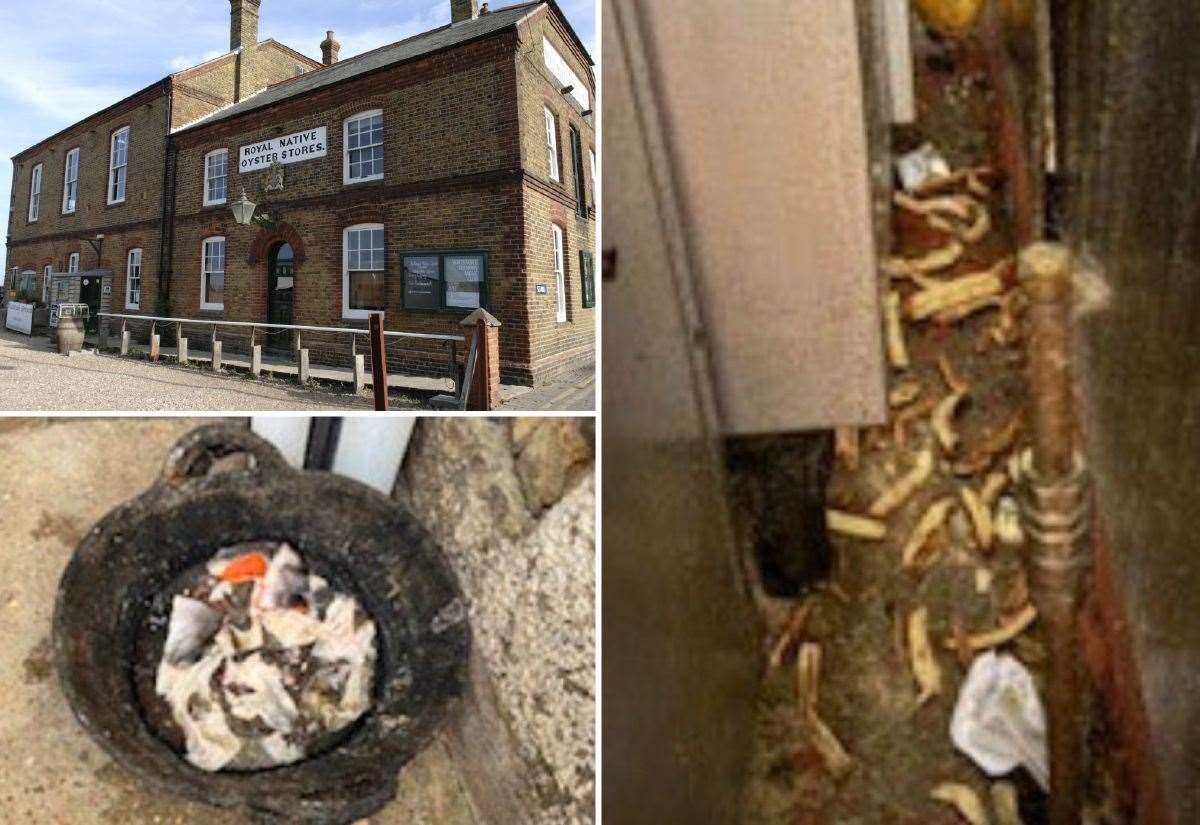
A popular restaurant in the Michelin Guide has been handed a poor hygiene rating after inspectors found flies, a bucket of “foul-smelling” fish and risks of contamination.
The Royal Native Oyster Stores, run by the Whitstable Oyster Company, in Whitstable has been a member of the prestigious guide for several years and has been credited with being a catalyst in the revival of the town.


But the seafront site has now dropped from a five-star food hygiene score to just two following a visit by Canterbury City Council (CCC).
An environmental health inspector downgraded the popular eatery after highlighting several issues in the kitchen.
The council inspector visited the restaurant in September, writing in their report that they found “a foul-smelling bucket containing discarded portions of fish”.
It was also alleged chefs in the restaurant did not have any formal food safety training, and the level of cleanliness was criticised multiple times.

The inspector noted: “A foul-smelling open bucket was noted to be stored directly outside the premises in the external yard containing discarded portions of fish.
“As discussed at the time of inspection, this is not appropriate storage for food waste and will significantly increase the risk of pest activity within the yard area.
“You must ensure food waste is disposed of appropriately.

“At the time of inspection, I was unable to see any evidence of formal food safety training amongst the chefs.”
A number of flies were spotted in the wash-up area, seen landing on various worktops in the area and food contact equipment at the time of inspection.
The potato chipping room needed to be deep-cleaned after dirt and food debris were found on the floor.
There was similar dirt inside cutlery trays, on fans blowing air into the kitchen and on the bottom of a freezer.
It was found the crushed ice machine was in a significantly poor state of cleanliness, and the lid was in a state of “significant disrepair, presenting a risk of contamination”.


The spade used to remove ice from the machine, and the scoop used for putting ice in drinks, were in a poor state of cleanliness and were not stored in a way that prevents contamination.
“More detailed cleaning is required throughout the kitchen,” said the inspector.
“A buildup of dirt, grease and food debris was noted behind, underneath and inside equipment.
“A thorough deep clean is required throughout, paying particular attention to the flooring underneath and behind the fryers, the inside of the plate cabinet and the underside of the handle, [and] fridge and freezer door seals.”

Multiple parts of the building had missing ceilings, including a small area of the potato chipping room and a large section of the roof in the prep room.
Damage was noted to the walls in the dry store room and on the wall leading from the kitchen to the prep area.
The floor within the main kitchen was damaged, and bare concrete was exposed in the kitchen and underneath the fryers, making “cleaning more difficult due to its porous nature”.
As well as a deep clean, the report called for several repairs be made throughout the building.
Run by the Whitstable Oyster Company, the firm did not respond to a request for comment.
