



Close Menu
UK Daily: Tech, Science, Business & Lifestyle News UpdatesUK Daily: Tech, Science, Business & Lifestyle News Updates
    What's Hot

    How Did the Rapper Die? – Hollywood Life

    February 18, 2026

    Is your startup’s check engine light on? Google Cloud’s VP explains what to do

    February 18, 2026

    Abu Dhabi Funds Top $1 Billion in Blackrock’s Bitcoin ETF

    February 18, 2026
    Facebook X (Twitter) Instagram
    Trending
    • How Did the Rapper Die? – Hollywood Life
    • Is your startup’s check engine light on? Google Cloud’s VP explains what to do
    • Abu Dhabi Funds Top $1 Billion in Blackrock’s Bitcoin ETF
    • Updates on Missing Blackbird Mountain Skiers – Hollywood Life
    • A startup called Germ becomes the first private messenger that launches directly from Bluesky’s app
    • M6 northbound within J8 | Northbound | Congestion
    • Does She Have Cancer? – Hollywood Life
    • SeatGeek and Spotify team up to offer concert ticket sales inside the music platform
    • London
    • Kent
    • Glasgow
    • Cardiff
    • Belfast
    Facebook X (Twitter) Instagram YouTube
    UK Daily: Tech, Science, Business & Lifestyle News UpdatesUK Daily: Tech, Science, Business & Lifestyle News Updates
    Subscribe
    Wednesday, February 18
    • Home
    • News
      1. Kent
      2. London
      3. Belfast
      4. Birmingham
      5. Cardiff
      6. Edinburgh
      7. Glasgow
      8. Liverpool
      9. Manchester
      10. Newcastle
      11. Nottingham
      12. Sheffield
      13. West Yorkshire
      Featured

      ‘Miniature’ mountain creature with ‘squeaker’-like call discovered as new species

      Science November 9, 2023
      Recent

      Is your startup’s check engine light on? Google Cloud’s VP explains what to do

      February 18, 2026

      Abu Dhabi Funds Top $1 Billion in Blackrock’s Bitcoin ETF

      February 18, 2026

      A startup called Germ becomes the first private messenger that launches directly from Bluesky’s app

      February 18, 2026
    • Lifestyle
      1. Celebrity
      2. Fashion
      3. Food
      4. Leisure
      5. Social Good
      6. Trending
      7. Wellness
      8. Event
      Featured

      How Did the Rapper Die? – Hollywood Life

      Celebrity February 18, 2026
      Recent

      How Did the Rapper Die? – Hollywood Life

      February 18, 2026

      Updates on Missing Blackbird Mountain Skiers – Hollywood Life

      February 18, 2026

      Does She Have Cancer? – Hollywood Life

      February 18, 2026
    • Science
    • Business
    • Sports

      Gillingham manager on fan support and ‘keyboard warriors’ as he works towards a long-term plan for success

      February 18, 2026

      Reaction from Gills boss Gareth Ainsworth after League 2 defeat

      February 18, 2026

      League 2 match report from the SMH Group Stadium

      February 17, 2026

      Matchday Live: Chesterfield v Gillingham

      February 17, 2026

      Gillingham play Chesterfield away in League Two clash as manager Gareth Ainsworth hopes to keep promotion hopes alive

      February 17, 2026
    • Politics
    • Tech
    • Property
    • Press Release
    UK Daily: Tech, Science, Business & Lifestyle News UpdatesUK Daily: Tech, Science, Business & Lifestyle News Updates
    Home » NASA Finds Lunar Regolith Limits Meteorites as Source of Earth’s Water

    NASA Finds Lunar Regolith Limits Meteorites as Source of Earth’s Water

    bibhutiBy bibhutiJanuary 26, 2026 Science No Comments4 Mins Read
    Facebook Twitter LinkedIn WhatsApp Telegram
    Share
    Facebook Twitter LinkedIn Telegram WhatsApp


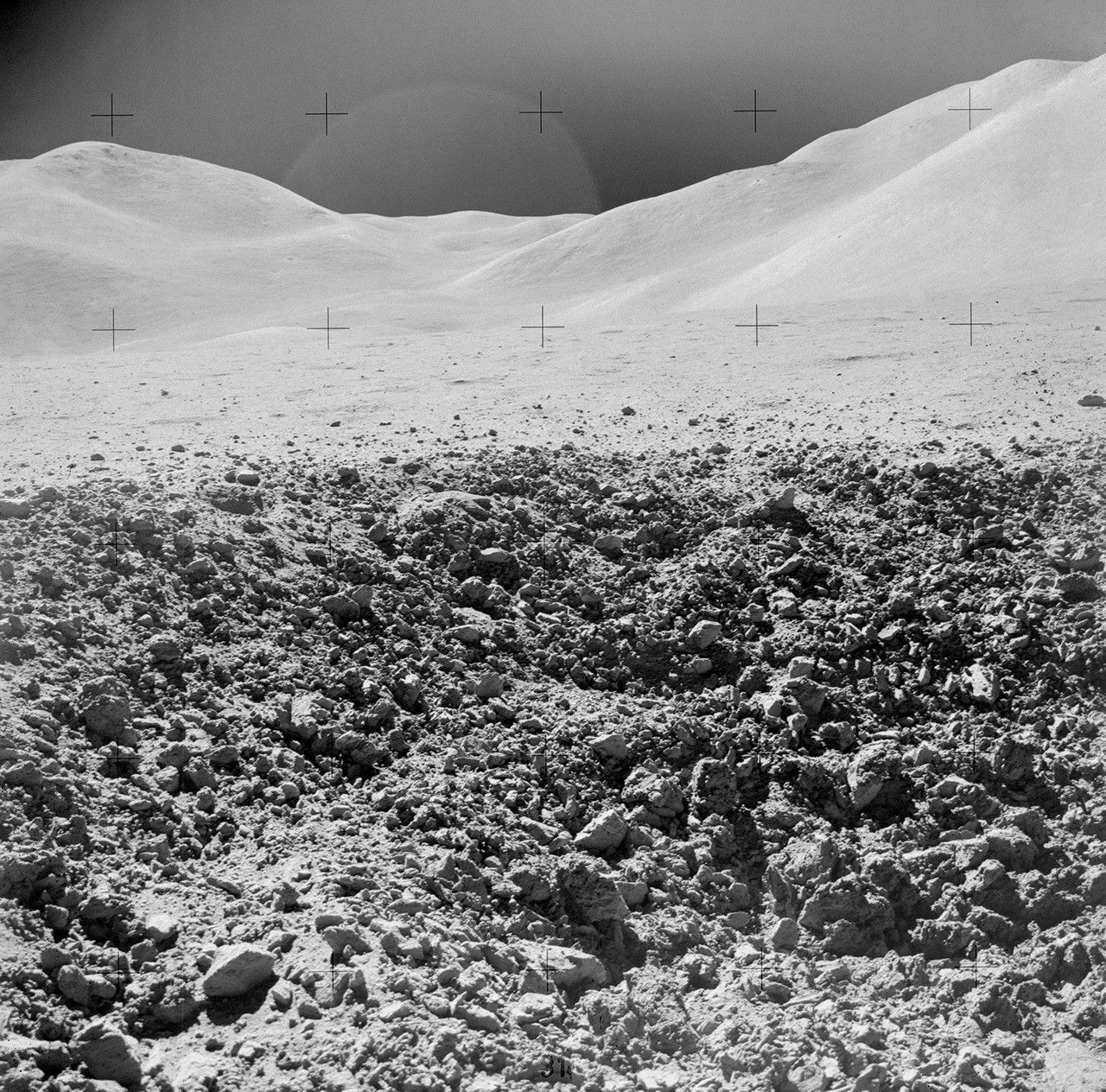
    A new NASA study of its Apollo lunar soils clarifies the Moon’s record of meteorite impacts and timing of water delivery. These findings place upper bounds on how much water meteorites could have supplied later in Earth’s history.

    Research has previously shown that meteorites may have been a significant source of Earth’s water as they bombarded our planet early in the solar system’s development. In a paper published Tuesday in the Proceedings to the National Academy of Sciences, researchers led by Tony Gargano, a postdoctoral fellow at NASA’s Johnson Space Center and the Lunar and Planetary Institute (LPI), both in Houston, used a novel method for analyzing the dusty debris that covers the Moon’s surface called regolith. They learned that even under generous assumptions, meteorite delivery since about four billion years ago could only have supplied a small fraction of Earth’s water.

    The Moon serves as an ancient archive of the impact history the Earth-Moon system has experienced over billions of years. Where Earth’s dynamic crust and weather erase such records, lunar samples preserve them. The records don’t come without challenge, though. Traditional methods of studying regolith have relied on analyzing metal-loving elements. These elements can get muddied by repeated impacts on the Moon, making it harder to untangle and reconstruct what the original meteoroids contained.

    Enter triple oxygen isotopes, high precision “fingerprints” that take advantage of the fact that oxygen, the dominant element by mass in rocks, is unaffected by impact or other external forces. The isotopes offer a clearer understanding of the composition of meteorites that impacted the Earth-Moon system. The oxygen-isotope measurements revealed that at least ~1% by mass of the regolith contained material from carbon-rich meteorites that were partially vaporized when they hit the Moon. Using the known properties of such meteorites allowed the team to calculate the amount of water that would have been carried within.   

    “The lunar regolith is one of the rare places we can still interpret a time-integrated record of what was hitting Earth’s neighborhood for billions of years,” said Gargano. “The oxygen-isotope fingerprint lets us pull an impactor signal out of a mixture that’s been melted, vaporized, and reworked countless times.”

    The findings have implications for our understanding of water sources on Earth and the Moon. When scaled up by roughly 20 times to account for the substantially higher rate of impacts on Earth, the cumulative water shown in the model made up only a small percent of the water in Earth’s oceans. That makes it difficult to reconcile the hypothesis that late delivery of water-rich meteorites was the dominant source of Earth’s water.

    “Our results don’t say meteorites delivered no water,” added co-author Justin Simon, a planetary scientist at NASA Johnson’s Astromaterials Research and Exploration Science Division. “They say the Moon’s long-term record makes it very hard for late meteorite delivery to be the dominant source of Earth’s oceans.”

    For the Moon, the implied delivery since about 4 billion years ago is tiny on an Earth-ocean scale but is not insignificant for the Moon. The Moon’s accessible water inventory is concentrated in small, permanently shadowed regions at the North and South Poles. These are some of the coldest spots in the solar system and introduce unique opportunities for scientific discovery and potential resources for lunar exploration when NASA lands astronauts on the Moon through Artemis III and beyond.

    The samples analyzed for this study came from parts of the Moon near the equator on the side of the Moon facing Earth, where all six Apollo missions landed. The rocks and dust collected more than 50 years ago continue to reveal new insights but are constrained to a small portion of the Moon. Samples delivered through Artemis will open the door for a new generation of discoveries for decades to come.

    “I’m part of the next generation of Apollo scientists —people who didn’t fly the missions, but who were trained on the samples and the questions Apollo made possible,” said Gargano. “The value of the Moon is that it gives us ground truth: real, physical material we can measure in the lab and use to anchor what we infer from orbital data and telescopes. I can’t wait to see what the Artemis samples have to teach us and the next generation about our place in the solar system.”

    For more information on NASA’s Astromaterials Research and Exploration Science Division, visit:

    https://science.nasa.gov/astromaterials

    Karen Fox / Molly Wasser
    Headquarters, Washington
    240-285-5155 / 240-419-1732
    karen.c.fox@nasa.gov / molly.l.wasser@nasa.gov   

    Victoria Segovia
    NASA’s Johnson Space Center
    281-483-5111
    victoria.segovia@nasa.gov


    Source link

    Just In
    Share. Facebook Twitter LinkedIn Email
    Previous ArticleUpdates as incident near beauty spot sparks large emergency response
    Next Article M6 southbound between J6 and J5 | Southbound | Congestion
    bibhuti
    • Website

    Keep Reading

    Is your startup’s check engine light on? Google Cloud’s VP explains what to do

    A startup called Germ becomes the first private messenger that launches directly from Bluesky’s app

    M6 northbound within J8 | Northbound | Congestion

    SeatGeek and Spotify team up to offer concert ticket sales inside the music platform

    Fallen trees and crash as heavy rain hits Sussex

    Amazon halts Blue Jay robotics project after less than six months

    Add A Comment
    Leave A Reply Cancel Reply

    Editors Picks

    89th Utkala Dibasa Celebration Brings Odisha’s Vibrant Culture to London

    April 8, 2024

    US and EU pledge to foster connections to enhance research on AI safety and risk.

    April 5, 2024

    Holi Celebrations Across Various Locations in Kent Attract a Diverse Range of Community Participation

    March 25, 2024

    Plans for new Bromley tower blocks up to 14-storeys tall refused

    December 4, 2023
    Latest Posts

    Subscribe to News

    Get the latest sports news from NewsSite about world, sports and politics.

    Advertisement

    Recent Posts

    • How Did the Rapper Die? – Hollywood Life
    • Is your startup’s check engine light on? Google Cloud’s VP explains what to do
    • Abu Dhabi Funds Top $1 Billion in Blackrock’s Bitcoin ETF
    • Updates on Missing Blackbird Mountain Skiers – Hollywood Life
    • A startup called Germ becomes the first private messenger that launches directly from Bluesky’s app

    Recent Comments

    1. Register on Anycubic users say their 3D printers were hacked to warn of a security flaw
    2. Pembuatan Akun Binance on Braiins Becomes First Mining Pool To Introduce Lightning Payouts
    3. tadalafil tablets sale on The market is forcing cloud vendors to relax data egress fees
    4. cerebrozen reviews on Kent director of cricket Simon Cook adapting to his new role during the close season
    5. Glycogen Review on The little-known town just 5 miles from Kent border with stunning beaches and only 600 residents
    The News Times Logo
    Facebook X (Twitter) Pinterest Vimeo WhatsApp TikTok Instagram

    News

    • UK News
    • US Politics
    • EU Politics
    • Business
    • Opinions
    • Connections
    • Science

    Company

    • Information
    • Advertising
    • Classified Ads
    • Contact Info
    • Do Not Sell Data
    • GDPR Policy
    • Media Kits

    Services

    • Subscriptions
    • Customer Support
    • Bulk Packages
    • Newsletters
    • Sponsored News
    • Work With Us

    Subscribe to Updates

    Get the latest creative news from FooBar about art, design and business.

    © 2026 The News Times. Designed by The News Times.
    • Privacy Policy
    • Terms
    • Accessibility

    Type above and press Enter to search. Press Esc to cancel.

    Manage Cookie Consent
    To provide the best experiences, we use technologies like cookies to store and/or access device information. Consenting to these technologies will allow us to process data such as browsing behavior or unique IDs on this site. Not consenting or withdrawing consent, may adversely affect certain features and functions.
    Functional Always active
    The technical storage or access is strictly necessary for the legitimate purpose of enabling the use of a specific service explicitly requested by the subscriber or user, or for the sole purpose of carrying out the transmission of a communication over an electronic communications network.
    Preferences
    The technical storage or access is necessary for the legitimate purpose of storing preferences that are not requested by the subscriber or user.
    Statistics
    The technical storage or access that is used exclusively for statistical purposes. The technical storage or access that is used exclusively for anonymous statistical purposes. Without a subpoena, voluntary compliance on the part of your Internet Service Provider, or additional records from a third party, information stored or retrieved for this purpose alone cannot usually be used to identify you.
    Marketing
    The technical storage or access is required to create user profiles to send advertising, or to track the user on a website or across several websites for similar marketing purposes.
    • Manage options
    • Manage services
    • Manage {vendor_count} vendors
    • Read more about these purposes
    View preferences
    • {title}
    • {title}
    • {title}