




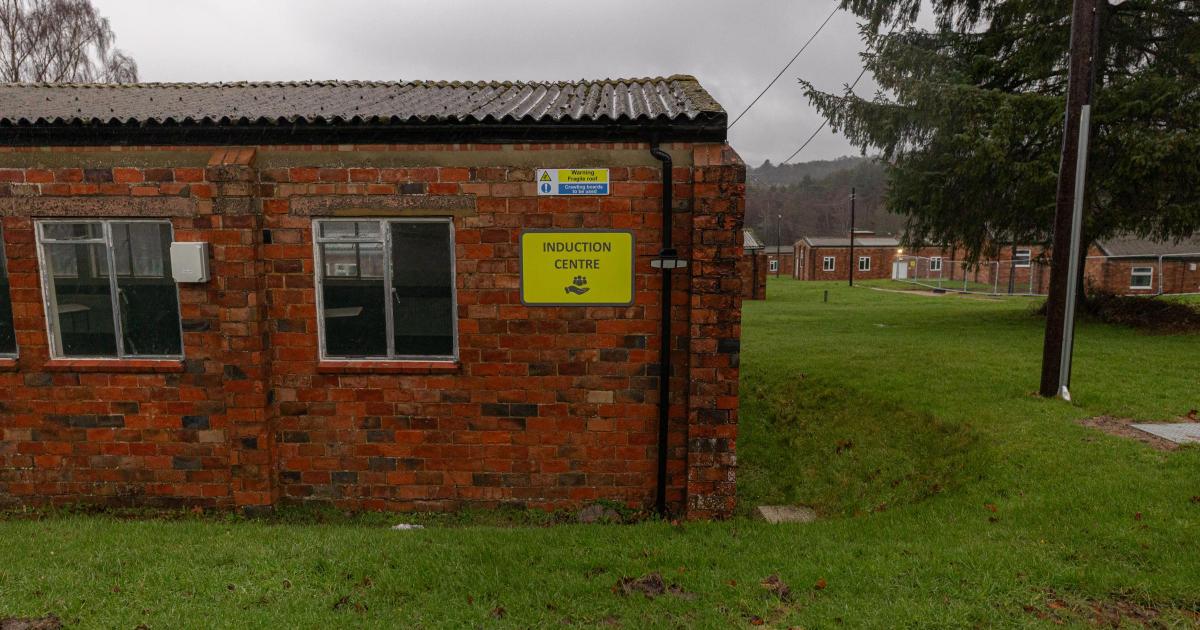
The Home Office has that 27 asylum seekers arrived at the site today (January 22), with more than 500 planned to be housed there.
Since the plans were announced, residents, local councils and MPs have had strong opposition.
A legal challenge is still being considered, but what does that mean? Here is all you need to know. You can follow our live coverage on the site here.
Is legal action happening over the Crowborough migrant camp?
Wealden District Council said today that it was informed that a “small group of asylum seekers were moved into Crowborough Training Camp last night”.
Despite this, the council confirmed it continues to seek legal advice on the matter, and it is not the only group looking at this.
Chair of the Crowborough Shield campaign, Kim Bailey, said the group is hoping to get an injunction following the decision to house migrants at the camp.
In a statement, she said: “We will be considering with our legal team the possibility of obtaining an injunction to prevent occupation (or further occupation) of the site and, in any event, will be continuing our judicial review which the Home Secretary has shamefully failed to properly participate in.
“The hopelessly inadequate, dishonest and biased Screening Direction that has had to be issued to support the Home Secretary’s decision, clearly supports our case that this entire scheme is unlawful.
“We intend to continue to pursue the Home Secretary to judgment.”
Yesterday, MP for Sussex Weald, Nusrat Ghani, also wrote to the Home Office and Wealden District Council about the migrant camp plans.
She said: “My letter to the Home Office calls on them to provide us with an urgent update on their plans for the Crowborough Training Camp.
“My letter to Wealden District Council, yet again, is calling on them as the lead partner to bring forward legal action to prevent and delay the Home Office moving asylum seekers into the site.
“I will not stop fighting this.”
Would legal action over the Crowborough migrant camp be successful?
Legal challenges against UK asylum accommodation are frequent, often initiated by local councils or community groups.
Deciding on whether or not it would be successful can be done by looking at similar examples across the country.
In Essex, the Wethersfield Asylum Centre on a former airfield is operated by Clearsprings Ready Homes on behalf of the Home Office.

Having been used as a migrant camp since 2023, the local council, Braintree District Council, has frequently fought against it with legal challenges.
Braintree District Council argued against its use due to reasons such as its isolated location, strain on local services and lack of planning permission.
However, the injunction was rejected by the High Court, and the Court of Appeal dismissed the council’s subsequent appeal.
Similarly, in Kent, while not the primary legal challengers, Folkestone & Hythe District Council threatened legal action against the Home Office over Napier Barracks being used as an asylum centre.
The council argued against unilateral planning permission, highlighting local concerns about planning rules.
Recommended reading:
During its time being open, six asylum seekers sued the Home Office over inadequate, unsafe conditions in the military barracks used for housing.
It led to a 2021 High Court ruling that found the accommodation unlawful and a breach of human rights, citing overcrowding, poor sanitation, and risk of COVID-19 outbreaks.
The site eventually closed in December 2025, partly due to widespread pressure from opponents of the site.
Have you been following our coverage on the asylum centre in Crowborough? Let us know.
Source link
[Featured]
[Just In]
