











TikTok, owned by the Chinese company ByteDance, has been at the center of controversy in the U.S. for years now due to concerns about user data potentially being accessed by the Chinese government.
On Thursday, January 22, 2026, TikTok announced that the TikTok USDS Joint Venture LLC had officially been established to comply with President Trump’s executive order that approved the sale of TikTok’s U.S. operations to an American investor group. Now, ByteDance will own less than 20% of the new entity, with the rest of it falling into non-Chinese ownership.
Over the years, U.S. users have often found themselves caught in the middle of this tension, facing uncertainty about how their access to the app would change — for creators who use TikTok to make a living, the stakes were even higher. Last year, the app experienced a temporary outage in the U.S. that left millions of users in suspense before it was quickly restored. TikTok returned to the App Store and Google Play Store on February 2, 2025.
A number of investors competed to purchase the app, and after President Trump extended the TikTok ban deadline for the fourth time, the battle finally ceased. In December 2025, TikTok officially signed a deal to divest a portion of its U.S. entity to a group of American investors.
Earlier in 2025, President Trump had announced that President Xi Jinping of China had given his approval of a TikTok deal, which would allow a consortium of U.S. investors to control the platform. ByteDance stated publicly that it would ensure the platform remains available to American users.
Who owns TikTok in the U.S.?

ByteDance will retain nearly a 20% stake in the company, while non-Chinese investors will hold the remaining 80% of ownership of the TikTok USDS Joint Venture.
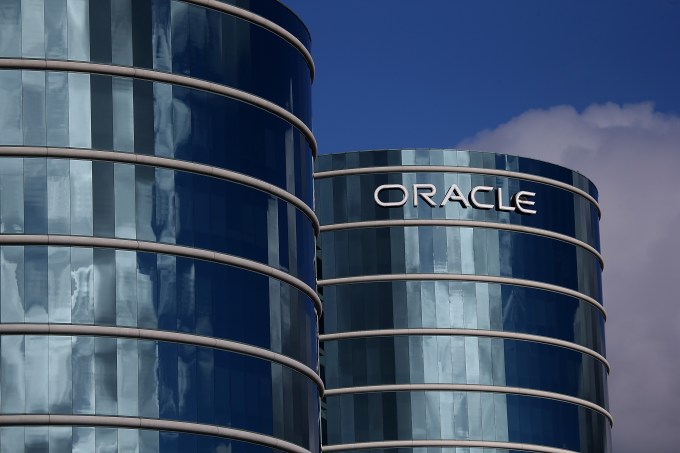
The managing investor group consists of Oracle, private equity firm Silver Lake, and investment firm MGX. These three investors will each hold 15% of the U.S. operation, or 45% collectively.
Techcrunch event
San Francisco
|
October 13-15, 2026
Other investors, which include existing ByteDance investors, make up another 35% of the venture’s ownership. This includes the Dell Family Office (Michael Dell’s investment firm), Susquehanna affiliate Vastmere, Alpha Wave Partners, and several more, which are listed in TikTok’s press release.
Reports estimate that TikTok U.S. is valued at approximately $14 billion — a figure also mentioned by Vice President JD Vance.
The newly formed “TikTok USDS Joint Venture LLC” will oversee the app’s operations, including data protection, algorithm security, content moderation, and software assurance.
Oracle will serve as the trusted security partner, responsible for auditing and ensuring compliance with National Security Terms, according to a memo. The company already provides cloud services for TikTok and manages user data in the U.S. Notably, Oracle previously made a bid for TikTok back in 2020.
A White House official previously said Oracle would replicate and secure a new U.S. version of the algorithm, and the U.S.-based TikTok owners could lease the algorithm from ByteDance, which Oracle will then retrain.
ByteDance will not have access to information about TikTok’s U.S. users or any influence over the U.S. algorithm.
How will TikTok change for U.S. users?
Since the deal was only just finalized, it’s not clear exactly how the 200 million American TikTok users will be impacted.
While earlier reports suggested that U.S. users might need to transition to a new platform, more recent reports have denied this claim, assuring users that they will not need to download a new app.
It’s also unclear how users’ algorithmic feeds will be impacted at this time.
How did we get here?

To fully understand this high-stakes drama, we’ll first revisit the timeline of TikTok’s tumultuous relationship with the U.S. government, which resulted in various legal battles and negotiations.
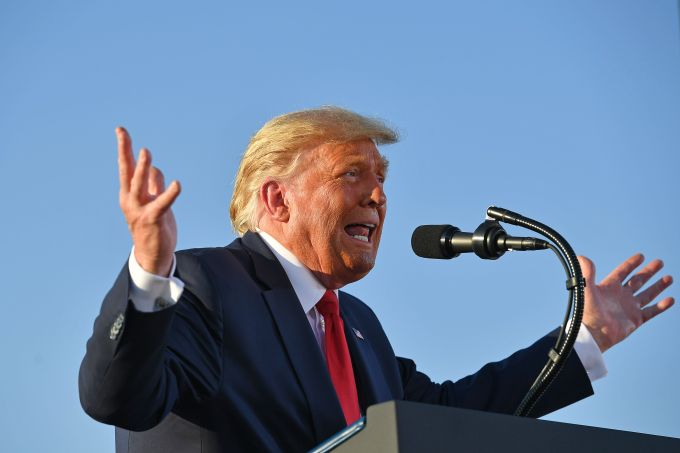
The drama first began in August 2020, when Trump signed an executive order to ban transactions with parent company ByteDance.
A month later, Trump’s administration sought to force a sale of TikTok’s U.S. operations to a U.S.-based company. The leading contenders included Microsoft, Oracle, and Walmart. However, a U.S. judge temporarily blocked Trump’s executive order, allowing TikTok to continue operating while the legal battle unfolded.
Things began to progress even more following the transition to the Biden administration. After the Senate passed the bill against TikTok, President Joe Biden signed it.
In response, TikTok sued the U.S. government, challenging the constitutionality of the ban and arguing the app and its American users were having their First Amendment rights violated. The company has consistently denied that it poses a security threat, asserting that its data stored in the U.S. complies with all local laws.
Fast-forward to 2024: Trump had a change of heart since his first term and sought to achieve a 50-50 ownership arrangement between ByteDance and a U.S. company.
There were several contenders, including The People’s Bid for TikTok, a consortium organized by Project Liberty founder Frank McCourt. This group had the support of investment firm Guggenheim Securities and the law firm Kirkland & Ellis. Supporters included Reddit co-founder Alexis Ohanian, TV personality and investor Kevin O’Leary, inventor of the World Wide Web Tim Berners-Lee, and senior research scientist David Clark.

Another group, called the American Investor Consortium, was led by Employer.com founder Jesse Tinsley and includes Roblox co-founder David Baszucki, Anchorage Digital co-founder Nathan McCauley, and famous YouTuber MrBeast.
Others in the running included Amazon, AppLovin, Microsoft, Perplexity AI, Rumble, Walmart, Zoop, former Activision CEO Bobby Kotick, and former U.S. Treasury Secretary Steven Mnuchin.
The story has been updated after publication.