










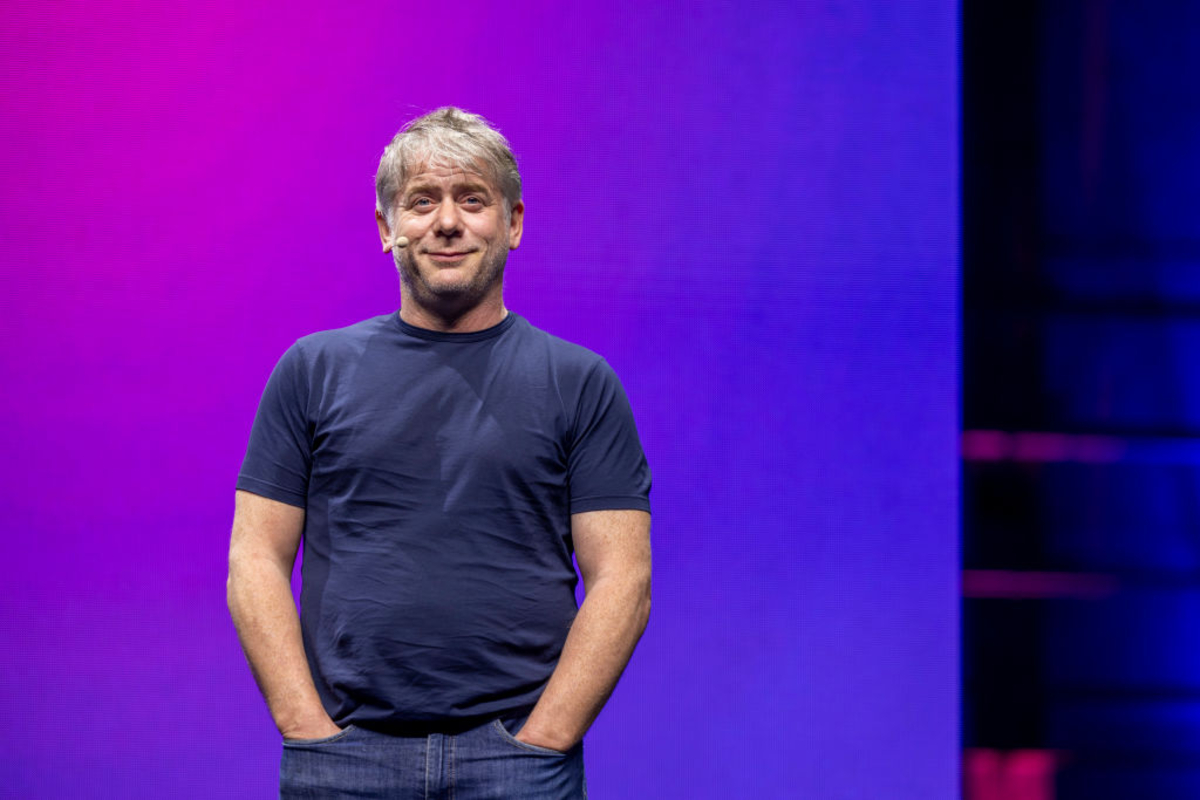


Octopus chief Greg Jackson has said choosing London as the destination for the blockbuster IPO of tech spin-off Kraken would be a “no brainer” if the exchange maintains its world-leading performance in 2025 and demonstrates it can lure fresh capital into the UK.
In the biggest signal yet that the firm may select London over New York for its eagerly anticipated £7bn IPO of Kraken, Jackson told City AM he would prefer to make his stock market debut in the Square Mile, and keep his “cutting-edge tech company” on British shores.
“I’d really love it to be in London,” he said in an interview, adding: “If we start to see the capital coming back into the market, if we start seeing the direction reverse, it becomes a no brainer.”
Greg Jackson calls for more hustle
Octopus Energy sold off a stake in Kraken to a fresh batch of investors in December, fetching an $8.65bn (£6.4bn) valuation, paving the way for a potential IPO in several years’ time. But an almighty tug-of-war has since broken out between London and New York over which bourse will host the bumper IPO.
Missing out on the tech spin-out’s debut would constitute a major blow to London’s status as a world-leading bourse, and exacerbate a years-long trend of stuttering performance and a paucity of fresh listings.
Last month, Greg Jackson, who founded Octopus in 2015 and built it into the UK’s largest energy provider, warned ministers and London Stock Exchange (LSE) top brass that Kraken’s leadership may have to choose New York unless the UK showed more “hustle” . He railed against the “Byzantine rules” that deter pension funds from backing UK equities and cash-starved scale-up businesses.
Kyle: Kraken is government’s ‘riskiest investment’
The entrepreneur issued his latest comments alongside his firm receiving a fresh £25m investment into Kraken from the British Business Bank (BBB), an arm’s-length body established to invest taxpayer cash into UK firms. The injection formed part of a wider overhaul of red tape and investment aimed at helping UK firms to scale up domestically without the need to look abroad for investor cash.
Speaking to City AM, business secretary Peter Kyle hailed the Kraken stake as evidence that ministers were “hustling”, branding it the “biggest and riskiest equity investment from the BBB” and promising similar multimillion-pound moves in the pipeline.
“This is a faster, bigger, bolder and riskier approach from government,” he said. “I am behind this. I am there to shoulder the risk for how these things unfold. We need to have more confidence in private investment… because we are the start-up founder of Europe.”
For several years, British founders have struggled to attract the cash needed to scale their business from start-up to IPO stage. Many have been forced to look abroad for investor capital or – in the case of tech darlings Oxford Ionics and Quantinuum – accept buyout offers from American rivals and dealmakers.
Neither of the lead investors for Kraken’s December fundraising round – Fidelity International and the Ontario Teachers’ Pension Plan Board – hails from the UK, sparking fears its new backers may encourage an overseas IPO.
But Greg Jackson said the BBB’s stake would give Britain “a seat at the table” to influence those discussions. “At the moment we’ve only got one British investor,” he added. “All the rest are global.”
Asked whether the investment was evidence of the “hustle” he previously called for, Jackson said: “It’s a great example of it. If you look at the fact we’ve seen this decline from 40 per cent of pension assets being deployed in the UK to four per cent, you only reverse that by changing rules. And you change rules by relentlessly identifying what should be done, and pushing it.”
The Octopus founder added that as well as “backroom” work on the rules, Britain needed to get better at harnessing “animal spirits”. The New York Stock Exchange heralded Kraken’s debut funding round by advertising the company on Time Square and issuing a congratulatory message across its trading floor.
Jackson urged the LSE to tell these stories “publicly and loudly”, and said London’s large fund raises and IPOs should also be plastered across Piccadilly Circus.
“The big thing is, of course, companies have got a huge responsibility to this themselves,” he added. “By stimulating these conversations, we have the opportunity to create the noise I grew up in the 1980s during that wave of that strike privatisation. And they were news events as much as [they] were financial events. Let’s start trying to recreate that.”


