




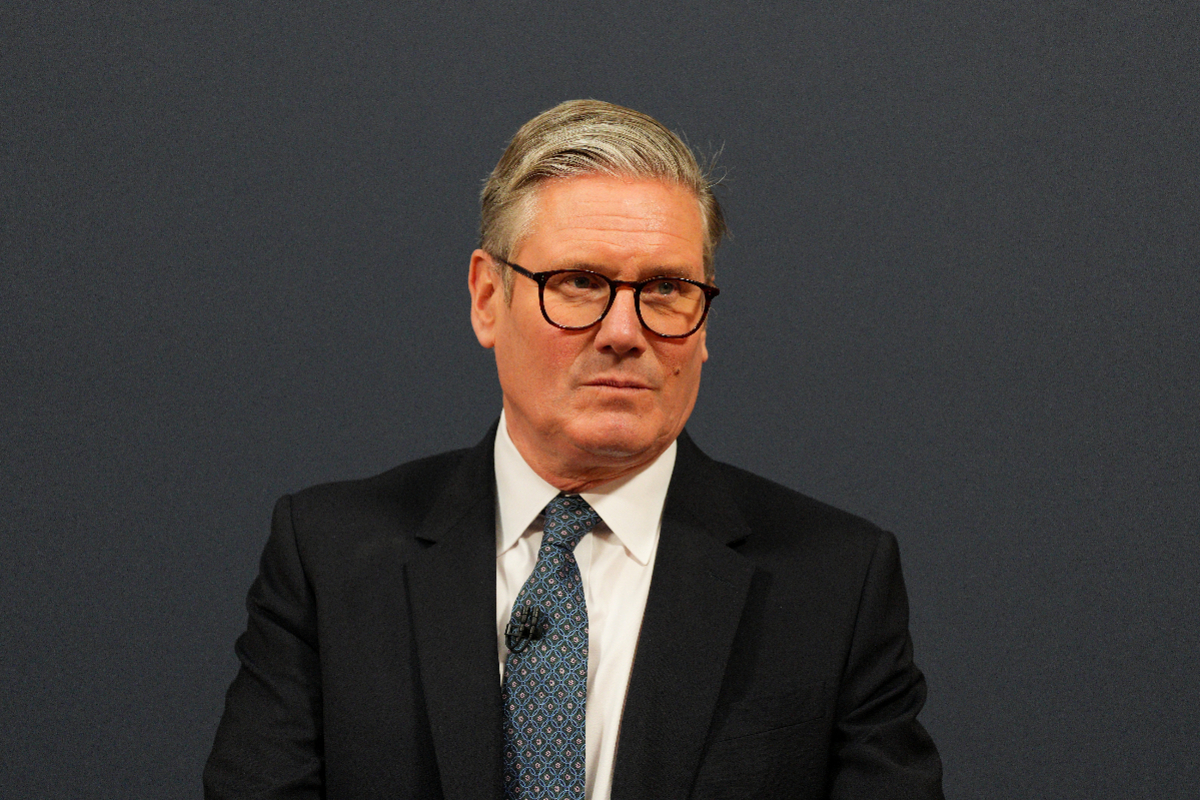

Keir Starmer has joined European leaders in condemning Donald Trump’s plan to impose sweeping tariffs on the UK and several Nato allies.
The prime minister has warned the move risks damaging transatlantic trade and collective security.
The US president said goods exported from the UK to the US would face a 10 per cent tariff from 1 February, rising 25 per cent from June, unless Washington secures a deal to acquire Greenland from Denmark.
The same measures apply to Denmark, France, Germany, the Netherlands, Norway, Sweden and Finland.
Starmer has dubbed the plan as “completely wrong”, and said the UK would raise the issue directly with the US administration.
“Our position on Greenland is very clear – it is part of the Kingdom of Denmark and its future is a matter for the Greenlanders and the Danes”, Starmer said.
“Applying tariffs on allies for pursuing collective security of Nato allies is completely wrong”.
Trump’s new tariff plan is set to cause chaos for companies and raise new inflationary risks in the US, with duties applied to “all or any goods” exported from affected countries.
Trade and security concerns
Trump justified the tariffs by claiming Greenland is vital to global security, arguing that China and Russia are seeking influence in the Arctic.
Writing on his own platform, Truth Social, he said the measures were necessary to protect “global peace and security”, and would remain in place until a deal was reached for the “complete and total purchase of Greenland”.
European leaders said they have reacied little or no warnings of the announcement.
Sweden’s own prime minister, Ulf Kristersson, said discussions were underway on a coordinated response, while French president Emmanuel Macron said Europe would not bow to “intimidation”.
European Commission president Ursula von der Leyen warned the tariffs would “undermine transatlantic relations and risk a dangerous downward spiral”.
She added that the EU stood “in full solidarity” with Denmark and Greenland.
Elsewhere, the UK confirmed earlier this week that it had sent a military officer to Greenland at Denmark’s request, stressing it was not a deployment but part of a reconnaissance group ahead of an Arctic training exercise.
Susannah Streeter, chief investment strategist at Wealth Club, said the move was “migraine inducing” for both politicians and companies, warning it risks derailing the UK’s tentative return to economic growth just as recent data had begun to show improvement.
“Just when there appeared to be a lull in tariff storm, president Trump has whipped up fresh economic chaos”, she said, adding that the uncertainty is likely to force firms to pass higher costs on to US consumers.
Streeter warned the tariffs could ultimately push up US inflation, increasing pressure on the Federal Reserve at a time when households are already struggling with rising living costs.
Economic impact on UK
Business groups have warned that the tariffs could hit British exporters hard, especially if they are added to existing US duties.
The British Chambers of Commerce (BCC) said the measures could have a greater impact than previous US tariff announcements.
William Bain, the BCC’s head of trade policy, said: “If these duties are stacked on top of existing tariffs, the impact on UK goods exports to the US would be significant.”
And opposition figures have also criticised the move.
Conservative leader Kemi Badenoch said the tariffs would be a “burden for businesses”, while Liberal Democrat leader Ed Davey accused Trump of “punishing” the UK.
Culture secretary Lisa Nandy said the government’s position on Greenland was “non-negotiable”, insisting its future must be decided by its people.
She described the tariff threat as “wrong and unproductive”.
Reform UK’s Richard Tice told Laura Kuenssberg this morning that the UK should tell Trump he had “got it wrong”, while arguing negotiations should be conducted privately.
The dispute comes amid rising tensions over Greenland, where protests have taken place against any US takeover.
European leaders have warned that the row risks weakening Nato unity at a time of heightened geopolitical instability.
