




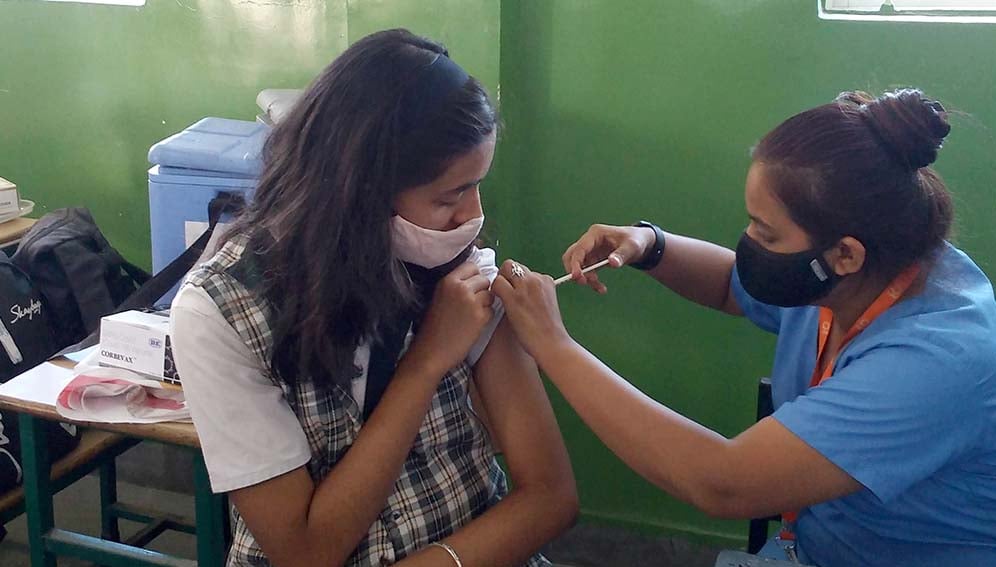
By: Papiya Bhattacharya
[BANGALORE, SciDev.Net] While infant deaths have dropped dramatically in India in recent decades, viral infection rates among children remain stubbornly high and must be tackled with vaccines, says Gagandeep Kang, a leading expert in enteric diseases.
Kang’s extensive work in this area includes supporting the development and introduction in India of indigenous rotavirus vaccines and building surveillance networks to stem this and other enteric viruses, which affect the gut and cause diarrhoeal disease.
In 2019, she became the first Indian woman in history to be elected a fellow of the Royal Society, London, and in 2024 she was awarded the John Dirks Canada Gairdner Global Health Award.
Now director for enterics, diagnostics, genomics and epidemiology at the Gates Foundation, Kang shares her insights with SciDev.Net on vaccines and pandemic preparedness in India, following a slew of outbreaks from influenza to the Nipah virus.
How has child health and infant mortality in India changed since the introduction of a vaccine against diarrhoea?
When I started medical college [in the 1980s] the infant mortality rate was 125 per thousand live births. In India more than one in ten children were dying in their first year of life. Looking back, that seems crazy. Today it has decreased to a quarter of the number. In Tamil Nadu, it is well under 20, and they want to push it to ten per thousand live births.
In the old days, death was the only measure of impact of any disease, now we need to move beyond that. We need to think about what puts people in hospital, keeps them sick; the time a child spends in hospital being ill for diseases such as diarrhoea that can be prevented by vaccines, water, sanitation and hygiene.
The rates at which children are infected with viruses have not changed too much. Bacteria can be handled with clean water and sanitation, but viruses are more resistant and find ways of infecting people all around the world and across social classes. We call rotaviruses ‘democratic’ because sooner or later they infect all children. Because water and sanitation alone do not help in prevention, we need vaccines to prevent them.

What was the biggest scientific challenge in developing and deploying the rotavirus vaccine?
No one had developed a vaccine in India from scratch and shown that it protected against the target disease. Measuring clinical efficacy and [conducting] Phase 3 studies had never been done in India before.
To deploy the vaccine in India, we had to convince the National Technical Advisory Group of Immunisation of the disease burden, that the vaccine worked, and was recommended by WHO, that it promoted equity and was affordable. Through a cost effectiveness analysis we showed that if children were not in hospital, India would actually save money by using the vaccine.
Misinformation around vaccines and science has grown globally. How can public trust be restored?
India was better information-wise during the pandemic than the rest of the world. [But] building trust in science has to happen at all times, not just during an emergency. As scientists, we have to learn how to communicate and build trust in the process of science.
Communication around health is also about the messenger […] we listen to people who have credibility. We need people to give evidence-based explanations of why something will work or not.
How do you see India’s preparedness for future pandemics today?
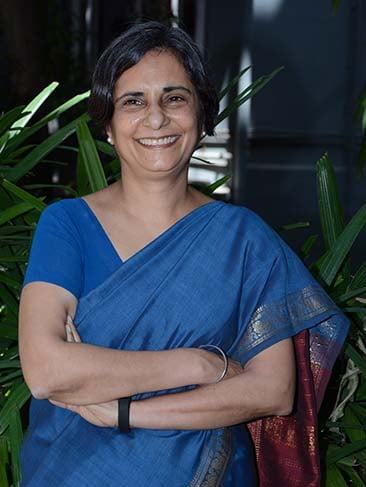
Gagandeep Kang, director for enterics, diagnostics, genomics and epidemiology at the Gates Foundation
When it comes to One Health, our surveillance systems have improved dramatically and expanded beyond humans to animals and birds. The threat of influenza is real. The government has established the National Institute for One Health in Nagpur. Some states are better prepared, such as in Kerala even a single case of Nipah virus can be picked up. We have better labs, testing for respiratory and other pathogens and work on pathogen genomics so when we investigate an outbreak, we can detect what is causing it.
During the pandemic, we developed vaccines indigenously almost in parallel with the West.
Our scientific companies are now more confident in their abilities. If the government had committed earlier to vaccine companies which had to make many at-risk investments, it would have helped in moving ahead even faster. Now the government knows about the capabilities of our scientific companies and is ready to invest.
Last year there was a surge in influenza, a Nipah virus outbreak in southern India, and avian flu elsewhere. Do you find these outbreaks concerning in terms of pandemic potential?
Flu can develop into a pandemic. The Nipah virus’s transmission is more limited, so it may not be able to infect at the same rate. In Ebola, quarantine and ring vaccination approaches have been shown to work to limit its spread. To control a virus, it is important to think of how viruses spread. Influenza is potentially dangerous because it is a respiratory virus.
If a flu virus becomes virulent it will take us a long time to develop a vaccine. They have caused pandemics in the past and will do so, again. This is concerning and we must look into getting a vaccine ready. India already is the pharmacy of the world and the biggest manufacturer of generics and vaccines. The situation could be leveraged to benefit public health.
This piece was produced by SciDev.Net’s Global desk. The interview was edited for brevity.
