




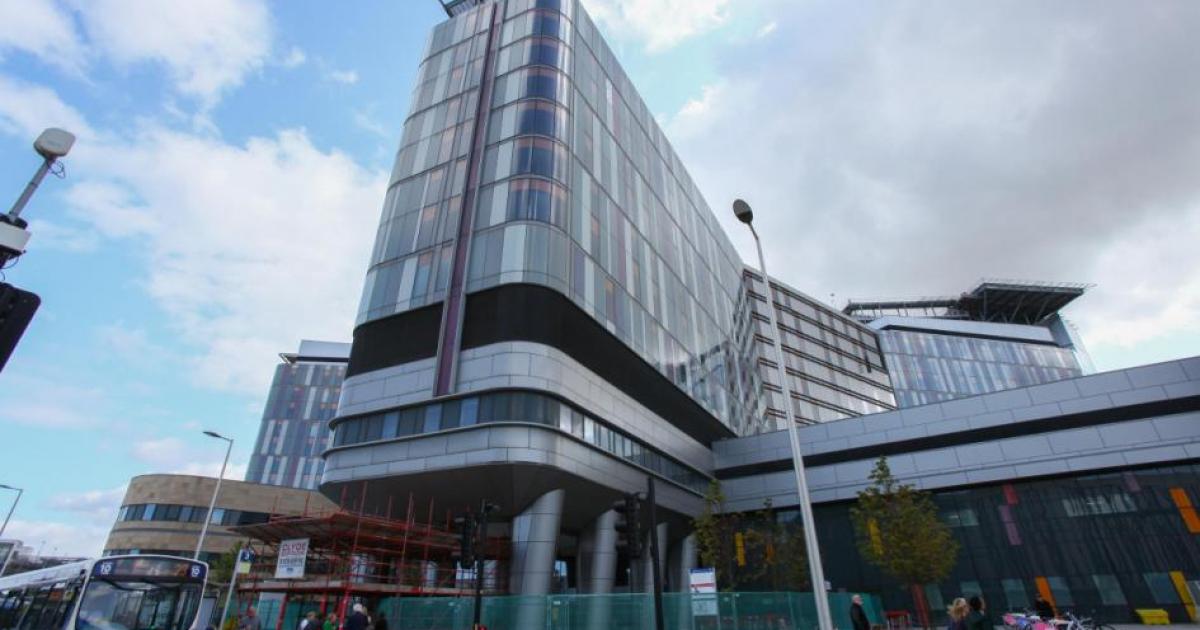
NHS Greater Glasgow and Clyde (NHSGGC) accepted in closing submissions to the Scottish Hospitals Inquiry that infections suffered by patients were more likely than not connected to the hospital environment, particularly its water supply.
The admission marks a significant shift from the board’s earlier position, in which it repeatedly rejected claims that bacteria in the water system contributed to infections that led to patient deaths.
According to the BBC, the health board said it was likely there was a “causal connection” between infections and “the hospital environment, in particular the water system”.
In a formal statement to the inquiry, NHSGGC said, as reported by the BBC: “NHSGGC accepts that, on the balance of probabilities, there is a causal connection between some infections suffered by patients and the hospital environment, in particular the water system.
“It is more likely than not that a material proportion of the additional environmentally relevant BSI [blood stream infections] in the paediatric haemato-oncology population between 2016 and 2018 had a connection to the state of the hospital water system.
“NHSGGC departs from its earlier submissions in this regard, having heard all expert evidence.”
The Scottish Hospitals Inquiry was established to investigate alleged failures in the planning, design and construction of the £842 million hospital campus after concerns emerged about unusual infections and the deaths of four patients.
Those deaths included Milly Main, a 10-year-old from Lanark who had been in remission from leukaemia when she contracted the rare bacteria Stenotrophomonas maltophilia. She died on August 31, 2017.

Milly’s family believe the infection originated from contaminated hospital water, which they say led to the infection of a line delivering medication into her body.
NHS Greater Glasgow and Clyde has since been named as a suspect in a corporate homicide investigation into Milly’s death and three others — two additional children and 73-year-old Gail Armstrong — which began in 2021.
Despite its latest admission, the health board also told the inquiry it remained the case that there was no proven, definitive link between infections and the water system, although it accepted the balance of probabilities now pointed to a connection.
A spokesperson for NHSGGC said the board was continuing to support the inquiry, while the Scottish Government declined to comment further.
A government spokesperson said, as reported by the BBC: “We established a statutory public inquiry so that families could get answers to their questions, and so that lessons can be learned for future hospital projects.
“As an independent core participant of the inquiry, the Scottish Government is committed to assisting the inquiry and therefore it would be inappropriate to comment any further at this time.”
The admission comes amid renewed scrutiny of infrastructure problems at the hospital. Almost half of planned surgeries at the Queen Elizabeth University Hospital were postponed last week after a burst pipe forced the temporary closure of operating theatres. Water leakage affected the building’s plant room and disrupted its power supply on January 9.
NHSGGC confirmed the incident had since been resolved, with 26 operations going ahead as planned once the issue was fixed. However, a further 25 procedures had to be postponed and rescheduled.
