



Close Menu
UK Daily: Tech, Science, Business & Lifestyle News UpdatesUK Daily: Tech, Science, Business & Lifestyle News Updates
    What's Hot

    OpenAI expands government footprint with AWS deal, report says

    March 18, 2026

    Meet Vurt, the mobile-first streaming platform for indie filmmakers embracing vertical video

    March 18, 2026

    Sustaining diplomacy amid competition in US-China relations | MIT News

    March 18, 2026
    Facebook X (Twitter) Instagram
    Trending
    • OpenAI expands government footprint with AWS deal, report says
    • Meet Vurt, the mobile-first streaming platform for indie filmmakers embracing vertical video
    • Sustaining diplomacy amid competition in US-China relations | MIT News
    • M25 clockwise between J27 and J28 | Clockwise | Accident
    • Top SaaS Startups in Germany
    • SEC’s Paul Atkins Floats Crypto ‘Safe Harbor’ Exemptions
    • Brighton beach rape accused ‘posed smiling for camera’
    • Their Marriage After Affair Rumors – Hollywood Life
    • London
    • Kent
    • Glasgow
    • Cardiff
    • Belfast
    Facebook X (Twitter) Instagram YouTube
    UK Daily: Tech, Science, Business & Lifestyle News UpdatesUK Daily: Tech, Science, Business & Lifestyle News Updates
    Subscribe
    Wednesday, March 18
    • Home
    • News
      1. Kent
      2. London
      3. Belfast
      4. Birmingham
      5. Cardiff
      6. Edinburgh
      7. Glasgow
      8. Liverpool
      9. Manchester
      10. Newcastle
      11. Nottingham
      12. Sheffield
      13. West Yorkshire
      Featured

      ‘Miniature’ mountain creature with ‘squeaker’-like call discovered as new species

      Science November 9, 2023
      Recent

      OpenAI expands government footprint with AWS deal, report says

      March 18, 2026

      Meet Vurt, the mobile-first streaming platform for indie filmmakers embracing vertical video

      March 18, 2026

      Sustaining diplomacy amid competition in US-China relations | MIT News

      March 18, 2026
    • Lifestyle
      1. Celebrity
      2. Fashion
      3. Food
      4. Leisure
      5. Social Good
      6. Trending
      7. Wellness
      8. Event
      Featured

      Their Marriage After Affair Rumors – Hollywood Life

      Celebrity March 18, 2026
      Recent

      Their Marriage After Affair Rumors – Hollywood Life

      March 18, 2026

      What We Know – Hollywood Life

      March 17, 2026

      Get to Know Her Kids – Hollywood Life

      March 17, 2026
    • Science
    • Business
    • Sports

      League Two match report from Priestfield Stadium

      March 17, 2026

      Live updates from Gillingham v Swindon Town in League 2 and Maidenhead United v Ebbsfleet United in National League South

      March 17, 2026

      Kent head coach Adam Hollioake says county brought in ‘faith healer’ to combat long-standing injury problems

      March 17, 2026

      Gillingham manager Gareth Ainsworth looks ahead to Tuesday night’s League Two match against Swindon Town at Priestfield Stadium

      March 17, 2026

      Vote for your star man in KentOnline’s team of the week

      March 16, 2026
    • Politics
    • Tech
    • Property
    • Press Release
    UK Daily: Tech, Science, Business & Lifestyle News UpdatesUK Daily: Tech, Science, Business & Lifestyle News Updates
    Home » This AI spots dangerous blood cells doctors often miss

    This AI spots dangerous blood cells doctors often miss

    bibhutiBy bibhutiJanuary 13, 2026 Science No Comments6 Mins Read
    Facebook Twitter LinkedIn WhatsApp Telegram
    Share
    Facebook Twitter LinkedIn Telegram WhatsApp


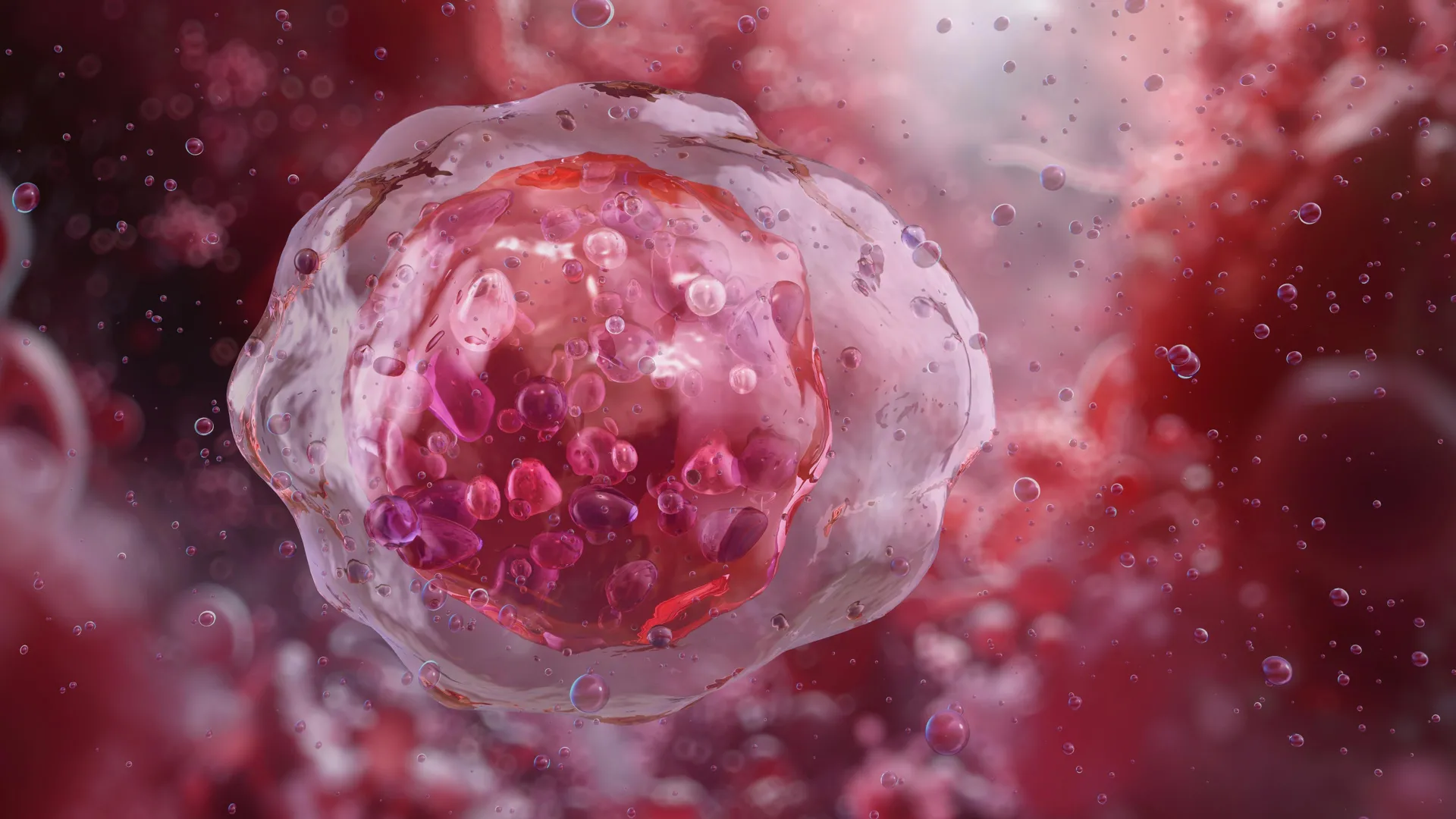
    A new artificial intelligence system that examines the shape and structure of blood cells could significantly improve how diseases such as leukemia are diagnosed. Researchers say the tool can identify abnormal cells with greater accuracy and consistency than human specialists, potentially reducing missed or uncertain diagnoses.

    The system, known as CytoDiffusion, relies on generative AI, the same type of technology used in image generators such as DALL-E, to analyze blood cell appearance in detail. Rather than focusing only on obvious patterns, it studies subtle variations in how cells look under a microscope.

    Moving Beyond Pattern Recognition

    Many existing medical AI tools are trained to sort images into predefined categories. In contrast, the team behind CytoDiffusion demonstrated that their approach can recognize the full range of normal blood cell appearances and reliably flag rare or unusual cells that may signal disease. The work was led by researchers from the University of Cambridge, University College London, and Queen Mary University of London, and the findings were published in Nature Machine Intelligence.

    Identifying small differences in blood cell size, shape, and structure is central to diagnosing many blood disorders. However, learning to do this well can take years of experience, and even highly trained doctors may disagree when reviewing complex cases.

    “We’ve all got many different types of blood cells that have different properties and different roles within our body,” said Simon Deltadahl from Cambridge’s Department of Applied Mathematics and Theoretical Physics, the study’s first author. “White blood cells specialize in fighting infection, for example. But knowing what an unusual or diseased blood cell looks like under a microscope is an important part of diagnosing many diseases.”

    Handling the Scale of Blood Analysis

    A standard blood smear can contain thousands of individual cells, far more than a person can realistically examine one by one. “Humans can’t look at all the cells in a smear — it’s just not possible,” Deltadahl said. “Our model can automate that process, triage the routine cases, and highlight anything unusual for human review.”

    This challenge is familiar to clinicians. “The clinical challenge I faced as a junior hematology doctor was that after a day of work, I would face a lot of blood films to analyze,” said co-senior author Dr. Suthesh Sivapalaratnam from Queen Mary University of London. “As I was analyzing them in the late hours, I became convinced AI would do a better job than me.”

    Training on an Unprecedented Dataset

    To build CytoDiffusion, the researchers trained it on more than half a million blood smear images collected at Addenbrooke’s Hospital in Cambridge. The dataset, described as the largest of its kind, includes common blood cell types, rare examples, and features that often confuse automated systems.

    Instead of simply learning how to separate cells into fixed categories, the AI models the entire range of how blood cells can appear. This makes it more resilient to differences between hospitals, microscopes, and staining techniques, while also improving its ability to detect rare or abnormal cells.

    Detecting Leukemia With Greater Confidence

    When tested, CytoDiffusion identified abnormal cells associated with leukemia with much higher sensitivity than existing systems. It also performed as well as or better than current leading models, even when trained with far fewer examples, and was able to quantify how confident it was in its own predictions.

    “When we tested its accuracy, the system was slightly better than humans,” said Deltadahl. “But where it really stood out was in knowing when it was uncertain. Our model would never say it was certain and then be wrong, but that is something that humans sometimes do.”

    Co-senior author Professor Michael Roberts from Cambridge’s Department of Applied Mathematics and Theoretical Physics said the system was evaluated against real-world challenges faced by medical AI. “We evaluated our method against many of the challenges seen in real-world AI, such as never-before-seen images, images captured by different machines and the degree of uncertainty in the labels,” he said. “This framework gives a multi-faceted view of model performance which we believe will be beneficial to researchers.”

    When AI Images Fool Human Experts

    The team also found that CytoDiffusion can generate synthetic images of blood cells that look indistinguishable from real ones. In a ‘Turing test’ involving ten experienced hematologists, the specialists were no better than random chance at telling real images apart from those created by the AI.

    “That really surprised me,” Deltadahl said. “These are people who stare at blood cells all day, and even they couldn’t tell.”

    Opening Data to the Global Research Community

    As part of the project, the researchers are releasing what they describe as the world’s largest publicly available collection of peripheral blood smear images, totaling more than half a million samples.

    “By making this resource open, we hope to empower researchers worldwide to build and test new AI models, democratize access to high-quality medical data, and ultimately contribute to better patient care,” Deltadahl said.

    Supporting, Not Replacing, Clinicians

    Despite the strong results, the researchers emphasize that CytoDiffusion is not intended to replace trained doctors. Instead, it is designed to assist clinicians by quickly flagging concerning cases and automatically processing routine samples.

    “The true value of healthcare AI lies not in approximating human expertise at lower cost, but in enabling greater diagnostic, prognostic, and prescriptive power than either experts or simple statistical models can achieve,” said co-senior author Professor Parashkev Nachev from UCL. “Our work suggests that generative AI will be central to this mission, transforming not only the fidelity of clinical support systems but their insight into the limits of their own knowledge. This ‘metacognitive’ awareness — knowing what one does not know — is critical to clinical decision-making, and here we show machines may be better at it than we are.”

    The team notes that additional research is needed to increase the system’s speed and to validate its performance across more diverse patient populations to ensure accuracy and fairness.

    The research received support from the Trinity Challenge, Wellcome, the British Heart Foundation, Cambridge University Hospitals NHS Trust, Barts Health NHS Trust, the NIHR Cambridge Biomedical Research Centre, NIHR UCLH Biomedical Research Centre, and NHS Blood and Transplant. The work was carried out by the Imaging working group within the BloodCounts! consortium, which aims to improve blood diagnostics worldwide using AI. Simon Deltadahl is a Member of Lucy Cavendish College, Cambridge.


    Source link

    Just In
    Share. Facebook Twitter LinkedIn Email
    Previous ArticleM5 J14 northbound exit | Northbound | Congestion
    Next Article Labour’s Workers’ Rights Reforms: Changes for UK Businesses
    bibhuti
    • Website

    Keep Reading

    OpenAI expands government footprint with AWS deal, report says

    Meet Vurt, the mobile-first streaming platform for indie filmmakers embracing vertical video

    Sustaining diplomacy amid competition in US-China relations | MIT News

    M25 clockwise between J27 and J28 | Clockwise | Accident

    Brighton beach rape accused ‘posed smiling for camera’

    Dengue observatory eyes global disease surveillance

    Add A Comment
    Leave A Reply Cancel Reply

    Editors Picks

    89th Utkala Dibasa Celebration Brings Odisha’s Vibrant Culture to London

    April 8, 2024

    US and EU pledge to foster connections to enhance research on AI safety and risk.

    April 5, 2024

    Holi Celebrations Across Various Locations in Kent Attract a Diverse Range of Community Participation

    March 25, 2024

    Plans for new Bromley tower blocks up to 14-storeys tall refused

    December 4, 2023
    Latest Posts

    Subscribe to News

    Get the latest sports news from NewsSite about world, sports and politics.

    Advertisement

    Recent Posts

    • OpenAI expands government footprint with AWS deal, report says
    • Meet Vurt, the mobile-first streaming platform for indie filmmakers embracing vertical video
    • Sustaining diplomacy amid competition in US-China relations | MIT News
    • M25 clockwise between J27 and J28 | Clockwise | Accident
    • Top SaaS Startups in Germany

    Recent Comments

    1. Register on Anycubic users say their 3D printers were hacked to warn of a security flaw
    2. Pembuatan Akun Binance on Braiins Becomes First Mining Pool To Introduce Lightning Payouts
    3. tadalafil tablets sale on The market is forcing cloud vendors to relax data egress fees
    4. cerebrozen reviews on Kent director of cricket Simon Cook adapting to his new role during the close season
    5. Glycogen Review on The little-known town just 5 miles from Kent border with stunning beaches and only 600 residents
    The News Times Logo
    Facebook X (Twitter) Pinterest Vimeo WhatsApp TikTok Instagram

    News

    • UK News
    • US Politics
    • EU Politics
    • Business
    • Opinions
    • Connections
    • Science

    Company

    • Information
    • Advertising
    • Classified Ads
    • Contact Info
    • Do Not Sell Data
    • GDPR Policy
    • Media Kits

    Services

    • Subscriptions
    • Customer Support
    • Bulk Packages
    • Newsletters
    • Sponsored News
    • Work With Us

    Subscribe to Updates

    Get the latest creative news from FooBar about art, design and business.

    © 2026 The News Times. Designed by The News Times.
    • Privacy Policy
    • Terms
    • Accessibility

    Type above and press Enter to search. Press Esc to cancel.

    Manage Cookie Consent
    To provide the best experiences, we use technologies like cookies to store and/or access device information. Consenting to these technologies will allow us to process data such as browsing behavior or unique IDs on this site. Not consenting or withdrawing consent, may adversely affect certain features and functions.
    Functional Always active
    The technical storage or access is strictly necessary for the legitimate purpose of enabling the use of a specific service explicitly requested by the subscriber or user, or for the sole purpose of carrying out the transmission of a communication over an electronic communications network.
    Preferences
    The technical storage or access is necessary for the legitimate purpose of storing preferences that are not requested by the subscriber or user.
    Statistics
    The technical storage or access that is used exclusively for statistical purposes. The technical storage or access that is used exclusively for anonymous statistical purposes. Without a subpoena, voluntary compliance on the part of your Internet Service Provider, or additional records from a third party, information stored or retrieved for this purpose alone cannot usually be used to identify you.
    Marketing
    The technical storage or access is required to create user profiles to send advertising, or to track the user on a website or across several websites for similar marketing purposes.
    • Manage options
    • Manage services
    • Manage {vendor_count} vendors
    • Read more about these purposes
    View preferences
    • {title}
    • {title}
    • {title}