




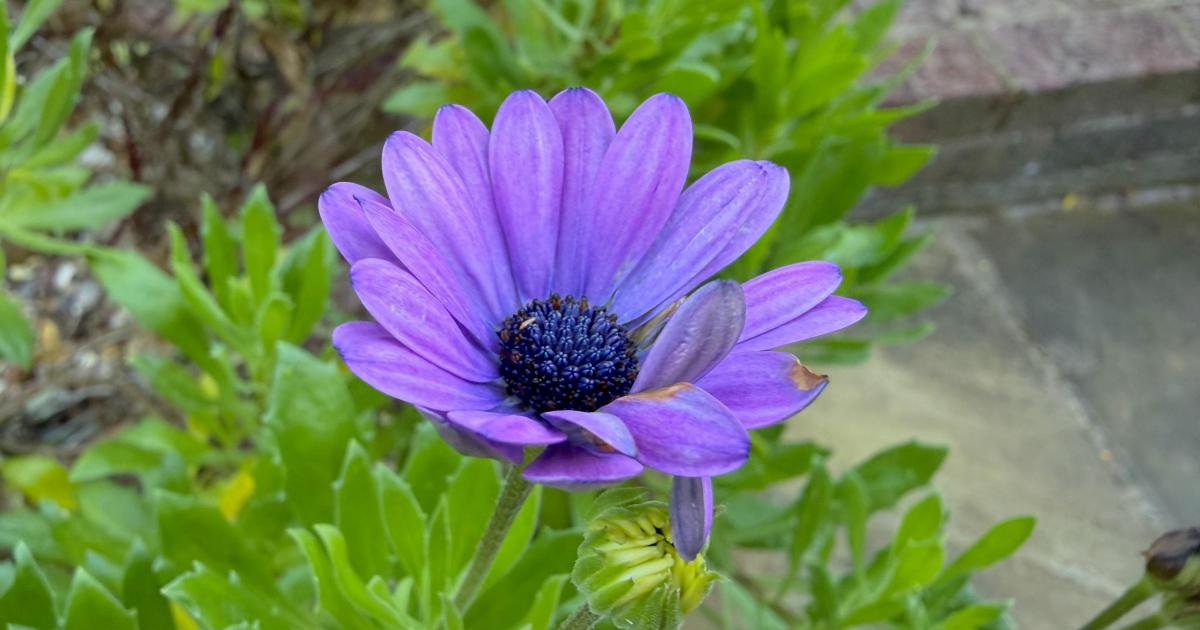

That said, looking out into the garden on some of the sunnier days we have seen off late, you could be mistaken for thinking it’s not really winter. There is still lots of pretty greenery about and with a clear blue sky some days look quite summery. In addition, I’ve still got quite a few osteospermum flowering away around the plot like the pretty blue/mauve one pictured.
I’ve got a lovely dogwood that really comes into its own at this time of the year, especially as it is a beautiful red. This vigorous, upright shrub is best known for its vivid coral-red stems, which bring strong winter colour after the leaves have dropped. In late spring to early summer, it produces flat clusters of creamy-white flowers, followed by occasional white berries. The dark green foliage takes on reddish-purple tones in autumn, adding seasonal interest before revealing the colourful stems. It is ideal for mass planting, boundary hedging or as part of a winter border scheme. It performs best in full sun or light shade and should be cut back hard in early spring to maintain its stem colour intensity. I’ve had mine a few years now and it makes a real statement in the winter months in the centre of the garden.
Just behind the corten steel pond I have a tall tree-like cotoneaster growing. These plants make useful garden shrubs and groundcover plants, with most of them growing well in sun and partial shade. They have a long season of interest, thanks to their prolific summer flowers followed by deep-red berries, which remain on the plant from autumn through most of winter. Many species have beautiful autumn foliage. Cotoneasters can be shrubs, wall shrubs or even small trees, like mine pictured. Choose your cotoneaster variety carefully, depending on your needs. For larger, taller specimens, you may want to plant at the back of a border or as a feature in its own right, making the most of its winter berries. Make sure you plant your cotoneaster where you have a good view of its winter berries, perhaps from a kitchen window or near your front door. Wall shrubs should be planted against a wall where you can train it to a vertical form. Groundcover cotoneasters should be planted towards the front of a border or a bank, where you want to suppress weeds. Mine is resplendent from the French windows in the kitchen and looks great with its dazzling red berries, especially set against the blue sky.
Before Christmas, I checked the large containers of shrubs that don’t like the wind and the cold, undercover in an alley to the side of the house. I’ve got about six sheltered there at the moment but they do need to be watered every so often, which has now been done. Regular visits up to the heated greenhouse are needed too, as the plants also need checking. I have one of those probes that you can pierce the soil with and it will tell you how damp it is, allowing you to tell whether it needs watering, a really useful tool at this time of year! My collection of tender plants in there have also been carefully checked, the dead leaves removed and watered where necessary, along with those stored in the shed and the back and front porches of the house.
All my bird feeders and water trays have been topped up to ensure our feathered friends don’t go hungry and have an enjoyable New year too. I’m maintaining regular daily checks in my garden shed this year too. I was horrified, when I emptied it in the spring, to find rats had AirBnB’d in there last winter.
Read more of Geoff’s garden at www.driftwoodbysea.co.uk or follow both him and the garden on social media.
Source link
[Featured]
[Just In]
