










The force says it is the first to achieve this since records began.
National figures show that Sussex Police answered over 98% of 999 calls within 10 seconds, outperforming every other force in England, Wales, Scotland and Northern Ireland between August and November 2025.
Sussex Police received 22,077 emergency 999 calls in November, with an average answer time of four seconds.
Chief Superintendent Rachel Glenton said: “To get one month nationally at the top of the tree is great but four consecutive months shows that’s not a fluke and we’re consistently meeting the needs of the people of Sussex.”
New contact technology has transformed call handling, improving how 999 and 101 calls are routed and managed in the force contact and control room.
The new technology delivers calls directly to agents without them needing to answer.
Changes to technology go hand in hand with the team’s “real desire and passion to do the right thing and get to the public at their time of need”.
“We’re really proud to be able to get to the public when they need us,” Ch Supt Glenton said.
Chief Superintendent Rachel Glenton (Image: The Argus)
In the busy control room in Lewes, contact and control handlers receive 999 and 101 calls, grade incidents to determine the appropriate response and dispatch police officers to the scene.
Some handlers deal solely with contact (taking calls from the public and sending to the radio) and some just with control (assessing risk, triaging and dispatching police officers) and some are ‘omni-competent’ which means they can do both.
The room is divided into different teams, some of whom work on geographical areas of Sussex – Eastbourne, Hastings, Brighton and Hove, Gatwick – and others who specialise in different kinds of incidents, for example firearms.
The team – which is around 600 in size – take approximately a million calls a year.
The force has witnessed a huge improvement in recent years – back in November 2017 only 81.6% of calls were being answered while in November of this year, over 98% of calls were answered.
The force’s four-month record began during the summer which tends to be a significantly busier period.
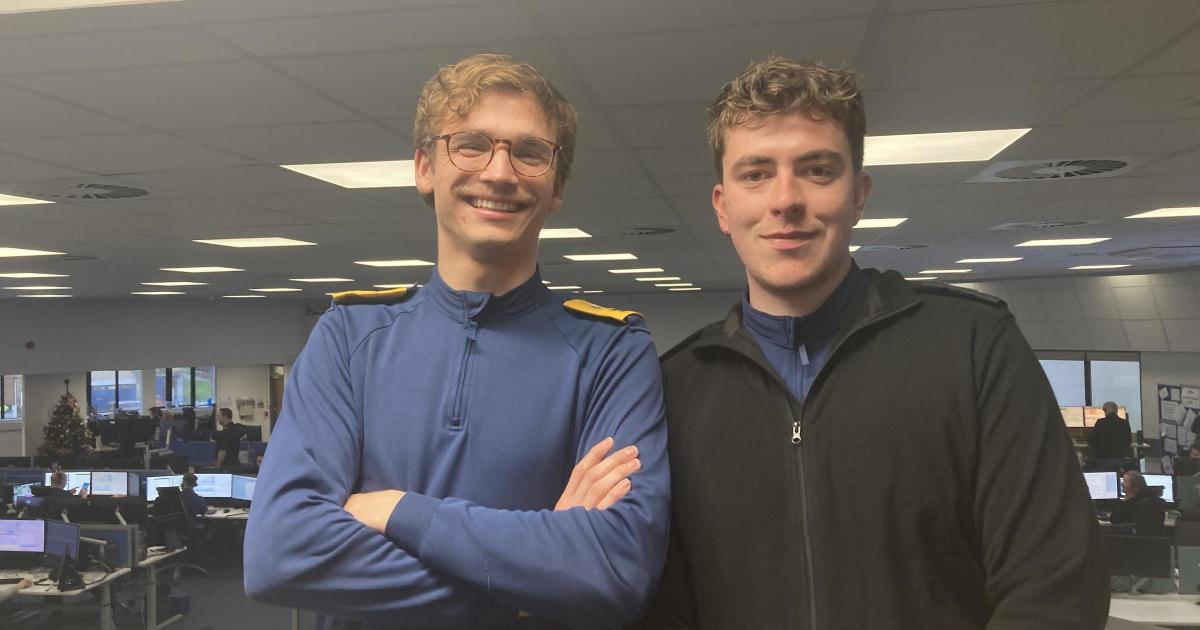
David Severn and Joe Walker are contact and control officers and are both omni-competent.
Handlers go through 12 weeks of training, including six weeks 1:1, before they take their first call on their own. At the start they have a tutor who listens in to their calls and can step in if required.
“That first 999 call is terrifying,” Joe said.
David Severn and Joe Walker (Image: The Argus)
Officers are trained to assess risk and vulnerability so that they can best triage calls and ensure the best response.
“The biggest thing about our job is risk assessment,” David said. “Every call you have to decide what the level is and then work out how quickly we need to get there.
“We ask about vulnerabilities because it’s very important to take that into account.”
David says the draw of the job was being able to help people and that he has always liked “talking to people and helping them through their problems”.
“Being able to help is amazing; it’s a great feeling,” he said.
Sussex is a diverse area to work in, from larger towns and cities like Brighton to the coastal communities and very rural areas.
“A lot of Sussex is quite rural so if someone is in an emergency in the middle of the countryside it can be difficult for us to get to, but the officers are amazing and can cover ground quite quickly,” Joe said.
David Severn and Joe Walker busy at work (Image: The Argus)
The job is high-pressured and calls can often be emotionally challenging.
“We do hear some things that are very distressing and some things that people who don’t do our job would never hear,” Joe said.
“It’s about making sure our mental health is in a condition where we’re able to provide this service because if we’re not thinking clearly, it’s going to jeopardise our work.
“It’s very much a family environment. The fact we have the support of our colleagues around us makes it 100 times easier.
“We spend so much time together – we do four days a week and 12-hour shifts – so we’re all so close.”
Source link
[Featured]
[Just In]


