




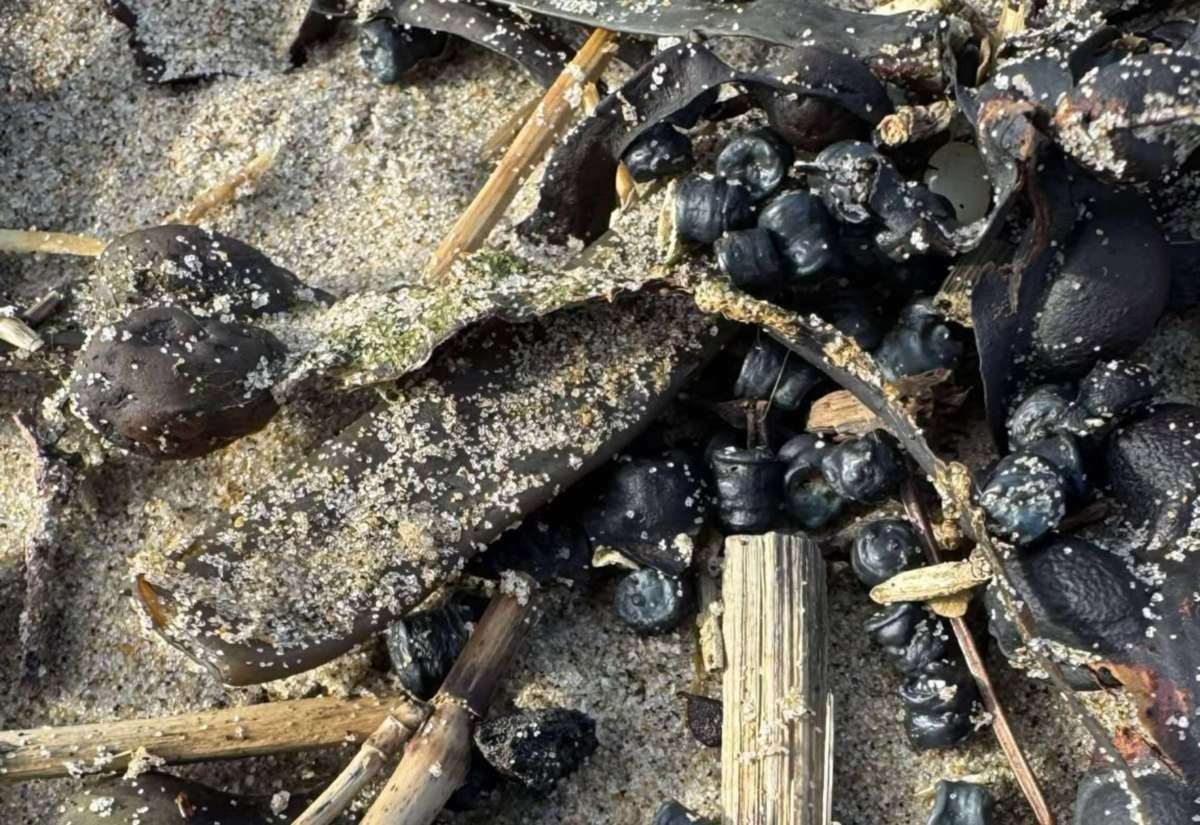
Heavy metals, including lead and arsenic, have been found in microplastic beads which washed up along the Sussex and Kent coast.
Scientists at King’s College London University tested 200 plastic pellets from Camber Sands, near Rye and found they contained several heavy metals which could be toxic to wildlife.


On November 8, a clean-up operation began after a huge number of the beads were discovered in East Sussex, due to a “damaged filter screen” at Southern Water’s Eastbourne Wastewater Treatment Works.
Originally, the company said there was no evidence the pollutants would make it to Kent’s beaches.
However, they were soon spotted at St Mary’s Bay on Romney Marsh.
Southern Water say the clean-up is ongoing, and they are currently conducting their own investigation, but are unable to comment on third-party testing.
However, the Environment Agency (EA) says it acknowledges the water provider’s responsibility for the pollution incident and will not hesitate to take “robust enforcement action” where necessary.

Professor Andreas Baas, an expert on microplastics in coastal environments at King’s, tested the beads with his team using an x-ray fluorescence scanner and found they contained elements, including lead, arsenic, cadmium and antimony.
He said the findings highlight a significant environmental issue.
“While the concentrations do not classify the beads as hazardous waste, the presence of these metals is worrying. If ingested by birds or fish, they could have toxic effects on the nervous system,” he added.
“This is not just pristine plastic. Our research shows these beads contain contaminants that should not enter the food chain.”
The university is a leader in research into microplastics and their environmental impact.
Professor Baas has shared the findings with the EA.
A 60-mile stretch of coastline from Eastbourne to Samphire Hoe, near Dover, is now being monitored by the water company.

Southern Water said it expects more beads to be in the sea.
Volunteers, including those from campaign group SOS Whitstable, were helping staff with the huge task of removing them from the sand.
One told KentOnline that they will continue finding the plastic for “years to come”.
Now, helpers are being asked to stay away until further notice, as stepping on the shore may push the beads further into the sand, making the clean-up harder.
Latest investigations by Southern Water suggest that “less than 10 tonnes” of the pellets – known as biobeads – were released.
In a statement, volunteers were thanked for their support but were instead asked to share the location online if they spot any beads during the clean-up operation, which is said to continue into the new year.
Bosses added they are “deeply sorry” for the impact on local communities, wildlife and the environment.
In a statement, Southern Water said: “We’re very sorry for the release of the biobeads from our Eastbourne site, and we have moved to prevent further releases.
“We pledged to continue the clear up for the long haul, and we’re keeping that promise, sponsoring microplastic experts Nurdle and providing our own teams to clear and monitor beaches along the coast.
“We’re also using innovative engineering to improve plastic clearance, not just for this incident, but to improve response to any other plastic release, wherever or however it takes place.”
The EA confirmed their investigation is ongoing.
A spokesperson added: “We acknowledge that Southern Water admitted responsibility for the pollution incident at Camber Sands in November.
“This is an active investigation, and we will not hesitate to take robust enforcement action where appropriate.
“We continue to work closely with Rother District Council and other agencies following the incident.
“The council remains the lead authority for the clean-up, and we remain ready to help should they need it.
“We encourage anyone with information on this incident or if they suspect environmental pollution elsewhere to report it to the Environment Agency’s 24-hour incident hotline on 0800 807060.”
The issue has also been raised in the House of Commons by Herne Bay and Sandwich MP Sir Roger Gale, who called it “shocking”.
It is thought that during storm conditions on October 29, a surge caused significant turbulence on site, and the failure of a screening filter allowed the beads in the tank to be pumped into the sea via the long-sea outfall, more than 3km offshore.
Biobeads are used in the final stages of wastewater treatment to help biologically clean water.
