




A “loving and supportive” mum who repeatedly knifed her severely disabled daughter was likely to have been suffering from psychotic symptoms of a depressive disorder, jurors have heard.
In what is alleged to have been an attempt to take her adult child’s life, Carla Lovejoy stabbed Isabella Lovejoy 14 times in the abdomen and twice to her chest at the home they shared in St Peter’s, Broadstairs.


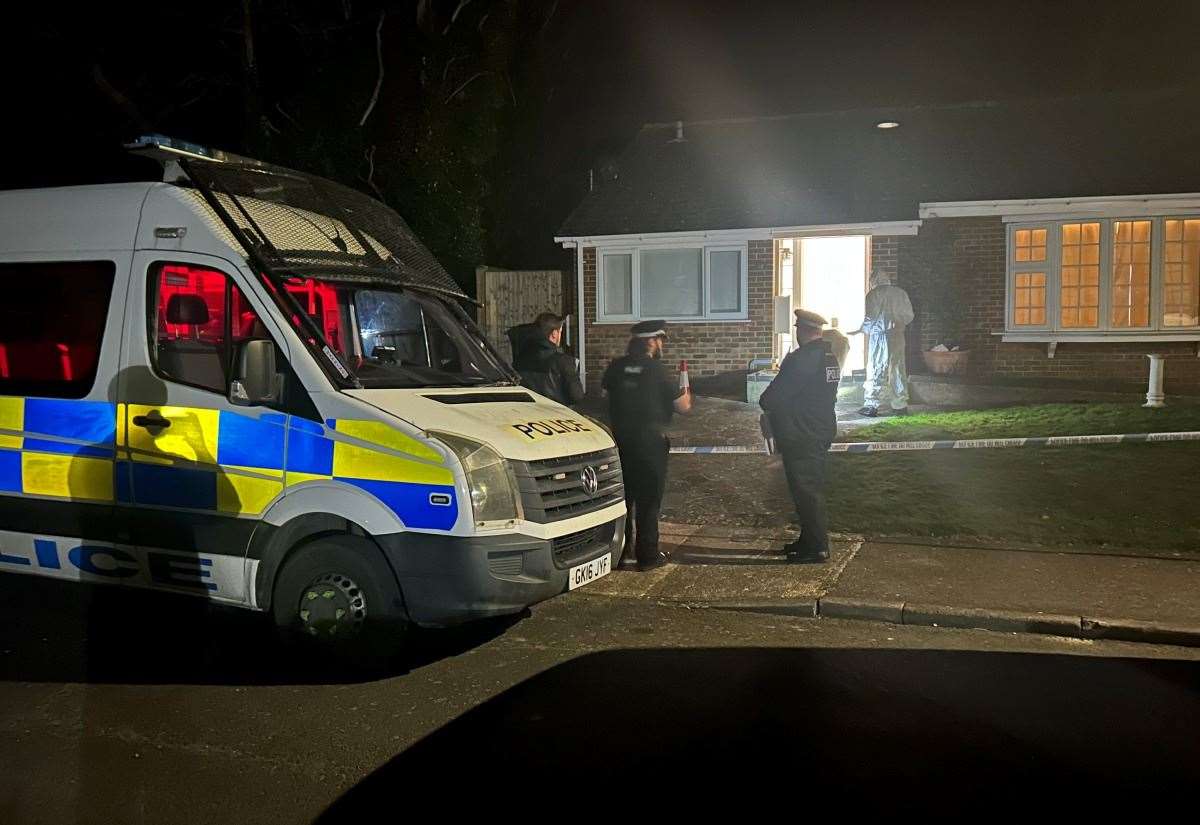
Police called to the property by concerned loved ones on the evening of March 20 this year were greeted by the sight of a blood-soaked Lovejoy, weapon in hand, and the victim lying on a sofa with life-threatening injuries.
Canterbury Crown Court heard that but for the skills of medics at the scene and later once airlifted to King’s College Hospital in London, 28-year-old Miss Lovejoy would have died.
Her mum is now on trial accused of attempted murder, as well as the alternative offence of wounding with intent.
But at the start of the case today (Monday), the jury was told that although it is not disputed that 53-year-old Lovejoy attacked her daughter at their home in Guy Close, the issue to decide was whether the defendant was insane at the time.
Furthermore, while it was explained it is for the prosecution to prove so jurors were “sure” that the defendant intended to kill or cause really serious harm, the burden was on the defence to prove it was “more likely than not” that Lovejoy’s mental state was affected to such an extent she did not know her actions were either “morally wrong or unlawful”.
Her top was soaked in blood…
Describing the circumstances as “terribly sad”, prosecutor Laurence Imrie said Lovejoy had cared all her life for her disabled daughter, who had been diagnosed with the rare genetic condition Rett Syndrome as a child.
It meant that by adulthood, Miss Lovejoy had “profound physical and communication needs” and was entirely dependent on others.
As well as being doubly incontinent, she could not feed herself, walk, push herself in her wheelchair or hold items in her hands, the court heard.
Her speech was limited to just two words – “Mumma” and “Help” – or noises to indicate whether she was happy, anxious or in pain.
In spite of her severe difficulties, her mum had looked after her “extremely well” and almost single-handedly round the clock up until the time of the alleged murder bid, the court heard.
Her partner of seven years, Bernard Broadley, described her as “very loving, very kind and genuine”, and said her standard of care was “100%”.
Having first met Lovejoy when she was just 18 and looking after his grandmother in an old people’s home, Mr Broadley said: “Carla was probably the best person you could have to care for you.”
Others, including several neighbours, told police that Lovejoy was a “very quiet” woman whose disabled daughter “came first in everything” and was “the last person in the world” they thought she would ever harm.

However, in recent years, Lovejoy’s mental health had been deteriorating, the court was told.
She began to express “paranoid” beliefs that she was being followed, her neighbours were drug-dealing, ships on the Broadstairs coastline were bringing in drugs and Russians were digging up roads to install cables.
As well as those closest to her noticing a decline, Lovejoy had also spoken to her GP in 2024 about psychotic symptoms such as feeling unsafe.
Furthermore, psychiatrists had since diagnosed her as suffering from a recurrent depression disorder, the court was told, and that it was “likely” she was suffering from related psychotic symptoms by the time of the attack on her daughter.
That evening at around 6pm, Mr Broadley had arrived at the bungalow to find the front door barricaded from the inside with wheelchairs and Lovejoy appearing at the lounge window in an “oddly euphoric” state refusing to let him in.
Becoming “increasingly worried” about her behaviour, which included throwing bags containing old rags out the window and falsely accusing him of being a murderer with gangland connections, he contacted his partner’s other daughter, Christina Roberts, in the hope she could help, the court was told.
“Mr Broadley felt his presence was exasperating Carla Lovejoy’s delusional thoughts,” said Mr Imrie, “so he collected Christina and they attended Carla Lovejoy’s home together.

“When they arrived she would not let them into the property. Mr Broadley and Christina were naturally concerned and the emergency services were contacted.
“Police arrived at Carla Lovejoy’s home at around 7pm. She was at the front of the property carrying a knife. Her top was soaked in blood.
“When Carla Lovejoy put the knife down, police were able to restrain her and check on Isabella’s welfare.
“She was found in the living room on the sofa. It was clear to the officers that she was very seriously injured.
“Carla Lovejoy had stabbed Isabella to the abdomen up to 14 times. She had stabbed her to the chest twice.

“Officers immediately gave her first aid and the injuries were so severe that police officers reported seeing internal organs protruding out from some of the stab wounds.”
The court heard three knives were recovered, including the one the accused had been holding.
Lovejoy was also found to have self-inflicted cuts to her wrists, significant blood on her arms, and numerous stab wounds to her abdominal or pubic area.
“Some of the wounds have been described as ‘tentative’ stab wounds, as if gearing up or preparing for suicide,” explained the prosecutor.
It was also said that following her arrest, Lovejoy was recorded on police body-worn camera and CCTV footage making some “bizarre and significant” comments, including that she knew she had done “something terrible” to her child.
When Carla Lovejoy stabbed Isabella to the chest and abdomen repeatedly, she wanted to kill Isabella…
Outlining the prosecution case, Mr Imrie said: “It is the prosecution who bear the burden of proving that Carla Lovejoy did cause the injuries to Isabella and that when she did so she was intending to kill her.
“There is no issue in this case as to who caused the injuries. All parties agree that Carla Lovejoy was responsible. Further, all parties agree that at the time, she was capable of forming an intent to kill.
”The prosecution say you can be sure that when Carla Lovejoy stabbed Isabella to the chest and abdomen repeatedly, she wanted to kill Isabella.”
On the issue of insanity, Mr Imrie told the jury it would hear evidence from three psychiatrists – one for the prosecution who had concluded Lovejoy was not insane at the relevant time, and two on behalf of the defence who had concluded she was suffering from what is known as a ‘defect of reason’ which caused her not to know that what she was doing was wrong or contrary to law.
At the start of proceedings, judge Mrs Justice Cheema-Grubb explained that it was an “unusual” case whereby the issues revolved solely around the defendant’s mental state.
Informing jurors they would have to decide “how significant and what impact” it had on Lovejoy’s actions, she added they had three verdicts available to them – guilty of attempted murder, guilty of wounding with intent or not guilty by reason of insanity.
The trial continues.
