



Close Menu
UK Daily: Tech, Science, Business & Lifestyle News UpdatesUK Daily: Tech, Science, Business & Lifestyle News Updates
    What's Hot

    Former England boxing head coach jailed for sexual assaults

    December 15, 2025

    How iRobot lost its way home

    December 15, 2025

    Sangha Opens 20MW Bitcoin Mining Facility In Texas

    December 15, 2025
    Facebook X (Twitter) Instagram
    Trending
    • Former England boxing head coach jailed for sexual assaults
    • How iRobot lost its way home
    • Sangha Opens 20MW Bitcoin Mining Facility In Texas
    • Bank of England expected to cut interest rates to nearly three-year low
    • Glasgow Subway turns 129 years old amid major route upgrades
    • Greenvale Hotel tragedy: Accused deny charges following deaths of three teenagers
    • WhatsApp’s biggest market is becoming its toughest test
    • Calls grow for fully integrated One Health surveillance
    • London
    • Kent
    • Glasgow
    • Cardiff
    • Belfast
    Facebook X (Twitter) Instagram YouTube
    UK Daily: Tech, Science, Business & Lifestyle News UpdatesUK Daily: Tech, Science, Business & Lifestyle News Updates
    Subscribe
    Monday, December 15
    • Home
    • News
      1. Kent
      2. London
      3. Belfast
      4. Birmingham
      5. Cardiff
      6. Edinburgh
      7. Glasgow
      8. Liverpool
      9. Manchester
      10. Newcastle
      11. Nottingham
      12. Sheffield
      13. West Yorkshire
      Featured

      ‘Miniature’ mountain creature with ‘squeaker’-like call discovered as new species

      Science November 9, 2023
      Recent

      Former England boxing head coach jailed for sexual assaults

      December 15, 2025

      How iRobot lost its way home

      December 15, 2025

      Sangha Opens 20MW Bitcoin Mining Facility In Texas

      December 15, 2025
    • Lifestyle
      1. Celebrity
      2. Fashion
      3. Food
      4. Leisure
      5. Social Good
      6. Trending
      7. Wellness
      8. Event
      Featured

      Season 2 Streaming Details – Hollywood Life

      Celebrity December 14, 2025
      Recent

      Season 2 Streaming Details – Hollywood Life

      December 14, 2025

      How Did the Actor Die? – Hollywood Life

      December 14, 2025

      Who Is Josh Dun? 5 Things to Know About Debby Ryan’s Husband – Hollywood Life

      December 14, 2025
    • Science
    • Business
    • Sports

      Chatham Town through to round four, Maidstone United beaten by Yeovil on penalties

      December 13, 2025

      League 2 match reaction from Gills boss Gareth Ainsworth

      December 13, 2025

      Whitstable Town go five points clear, nine-man Larkfield & New Hythe lose at Phoenix Sports, Bearsted up to third

      December 13, 2025

      Leaders Folkestone Invicta win derby at Dartford, two wins in a row for Ashford United, Sittingbourne and Sheppey United hit the goal trail

      December 13, 2025

      League 2 match report from Priestfield Stadium

      December 13, 2025
    • Politics
    • Tech
    • Property
    • Press Release
    UK Daily: Tech, Science, Business & Lifestyle News UpdatesUK Daily: Tech, Science, Business & Lifestyle News Updates
    Home » neuroClues wants to put high speed eye tracking tech in the doctor’s office

    neuroClues wants to put high speed eye tracking tech in the doctor’s office

    bibhutiBy bibhutiApril 30, 2024 Tech No Comments6 Mins Read
    Facebook Twitter LinkedIn WhatsApp Telegram
    Share
    Facebook Twitter LinkedIn Telegram WhatsApp


    The eyes aren’t just a window into the soul; tracking saccades can help doctors pick up a range of brain health issues. That’s why French-Belgian medtech startup neuroClues is building accessible, high-speed eye-tracking technology that incorporates AI-driven analysis. It wants to make it easier for healthcare service providers to use eye tracking to support the diagnosis of neurodegenerative conditions.

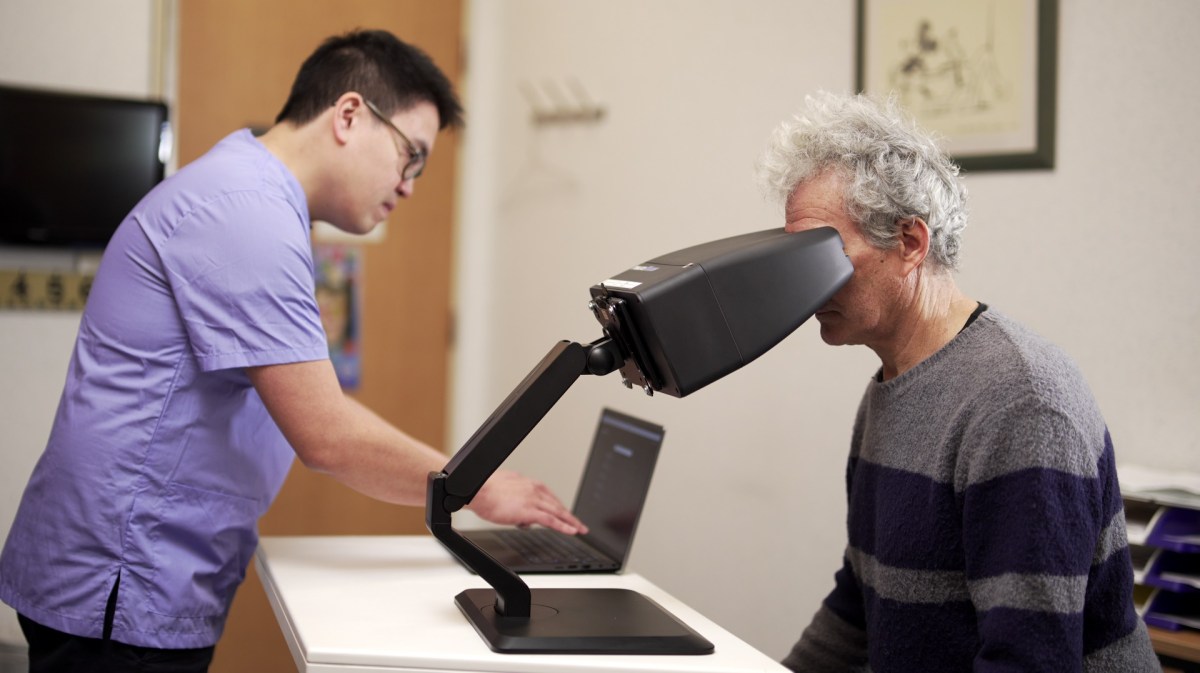
    The company is starting with a focus on Parkinson’s disease, which already typically incorporates a test of a patient’s eye movement. Today, a doctor asks a patient to “follow my finger,” but neuroClues wants clinicians to use its proprietary, portable headsets to instead capture eye movements at 800 frames per second, after which they can run an analysis of the data in just a few seconds.

    The 3.5-year-old outfit’s founders — two of whom are neuroscience researchers — point to high rates of misdiagnosis of Parkinson’s as one of the factors informing their decision to focus on the disease first. But their ambitions do pan wider. They paint a picture of the future in which their device becomes a “stethoscope for the brain.” Imagine, for example, if your annual trip to the optician could pack in a quick scan of brain health, and compare you against standard benchmarks for your age. According to the startup, which says it aims to help 10 million patients by 2032, eye tracking protocols could also help test for other diseases and conditions including concussion, Alzheimer’s, MS and stroke.

    The startup is in the process of filing an application for FDA approval and hoping to gain clearance for use of its device a clinical support tool in the US later this year. It is working on the same type of application in the European Union and anticipates gaining regulatory approval in the EU in 2025.

    So how does the device work? The patient looks through the headset and sees a screen where dots appear. A clinician will then tell them to follow the dots with their eyes, after which the device extracts data that can be used as disease biomarkers by recording and analyzing their eye movements, measuring things like latency and error rate. It also provides the clinician with a standard value expected from a healthy population to compare with the patient’s results. 

    “The first scientific paper that is using eye tracking to diagnose patients is 1905,” neuroClues co-founder and CEO Antoine Pouppez told TechCrunch in an exclusive interview, noting the technique was initially used for diagnosing schizophrenia. In the 1960s, when video eye trackers arrived, there was a boom in research into the technique for tracking neurological disorders. But decades of research into the usefulness of eye-tracking as a diagnostic technique has not translated into widespread clinical uptake because the tech wasn’t there yet and/or was too expensive, said Pouppez.

    “That’s where this technology comes from: The frustration of my co-founders to see that eye tracking has a lot of value — that’s been demonstrated in research that has been clinically proven on thousands of patients in research setups — and it’s still not used in clinical practice,” he said. “Doctors today use their fingers — and literally say ‘follow my finger’ — whereas an eye is moving at 600 degrees per second. You’re doing three eye movements per second. And so it’s very, very difficult — close to impossible — to evaluate how well you’re moving around [by human eye alone].”

    Others have similarly spotted the potential to do more with eye tracking as a diagnostic aid.

    U.S.-based Neurosync, for example, offers a VR headset combined with FDA-cleared eye tracking software it says can analyze the wearer’s eye movements “as an aid to concussion diagnosis.” The product is geared toward football players and athletes in other contact sports who face elevated risk of head injury.

    There are also mobile app makers — such as BrainEye — pitching consumers on smartphone-based eye-tracking tech for self testing “brain health.” (Such claims are not evaluated by medical device regulators, however.)

    But neuroClues stands out in a variety of ways. First, it says its headset can be located in a regular clinician’s office, without the need for a dark room set-up nor specialist computing hardware. It’s not using off-the-shelf hardware but instead developing dedicated eye-tracking headsets for eye testing designed to record at high speed and control the recording environment. The outfit’s founders further argue that by building its own hardware and software, neuroClues enjoys unrivaled speed of data capture in a commercially deployed, non-static device.

    To protect these ostensible advantages, neuroClues has a number of patents granted (or filed) that it says cover various aspects of the design, such as the synchronization of the hardware and software, and its approach to analyzing data.

    “We are the only one on the market today that is recording an 800 frames per second on a portable device,” said Pouppez, noting that the research “gold standard” is 1,000 frames per second. “There is no clinical or non-clinical product that is doing it at that frame rate, which meant that we had to lift barriers that no one had lifted before.”
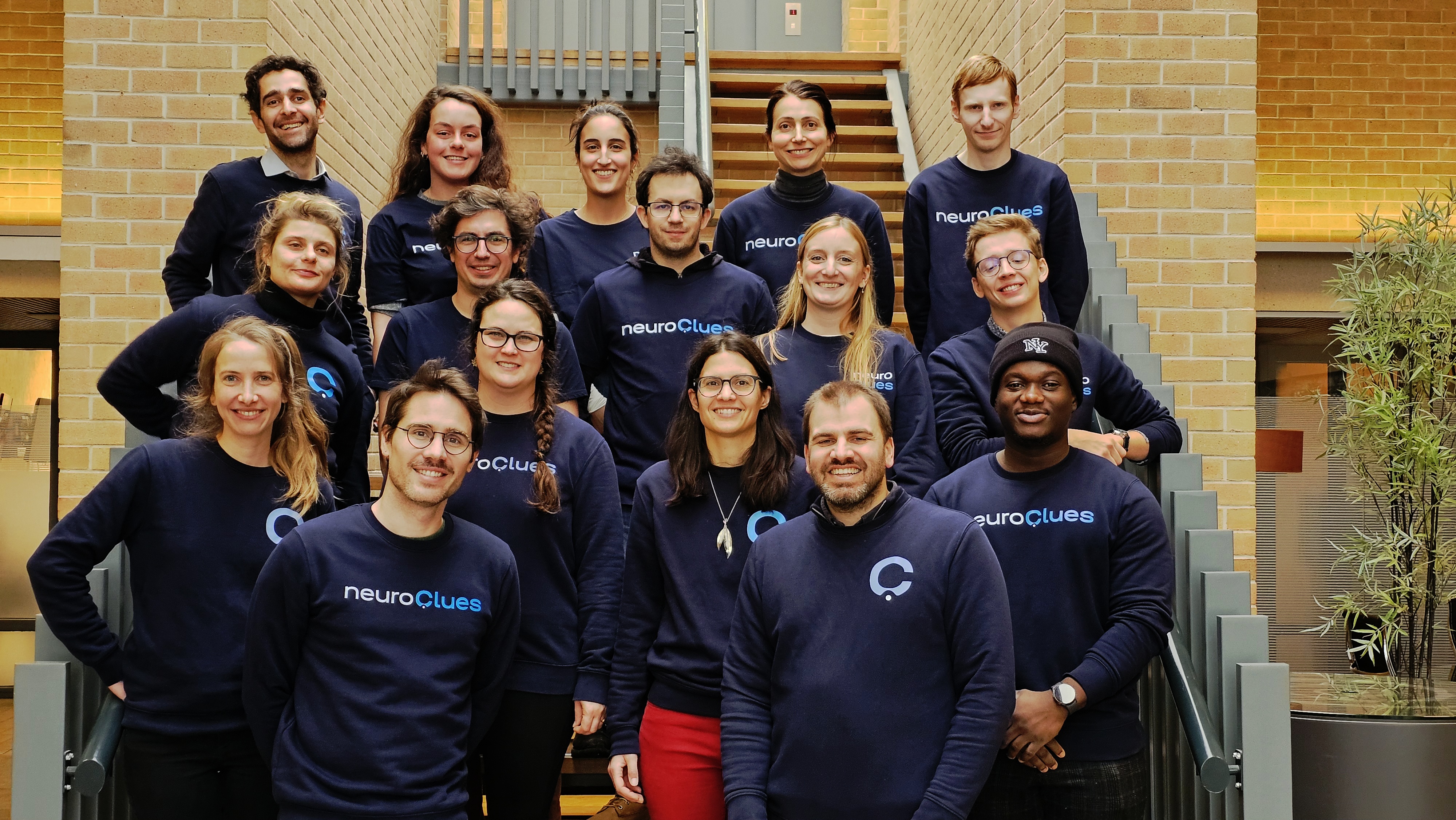
    NeuroClues Team

    Image credit: neuroClues

    neuroClues, which was incubated in the Paris Brain Institute, expects the first eye-tracking headsets to be deployed in specialist settings such as university hospitals, so for use on patients who have already been referred to consultants. It notes the service will be reimbursable via existing health insurance codes as eye tracking tests are an established medical intervention. The company says it’s also talking to a number of other outfits in the U.S. and Europe that are interested in its hardware and software.

    This first version of the device is designed as a diagnostic aid, meaning a clinician is still responsible for interpreting the results. But Pouppez said the team’s goal is to evolve the technology to serve up interpretations of the data, too, so the device can be deployed more broadly.

    “Our goal is quickly to move down to bring that diagnostics capabilities to practitioners,” he told us. “We hope to be on the market with such a device in ’26/’27. And so to broaden up our market perspectives and really be in [the toolbox of] every neurologist in US and in Europe.”

    The startup is announcing close of a €5 million pre-Series A round of funding, led by White Fund and the European Commission’s EIC Accelerator program. Existing investors Invest.BW, plus a number of business angels, including Fiona du Monceau, former Chair of the Board at UCB, Artwall, and Olivier Legrain, CEO of IBA, also participated. Including this round neuroClues has raised a total of €12M since being founded back in 2020.

    Pouppez said it will be looking to raise a Series A in the next 12 to 18 months. “Our existing investors and the European Commission have already shown interest in participating, so basically i’m looking for a lead investor,” he added.


    Source link

    Featured Just In Top News
    Share. Facebook Twitter LinkedIn Email
    Previous ArticleAppeal to help find missing woman last seen in Seal area, Sevenoaks
    Next Article Live M25 traffic updates as lanes closed near Sevenoaks for emergency repairs
    bibhuti
    • Website

    Keep Reading

    Former England boxing head coach jailed for sexual assaults

    How iRobot lost its way home

    Bank of England expected to cut interest rates to nearly three-year low

    Glasgow Subway turns 129 years old amid major route upgrades

    Greenvale Hotel tragedy: Accused deny charges following deaths of three teenagers

    WhatsApp’s biggest market is becoming its toughest test

    Add A Comment
    Leave A Reply Cancel Reply

    Editors Picks

    89th Utkala Dibasa Celebration Brings Odisha’s Vibrant Culture to London

    April 8, 2024

    US and EU pledge to foster connections to enhance research on AI safety and risk.

    April 5, 2024

    Holi Celebrations Across Various Locations in Kent Attract a Diverse Range of Community Participation

    March 25, 2024

    Plans for new Bromley tower blocks up to 14-storeys tall refused

    December 4, 2023
    Latest Posts

    Subscribe to News

    Get the latest sports news from NewsSite about world, sports and politics.

    Advertisement

    Recent Posts

    • Former England boxing head coach jailed for sexual assaults
    • How iRobot lost its way home
    • Sangha Opens 20MW Bitcoin Mining Facility In Texas
    • Bank of England expected to cut interest rates to nearly three-year low
    • Glasgow Subway turns 129 years old amid major route upgrades

    Recent Comments

    1. Register on Anycubic users say their 3D printers were hacked to warn of a security flaw
    2. Pembuatan Akun Binance on Braiins Becomes First Mining Pool To Introduce Lightning Payouts
    3. tadalafil tablets sale on The market is forcing cloud vendors to relax data egress fees
    4. cerebrozen reviews on Kent director of cricket Simon Cook adapting to his new role during the close season
    5. Glycogen Review on The little-known town just 5 miles from Kent border with stunning beaches and only 600 residents
    The News Times Logo
    Facebook X (Twitter) Pinterest Vimeo WhatsApp TikTok Instagram

    News

    • UK News
    • US Politics
    • EU Politics
    • Business
    • Opinions
    • Connections
    • Science

    Company

    • Information
    • Advertising
    • Classified Ads
    • Contact Info
    • Do Not Sell Data
    • GDPR Policy
    • Media Kits

    Services

    • Subscriptions
    • Customer Support
    • Bulk Packages
    • Newsletters
    • Sponsored News
    • Work With Us

    Subscribe to Updates

    Get the latest creative news from FooBar about art, design and business.

    © 2025 The News Times. Designed by The News Times.
    • Privacy Policy
    • Terms
    • Accessibility

    Type above and press Enter to search. Press Esc to cancel.

    Manage Cookie Consent
    To provide the best experiences, we use technologies like cookies to store and/or access device information. Consenting to these technologies will allow us to process data such as browsing behavior or unique IDs on this site. Not consenting or withdrawing consent, may adversely affect certain features and functions.
    Functional Always active
    The technical storage or access is strictly necessary for the legitimate purpose of enabling the use of a specific service explicitly requested by the subscriber or user, or for the sole purpose of carrying out the transmission of a communication over an electronic communications network.
    Preferences
    The technical storage or access is necessary for the legitimate purpose of storing preferences that are not requested by the subscriber or user.
    Statistics
    The technical storage or access that is used exclusively for statistical purposes. The technical storage or access that is used exclusively for anonymous statistical purposes. Without a subpoena, voluntary compliance on the part of your Internet Service Provider, or additional records from a third party, information stored or retrieved for this purpose alone cannot usually be used to identify you.
    Marketing
    The technical storage or access is required to create user profiles to send advertising, or to track the user on a website or across several websites for similar marketing purposes.
    • Manage options
    • Manage services
    • Manage {vendor_count} vendors
    • Read more about these purposes
    View preferences
    • {title}
    • {title}
    • {title}