




[CAIRO/LAGOS] For the past 19 years, Felix Adebayo has called Balarabe Musa Crescent in Victoria Island, an affluent area within Nigeria’s bustling Lagos city, his home.
When he secured a gatekeeper position at a company in the neighbourhood in 2004, it came with the added bonus of free accommodation.
However, with this move came an unexpected challenge – access to clean drinking water.
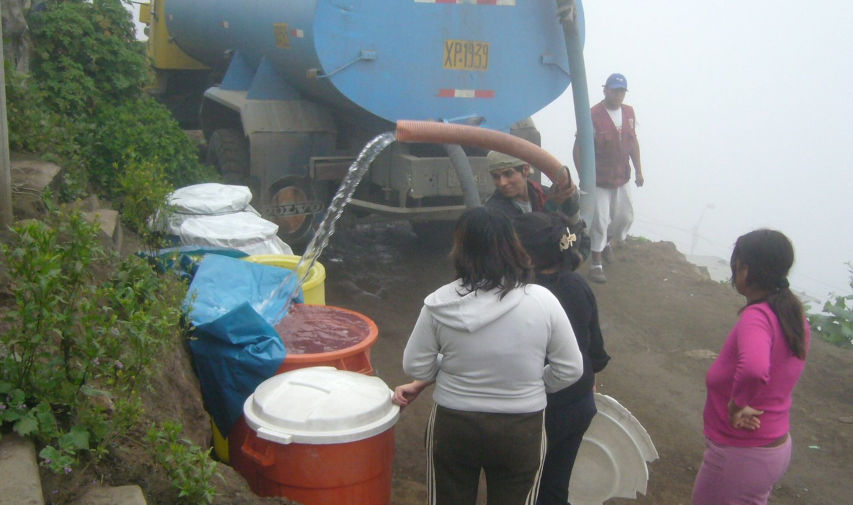
Victoria Island, a high-end district and major business hub in Lagos, is surrounded by the Atlantic Ocean to the south and the Lagos Lagoon to the north. Yet, despite its affluent status, the area suffers from a severe shortage of clean water.
“We need to ensure that the environmental costs are fairly distributed across different regions for environmentally equitable AI, which is a crucial consideration for responsible AI.”
Mohammad Atiqul Islam, assistant professor in computer science and engineering, University of Texas at Arlington
Speaking to SciDev.Net outside his apartment, 52-year-old Adebayo shared how this had affected his family’s daily life.
“We buy water to drink. We buy water to cook,” said Adebayo.
The shortage, experts say, is due to the shallow water table and intrusion of saltwater into its groundwater.
So, even though some residents resort to boreholes, the water is unsuitable for even basic needs like bathing, let alone drinking.
![Gatekeeper Felix Adebayo, pictured, says his family struggles to access drinking water at his home in Lagos. Credit: Alred Olufemi]](https://www.scidev.net/global/wp-content/uploads/Data_centres_pic_Felix_Adebayo_main.jpg)
Gatekeeper Felix Adebayo, pictured, says his family struggles to access drinking water at his home in Lagos. Copyright: Alfred Olufemi.
Adebayo explained: “You can’t dig a borehole and get clean water from it because the water you will get underground is the same.”
Located around 300 metres from Adebayo’s residence, is the data centre of IpNx, a telecommunications company focused on providing last-mile connectivity services.
Another centre, MDXI, claims to operate the largest carrier-neutral data centres (not tied to any one service provider) in West Africa. It has its head office within FF Millennium towers in Ligali Ayorinde street, less than 2km from Adebayo’s street.
According to Data Centres Map, an open resource for researching data centres, no fewer than ten data centres are headquartered in Lagos, where water resources are stretched.
Data centres like these often use large amounts of water for electricity generation and for cooling. And with the surge in Artificial Intelligence (AI), which relies on access to vast amounts of data, demand for data centre services is rising.
However, while the carbon footprint of such centres might be made public, little information is publicly available about their water usage.
In Lagos, the city’s water shortage predates the data centres and is largely linked to rapid population growth, inadequate infrastructure, and pollution, among other things, says Saudat Ajijola, senior lecturer in the Department of Architecture at Nigeria’s Lead City University.
However, “pressure on existing limited water resources [from data centres] may have significantly strained the provision of adequate clean water,” she added.
“The establishment of AI and data centres in Nigeria can facilitate technological development, foster collaboration with global tech companies, and generally improve economic growth,” said Ajijola.
“However, it can exacerbate the strain on the already limited water supplies and potentially impact the people’s access to water.”
AI’s ‘water footprint’
Conventional data centres already use large amounts of water for their cooling processes. But these may need to increase their cooling capacity to support the vast computing resources and storage requirements needed to support new AI applications.
Kaveh Madani, director of the UN University Institute for Water, Environment and Health and ex-vice-president of the UN Environment Assembly Bureau, explained: “AI requires high-performance processes and that results in more electricity and water use in the case of AI data centres when compared with conventional data centers.”
Dedicated AI data centres are springing up, mostly in the US, but increasingly also in the global South, where water resources are stretched.
Stanford University’s AI Index Report 2023 revealed that the environmental impact of training AI models is unprecedented as the adoption of AI skyrockets. The proportion of companies using AI more than doubled between 2017 and 2022, according to the report.
Madani said AI experts were becoming increasingly aware of AI’s environmental footprint.
“The public and the decision-makers must know about such footprints to proactively develop […] footprint-reduction measures,” he told SciDev.Net.
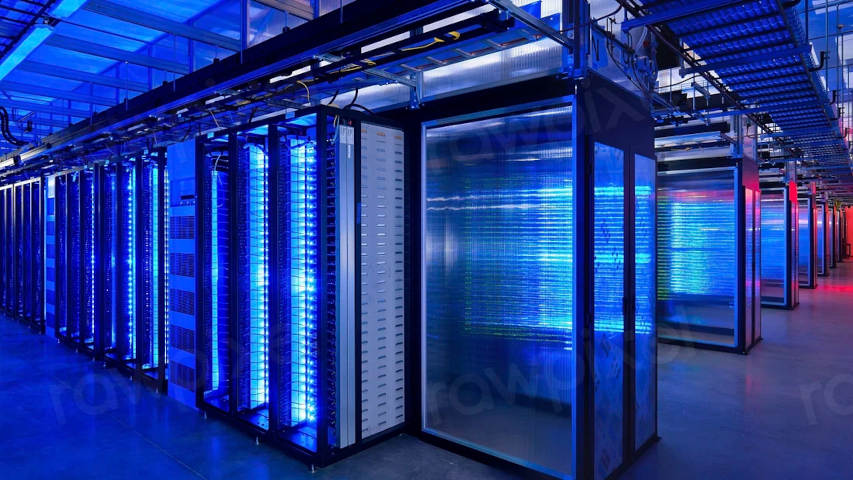
AI systems require a lot of data to train and operate. This data is stored in data centres, which are large facilities that house computer systems and other equipment.
The data centres are the backbone of the digital world, providing the computing power and storage space that AI systems need to function. They power our online activities, such as social media, online shopping, streaming services, online gaming and video conferencing.
Even after adopting best practices, machine learning takes up around 10 to 15 per cent of the total data centre energy at Google, according to a paper by computer scientists at the US tech company.
Water consumption at the firm’s data centres increased more than 60 per cent in the last four years, from 3,412 million gallons in 2019 to 5,565 million gallons in 2022.
Shaolei Ren, associate professor in the department of electrical and computer engineering at the University of California, Riverside, says the carbon footprint of AI models is usually documented, but “the water footprint is missing”.
“Once we have the visibility of AI’s water footprint, we can leverage the scheduling flexibility of AI to reduce it,” he told SciDev.Net.
Why so thirsty?
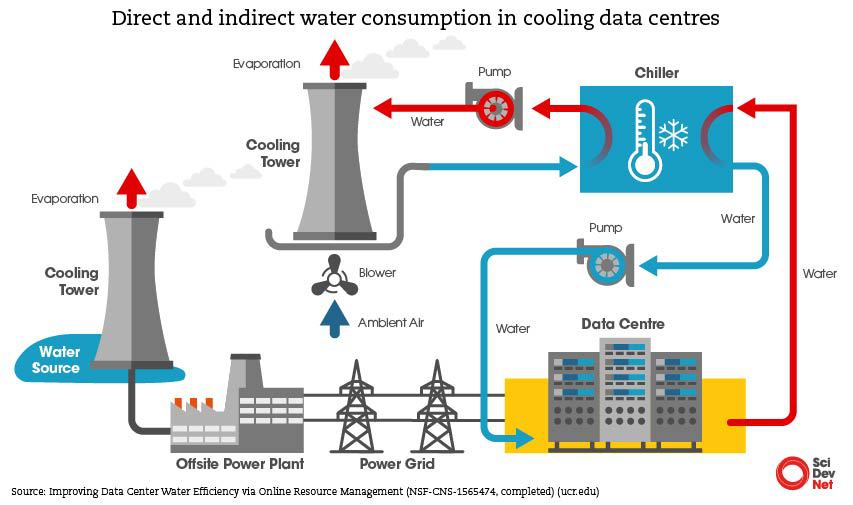
Data centres use water in two ways: direct and indirect. Data centres require vast amounts of electricity for their operations and electricity generation requires significant amounts of water. In addition to this indirect impact via electricity use, data centres require considerable amounts of water for cooling.
Power plants use water to generate electricity by heating water to create steam, which then turns a turbine to generate electricity. The water used in this process is first treated to remove any contaminants that could damage the equipment.
After the water is used to create steam, it may be evaporated, discharged as effluent, or recirculated.
Data centres also use water to cool the equipment by circulating water through it, which absorbs heat. The water is then cooled and recirculated.
The amount of water used varies depending on the type of power plant and from region to region, as the water consumption depends on the weather conditions and cooling technology used.
Computer scientists interviewed by SciDev.Net say these local conditions are often not factored into decisions on where to locate data centres or what cooling systems to use.
“We need to consider the local constraints and priorities before deciding the most suitable cooling method,” Ren added.
“We need to consider not only the direct water consumption but also the indirect water consumption for electricity generation to holistically reduce the total water footprint.”
According to a recent preprint (a draft research paper that has not been peer reviewed) published by Ren and his colleagues, training GPT-3 in Microsoft’s state-of-the-art US data centres can directly consume a total of 700,000 litres of clean freshwater. They say the language prediction model needs to “drink” a 500ml bottle of water to have a simple conversation of about 20- to 50 questions and answers per user.
If this training was done in Microsoft’s Asian data centres, it would consume three times as much, according to the paper. This is because the climate in Asia is warmer and drier, which means that more water is needed to cool the data centres.
“This is extremely concerning, as freshwater scarcity has become one of the most pressing challenges shared by all of us in the wake of the rapidly growing population, depleting water resources, and aging water infrastructure,” the paper says.
Sub-Saharan Africa is one of several regions facing a water crisis, with water demand expected to almost quadruple by 2030. Yet it is becoming a hub for data centre investments.
The demand for data centres on the continent has doubled since 2016, according to the International Telecommunications Union, and it is expected to attract US$5 billion of investment by 2026, potentially putting further strain on water resources.
Lack of regulation
“This sector is not properly regulated in both the global North and global South,” said Madani from UN University Institute for Water, adding that stronger regulations, monitoring and reporting are “essential”.
“In addition, service users must become aware of the impacts of their ‘AI consumption’ on water resources,” he said.
According to the World Bank, water-related disasters account for 70 per cent of all deaths related to natural disasters.
About 2 billion people worldwide don’t have access to safe drinking water and roughly half of the world’s population is experiencing severe water scarcity for at least part of the year.
These numbers are expected to increase, exacerbated by climate change and population growth.
In developing countries, the water footprint of AI data centres is more concerning. These countries often have limited water resources and are already struggling to meet the needs of their growing populations.
The addition of a growing number of data centres to the mix could put a strain on water resources and lead to water shortages.
Mohammad Atiqul Islam, assistant professor in computer science and engineering at the University of Texas at Arlington, and one of the published preprint team, said water was rarely considered when locating data centres.
“Typically, companies care more about performance and cost; they do not take water intensity into account,” he told SciDev.Net.
“We need to ensure that the environmental costs are fairly distributed across different regions for environmentally equitable AI, which is a crucial consideration for responsible AI,” added Ren.*
Lagos water shortage
In Lagos, the state water corporation supplies some households with water, but residents say it’s often not clean and the intervention is insufficient.
Adebayo says he ends up spending up to 8,000 naira (about U$9) a week on water.
“They used to bring water from Ikoyi,” said Sodiq Omotayo, Adebayo’s friend.
“There is a water corporation at Ikoyi. Those tankers are used to bring water and supply the area. But it is not drinkable and regular. Many don’t cook with it.”
In 2021, the Lagos State government admitted that less than 40 per cent of the state’s residents have access to potable water.
The deputy governor, Obafemi Hamzat, while delivering the Governor’s speech at an event, alluded to the fact that the production by the water corporation is not enough to meet the needs of Lagosians.
“The Lagos State Water Supply Master Plan estimates daily water demand in the city at 540 million gallons per day (MGD) but production by the Lagos State Water Corporation stands at 210 MGD,” he said.
Because of this shortage, some residents rely on private companies who purify their water sources for private use but make it accessible to residents.
Victoria Anyaoha, who runs a small shop on Balarabe Musa Crescent, said she gets water for domestic needs from one of these benevolent private companies.
“I used to fetch water from a tap. It’s owned by a company and they do treat it,” she told SciDev.Net.
She noted that, despite only operating the shop on weekdays and residing outside of Victoria Island on weekends, she still manages to spend at least 1,500 naira ($US1.9) a week on drinking water.

Shopkeeper Victoria Anyaoha, pictured in Victoria Island, Lagos. She says she has to buy her water from a private company. Credit: Alfred Olufemi
When SciDev.Net contacted several data centres in Lagos to have an idea of their water sources and how much water they consume for their operations, most of them declined to respond, while a few left out specifics.
Although the receptionist at ipNX explained that the company dug its borehole three years ago and had been purchasing water before that, he declined to specify how much water they consume.
A marketing officer at MDXi said he would respond to SciDev.Net’s enquiries but has not done so despite multiple reminder emails.
Other data centres contacted including Rack Centre and MTN Nigeria data centre did not respond to emails before this article was published. The Rack Centre had pledged to reduce its water consumption by more than 40 per cent, according to a local media report.
SciDev.Net also contacted a spokesperson for the Lagos ministry of science and technology but received no reply.
Ajijola believes industry players must factor in local water resources when planning new data centres.
“As long as the resources, infrastructure and policy support to address water scarcity are absent, any additional pressure on the already existing scarcity will further strain the provision of clean water for consumption,” said Ajijola.
“Therefore … consideration for clean water consumption standards should be a higher priority for investments.”
Water ‘stewardship’
Many cloud service providers and large internet companies, collectively known as hyperscalers, have disclosed metrics on their data centre water usage.
Microsoft, Facebook (Meta), Amazon and Google have all committed to be water positive by 2030.
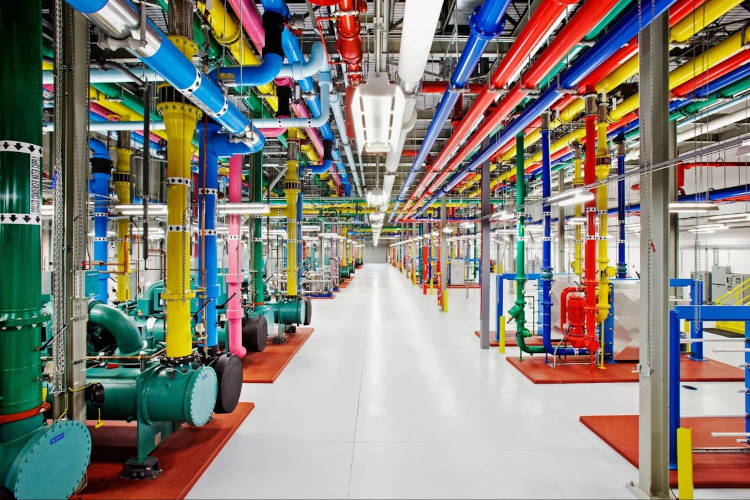
The water pipe-work in what google says is a climate-conscious approach to data center cooling. Source: Google
“Big techs typically achieve ‘water positive’ by restoring water from other places to ‘offset’ its consumption,” explained Ren, from the University of California, Riverside.
“This is like using non-renewable energy in one place and then generating renewable energy elsewhere to offset the non-renewable energy usage.”
However, Islam, at the University of Texas, added: “These companies own only a tiny fraction of all the data centres in the world.”
“If all other data centre companies do not join these initiatives, these efforts will be nothing more than a PR stunt.”
While this is a positive step towards good water stewardship, this practice alone won’t be enough for water sustainability, added Ren.
“This sector is not properly regulated in both the global North and global South. In addition, service users must become aware of the impacts of their ‘AI consumption’ on water resources.”
Kaveh Madani, director, UN University Institute for Water, Environment and Health
Data centres also need to reduce their water consumption, improve water efficiency, and report their off-site water consumption for electricity generation, he said.
There are plans to build and expand data centres in many developing countries, including some that are already experiencing water scarcity and crisis such as Ghana, Nigeria, Kenya, Peru, Uruguay, Chile, and countries in the Middle East and North Africa. Uruguay, for example, is suffering its worst drought in 74 years.
“Developing countries should take the spread of AI with a grain of salt, as many of their impacts may go unnoticed,” Islam cautioned.
“These countries should look at regulations from the EU and the US to proactively avoid AI’s potential impact on the environment.”
While the expansion of data centres and AI services can result in increased water usage, the unprecedented opportunities created by AI to improve water resources management and use in the municipal, agricultural, and industrial sectors should not be overlooked, according to Madani.
“I’m excited about these opportunities while putting effort into raising the global awareness about the environmental footprint of Industry 4.0 products,” he said, referring to the so-called Fourth Industrial Revolution, involving integration of AI into manufacturing and industrial processes.
Innovative solutions
New innovations can help data centres reduce their water consumption. For example, Google is currently developing a new, low-water alternative able to reduce the water usage of a data centre by up to 50 per cent.
Google also utilises reclaimed or non-potable water at more than 25 per cent of its data centre campuses. In Douglas County, Georgia, Google implemented a solution to cool its data centre by recycling local municipal wastewater that would otherwise be deposited in the Chattahoochee River.
Microsoft is leveraging a method called adiabatic cooling, which uses outside air instead of water for cooling when temperatures are below 85 degrees Fahrenheit (29.4 degrees Celsius).
Data centres use a lot of energy, so even a small reduction in power consumption is helpful. A recent study proposes a system for distributing workloads in a data centre in a way that considers the temperature of the servers, in order to reduce the amount of energy needed for cooling.
The results show that the proposed approach can reduce the cooling power consumption by more than 30 per cent compared to other approaches.
The research was focused on air-cooled data centres and further investigation is required to know how it could be applicable to liquid-cooled technologies.
Data centres that own and operate the entire facility have more flexibility to explore alternative water sources and cooling techniques. Google’s Hamina data centre in Finland uses sea water for cooling since it opened in 2011. The cold sea water is pumped into heat exchangers within the facility, and the hot water is mixed with cold sea water before being returned to the sea.
Microsoft’s Project Natick is an attempt to tackle the cooling challenge by submerging a sealed data centre underwater. This uses the ambient sea temperature for cooling.
These are just a few examples of how data centres can reduce water usage as demand for data centres continues to grow.
In Lagos, Ajijola, from Nigeria’s Lead City University, believes there needs to be regulatory frameworks and standards established to promote sustainable practices, along with investment in research and development initiatives focused on water-saving technologies in AI and data centres.
“We are in a tech age, so investing in AI infrastructure is not a problem and it is also very important considering global trends,” said Ajijola.
“However, the focus should be on ensuring the adoption of sustainable practices.”
*This article was amended on 16 November, 2023 to correct the attribution of the quote on cost distribution from Mohammad Atiqul Islam to Shaolei Ren.
This piece was produced by SciDev.Net’s Global desk.
