




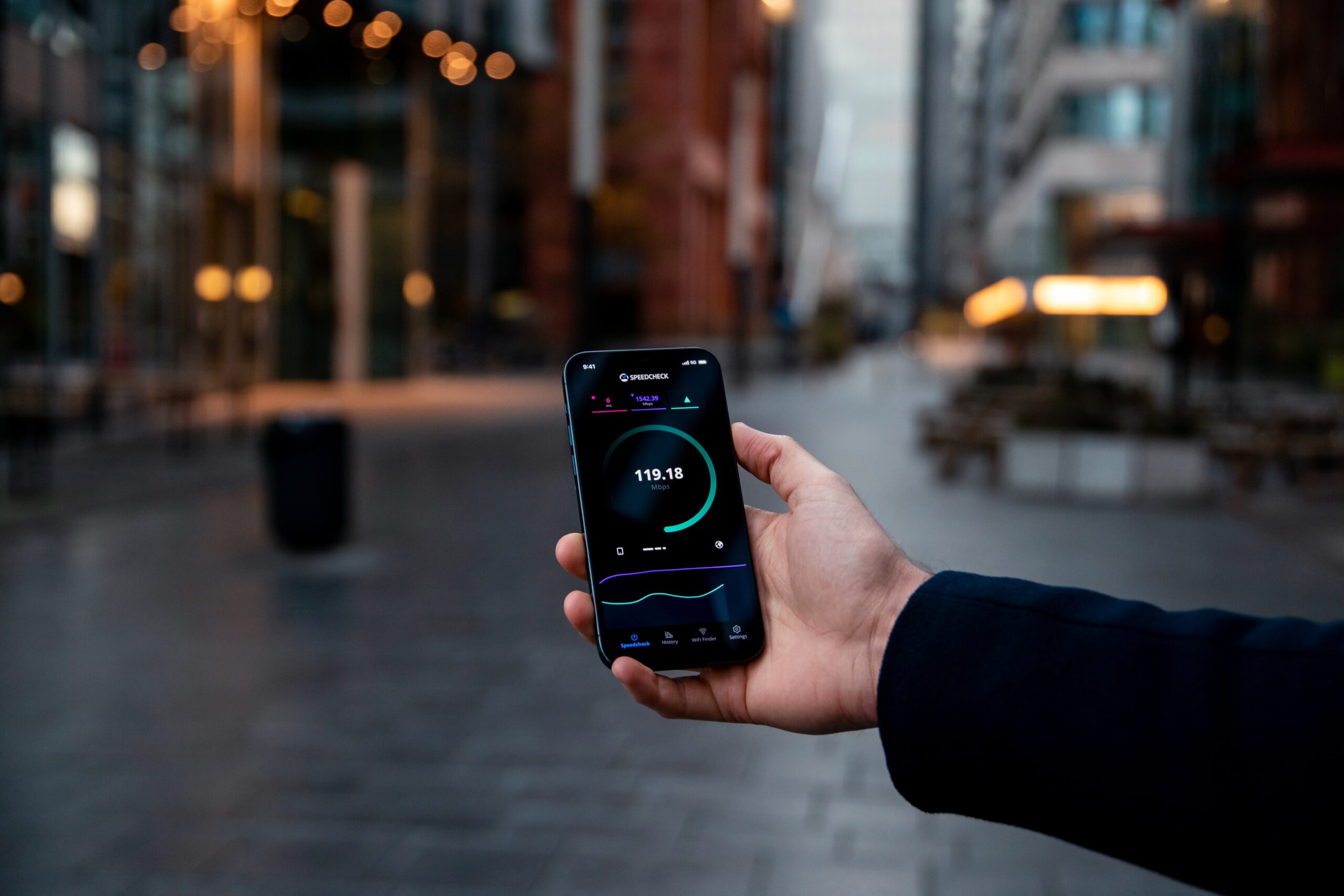
China has introduced the globe’s fastest internet connection, surpassing its closest U.S. competitor by threefold.
The core network boasts an astonishing data transmission speed of 1.2 terabits per second, able to download a remarkable 150 films per second.
Breaking US Network Records
Practically every networking in the world operates at around 100 gigabits per second. The US has been the front-runner in the network speed race, operating at 400 gigabits every second, until now.
This means that not only has China’s achievement smashed US rates, but it has also surpassed expert forecasts that said 1 terabit per second networks would not emerge until around 2025.
Tsinghua University, China Mobile, Huawei Technologies, and Cernet Corporation joined forces to create an ambitious infrastructure spanning over 1,860 miles of optical fibre cabling.
This network links Beijing in the north, central China’s Wuhan, and Guangzhou in the southern province of Guangdong. The project is an integral component of China’s Future Internet Technology Infrastructure (FITI).
China’s Superfast Network Line
A decade in development, FITI represents the latest iteration of the national China Education and Research Network (Cernet).
During a press conference, Wu Jianping, the project leader from the Chinese Academy of Engineering, declared, “The successful implementation of the superfast line not only signifies a technological triumph but also equips China with the capabilities to construct an even more rapid mass internet infrastructure.”
Xu Mingwei from Tsinghua University elucidated that the new internet backbone resembles a high-speed train track, replacing the need for 10 regular tracks to handle the same volume of data. This transformation has significantly reduced costs and simplified management, he added.
Earlier this year, Wu said in a work meeting: “The FITI project is unprecedented across the world.
“It is open to society and is capable of supporting experimental trials of innovative network structures.”
The entire R&D of the project is indigenous, and all of the system’s software and hardware has been domestically produced, it has been reported.
The new backbone network marks another advance for China and puts the country far ahead of the West in terms of technological developments.
China’s uphill journey in technology, however, is seen as a potential security threat by the West as most of the companies involved in the development have links to China’s current communist regime.
The Ongoing Saga of China-US Relations
Interestingly, China’s latest development coincides with a high-profile summit between President Biden and Xi Jinping in San Francisco, marking a renewed attempt to stabilise US-China relations following years of escalating tensions and growing concerns about a potential conflict over Taiwan.
The relationship between China and the US has soured amid heightened rivalries in political and technological spheres.
The global stage has witnessed the tech rivalry between these nations, notably in space exploration, referred to as “a space race”, by Chief of NASA Bill Nelson, and in the field of artificial intelligence (AI).
It is therefore notable that, as President Biden and Xi Jinping meet to quell political tensions and dismiss the concept of violent competition, China achieves a significant breakthrough by surpassing US network records.
Nevertheless, during the meeting commencement, Biden emphasised the need to ensure that competition does not escalate into conflict: “We have to ensure that competition does not lead to conflict,” said Biden, adding that the countries could work together on issues such as AI.
Xi, in turn, acknowledged the world’s emergence from the global pandemic but highlighted its “tremendous impacts”. While the global economy has been in recovery, the momentum has remained “sluggish”, Xi said, adding that industrial supply chains were under the threat of interruption and protectionism was rising.
“All these are grave problems,” the Chinese president said, but the two countries should be “fully capable of rising above differences”.
“Planet Earth is big enough for the two countries to succeed,” Xi said.
