



Close Menu
UK Daily: Tech, Science, Business & Lifestyle News UpdatesUK Daily: Tech, Science, Business & Lifestyle News Updates
    What's Hot

    Parking-aware navigation system could prevent frustration and emissions | MIT News

    February 19, 2026

    Octopus to swerve new Pisces private stock exchange

    February 19, 2026

    Glasgow coffeehouse named among world’s top 100

    February 19, 2026
    Facebook X (Twitter) Instagram
    Trending
    • Parking-aware navigation system could prevent frustration and emissions | MIT News
    • Octopus to swerve new Pisces private stock exchange
    • Glasgow coffeehouse named among world’s top 100
    • Belfast children’s hospital marks Valentine’s Day with ‘love train’ through wards
    • Bromley’s top-rated Chinese restaurants according to TripAdvisor
    • Science academies failing to put women at the top
    • OpenAI deepens India push with Pine Labs fintech partnership
    • Fashion Startups In The USA
    • London
    • Kent
    • Glasgow
    • Cardiff
    • Belfast
    Facebook X (Twitter) Instagram YouTube
    UK Daily: Tech, Science, Business & Lifestyle News UpdatesUK Daily: Tech, Science, Business & Lifestyle News Updates
    Subscribe
    Thursday, February 19
    • Home
    • News
      1. Kent
      2. London
      3. Belfast
      4. Birmingham
      5. Cardiff
      6. Edinburgh
      7. Glasgow
      8. Liverpool
      9. Manchester
      10. Newcastle
      11. Nottingham
      12. Sheffield
      13. West Yorkshire
      Featured

      ‘Miniature’ mountain creature with ‘squeaker’-like call discovered as new species

      Science November 9, 2023
      Recent

      Parking-aware navigation system could prevent frustration and emissions | MIT News

      February 19, 2026

      Octopus to swerve new Pisces private stock exchange

      February 19, 2026

      Glasgow coffeehouse named among world’s top 100

      February 19, 2026
    • Lifestyle
      1. Celebrity
      2. Fashion
      3. Food
      4. Leisure
      5. Social Good
      6. Trending
      7. Wellness
      8. Event
      Featured

      All About the Chef’s Life Before Her Death – Hollywood Life

      Celebrity February 19, 2026
      Recent

      All About the Chef’s Life Before Her Death – Hollywood Life

      February 19, 2026

      What Happened to Anne Burrell? Updates After Her Death – Hollywood Life

      February 19, 2026

      How the Food Network Star Made a Fortune – Hollywood Life

      February 18, 2026
    • Science
    • Business
    • Sports

      Gillingham manager on fan support and ‘keyboard warriors’ as he works towards a long-term plan for success

      February 18, 2026

      Reaction from Gills boss Gareth Ainsworth after League 2 defeat

      February 18, 2026

      League 2 match report from the SMH Group Stadium

      February 17, 2026

      Matchday Live: Chesterfield v Gillingham

      February 17, 2026

      Gillingham play Chesterfield away in League Two clash as manager Gareth Ainsworth hopes to keep promotion hopes alive

      February 17, 2026
    • Politics
    • Tech
    • Property
    • Press Release
    UK Daily: Tech, Science, Business & Lifestyle News UpdatesUK Daily: Tech, Science, Business & Lifestyle News Updates
    Home » Hummingbirds’ unique sideways flutter gets them through small apertures

    Hummingbirds’ unique sideways flutter gets them through small apertures

    bibhutiBy bibhutiNovember 10, 2023 Science No Comments6 Mins Read
    Facebook Twitter LinkedIn WhatsApp Telegram
    Share
    Facebook Twitter LinkedIn Telegram WhatsApp


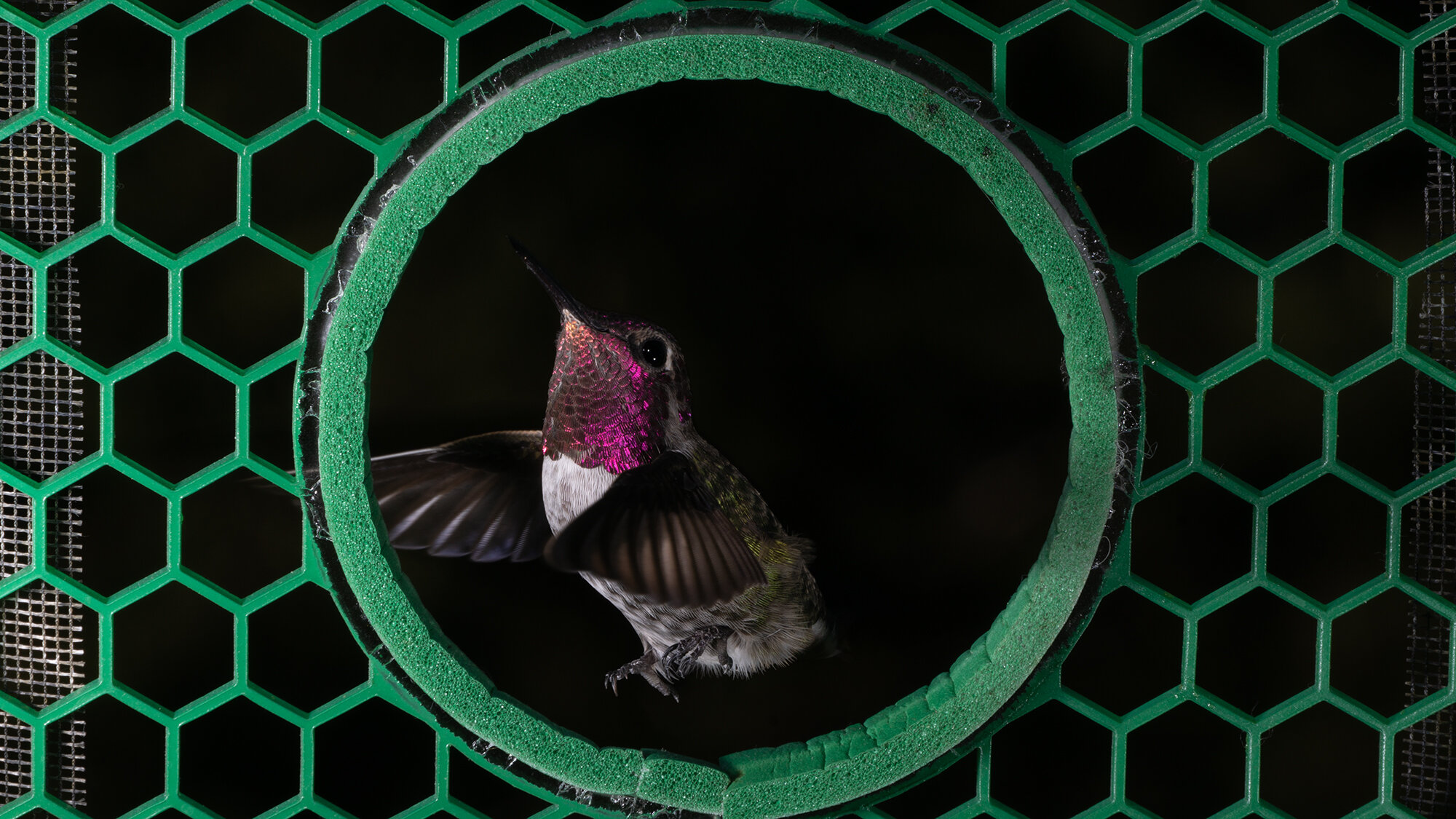
    Hummingbirds' unique sideways flutter gets them through small apertures
    An Anna’s hummingbird (Calypte anna) navigating an aperture too small for its wingspan by sidling through while flapping its wings. Credit: Marc Badger, UC Berkeley

    Most birds that flit through dense, leafy forests have a strategy for maneuvering through tight windows in the vegetation—they bend their wings at the wrist or elbow and barrel through.

    But hummingbirds can’t bend their wing bones during flight, so how do they transit the gaps between leaves and tangled branches?

    A study published today in the Journal of Experimental Biology shows that hummingbirds have evolved their own unique strategies—two of them, in fact. These strategies have not been reported before, likely because hummers maneuver too quickly for the human eye to see.

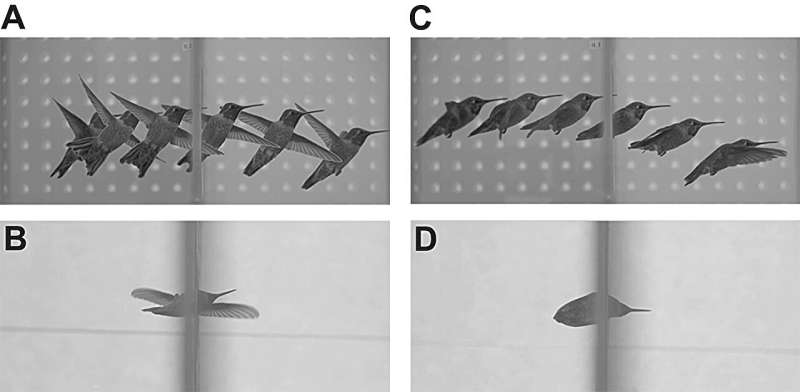
    For slit-like gaps too narrow to accommodate their wingspan, they scooch sideways through the slit, flapping their wings continually so as not to lose height.

    For smaller holes—or if the birds are already familiar with what awaits them on the other side—they tuck their wings and coast through, resuming flapping once clear.

    “For us, going into the experiments, the tuck and glide would have been the default. How else could they get through?” said Robert Dudley, a professor of integrative biology at the University of California, Berkeley, and senior author of the paper. “This concept of sideways motion with a total mix-up of the wing kinematics is quite amazing—it’s a novel and unexpected method of aperture transit. They’re changing the amplitude of the wing beats so that they’re not dropping vertically when they do the sideways scooch.”

    Using the slower sideways scooch technique may allow birds to better assess upcoming obstacles and voids, thereby reducing the likelihood of collisions.

    “Learning more about how animals negotiate obstacles and other ‘building-blocks’ of the environment, such as wind gusts or turbulent regions, can improve our overall understanding of animal locomotion in complex environments,” noted first author Marc Badger, who obtained his Ph.D from UC Berkeley in 2016.

    “We still don’t know very much about how flight through clutter might be limited by geometric, aerodynamic, sensory, metabolic or structural processes. Even behavioral limitations could arise from longer-term effects, such as wear and tear on the body, as hinted at by the shift in aperture negotiation technique we observed in our study.”
    Mystery solved: how hummingbirds fly through gaps that are too small
    Panels A and B show the side-on and underneath view of a hummingbird passing through an aperture sideways. C and D show the same views of the hummingbird passing thorough an aperture like a bullet with its wings swept back. Credit: Marc Badger

    Understanding the strategies that birds use to maneuver through a cluttered environment may eventually help engineers design drones that better navigate complex environments, he noted.

    “Current remote control quadrotors can outperform most birds in open space across most metrics of performance. So is there any reason to continue learning from nature?” said Badger. “Yes. I think it’s in how animals interact with complex environments. If we put a bird’s brain inside a quadrotor, would the cyborg bird or a normal bird be better at flying through a dense forest in the wind? There may be many sensory and physical advantages to flapping wings in turbulent or cluttered environments.”

    Obstacle course

    To discover how hummingbirds—in this case, four local Anna’s hummingbirds (Calypte anna)—slip through tiny openings, despite being unable to fold their wings, Badger and Dudley teamed up with UC Berkeley students Kathryn McClain, Ashley Smiley and Jessica Ye.
    Hummingbirds' unique sideways flutter gets them through small apertures
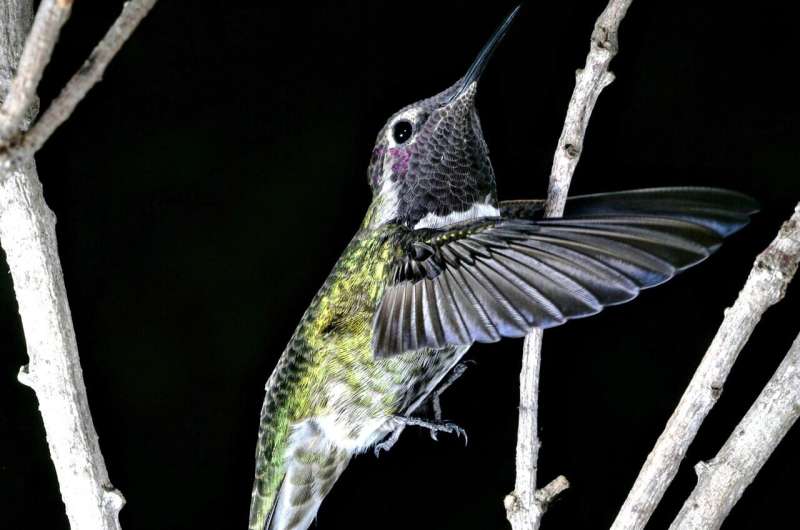
    An Anna’s hummingbird slips sideways between twigs, an unexpected maneuver that appears unique to hummingbirds. Credit: Marc Badger, UC Berkeley

    “We set up a two-sided flight arena and wondered how to train birds to fly through a 16-square- centimeter gap in the partition separating the two sides,” Badger said, noting that the hummingbirds have a wingspan of about 12 centimeters (4 3/4 inches). “Then, Kathryn had the amazing idea to use alternating rewards.”

    The team placed flower-shaped feeders containing a sip of sugar solution on both sides of the partition, but only remotely refilled the feeders after the bird had visited the opposite feeder. This encouraged the birds to continually flit between the two feeders through the aperture.

    The researchers then varied the shape of the aperture, from oval to circular, ranging in height, width and diameter, from 12 cm to 6 cm, and filmed the birds’ maneuvers with high-speed cameras. Badger wrote a computer program to track the position of each bird’s bill and wing tips as it approached and passed through the aperture.

    They discovered that as the birds approached the aperture, they often hovered briefly to assess it before traveling through sideways, reaching forward with one wing while sweeping the second wing back, fluttering their wings to support their weight as they passed through the aperture. They then swiveled their wings forward to continue on their way.

    “The thing is, they have to still maintain weight support, which is derived from both wings, and then control the horizontal thrust, which is pushing it forward. And they’re doing this with the right and left wing doing very peculiar things,” Dudley said. “Once again, this is just one more example of how, when pushed in some experimental situation, we can elicit control features that we don’t see in just a standard hovering hummingbird.”

    Alternatively, the birds swept their wings back and pinned them to their bodies, shooting through—beak first, like a bullet—before sweeping the wings forward and resuming flapping once safely through.

    “They seem to do the faster method, the ballistic buzz-through, when they get more acquainted with the system,” Dudley said.

    Only when approaching the smallest apertures, which were half a wingspan wide, would the birds automatically resort to the tuck and glide, even though they were unfamiliar with the setup.

    The team pointed out that only about 8% of the birds clipped their wings as they passed through the partition, although one experienced a major collision. Even then, the bird recovered quickly before successfully reattempting the maneuver and going on its way.

    “The ability to pick among several obstacle negotiation strategies can allow animals to reliably squeeze through tight gaps and recover from mistakes,” Badger noted.

    Dudley hopes to conduct further experiments, perhaps with a sequence of different apertures, to determine how birds navigate multiple obstacles.

    More information:
    Sideways maneuvers enable narrow aperture negotiation by free-flying hummingbirds, Journal of Experimental Biology (2023). DOI: 10.1242/jeb.245643

    Provided by
    University of California – Berkeley


    Citation:
    Hummingbirds’ unique sideways flutter gets them through small apertures (2023, November 9)
    retrieved 9 November 2023
    from https://phys.org/news/2023-11-hummingbirds-unique-sideways-flutter-small.html

    This document is subject to copyright. Apart from any fair dealing for the purpose of private study or research, no
    part may be reproduced without the written permission. The content is provided for information purposes only.


    Source link

    Featured Just In Top News
    Share. Facebook Twitter LinkedIn Email
    Previous ArticleSussex Police hunt for Crawley man in relation to driving offences
    Next Article EU backs Data Act with clause to shut off smart contracts
    bibhuti
    • Website

    Keep Reading

    Parking-aware navigation system could prevent frustration and emissions | MIT News

    Octopus to swerve new Pisces private stock exchange

    Glasgow coffeehouse named among world’s top 100

    Belfast children’s hospital marks Valentine’s Day with ‘love train’ through wards

    Bromley’s top-rated Chinese restaurants according to TripAdvisor

    Science academies failing to put women at the top

    Add A Comment
    Leave A Reply Cancel Reply

    Editors Picks

    89th Utkala Dibasa Celebration Brings Odisha’s Vibrant Culture to London

    April 8, 2024

    US and EU pledge to foster connections to enhance research on AI safety and risk.

    April 5, 2024

    Holi Celebrations Across Various Locations in Kent Attract a Diverse Range of Community Participation

    March 25, 2024

    Plans for new Bromley tower blocks up to 14-storeys tall refused

    December 4, 2023
    Latest Posts

    Subscribe to News

    Get the latest sports news from NewsSite about world, sports and politics.

    Advertisement

    Recent Posts

    • Parking-aware navigation system could prevent frustration and emissions | MIT News
    • Octopus to swerve new Pisces private stock exchange
    • Glasgow coffeehouse named among world’s top 100
    • Belfast children’s hospital marks Valentine’s Day with ‘love train’ through wards
    • Bromley’s top-rated Chinese restaurants according to TripAdvisor

    Recent Comments

    1. Register on Anycubic users say their 3D printers were hacked to warn of a security flaw
    2. Pembuatan Akun Binance on Braiins Becomes First Mining Pool To Introduce Lightning Payouts
    3. tadalafil tablets sale on The market is forcing cloud vendors to relax data egress fees
    4. cerebrozen reviews on Kent director of cricket Simon Cook adapting to his new role during the close season
    5. Glycogen Review on The little-known town just 5 miles from Kent border with stunning beaches and only 600 residents
    The News Times Logo
    Facebook X (Twitter) Pinterest Vimeo WhatsApp TikTok Instagram

    News

    • UK News
    • US Politics
    • EU Politics
    • Business
    • Opinions
    • Connections
    • Science

    Company

    • Information
    • Advertising
    • Classified Ads
    • Contact Info
    • Do Not Sell Data
    • GDPR Policy
    • Media Kits

    Services

    • Subscriptions
    • Customer Support
    • Bulk Packages
    • Newsletters
    • Sponsored News
    • Work With Us

    Subscribe to Updates

    Get the latest creative news from FooBar about art, design and business.

    © 2026 The News Times. Designed by The News Times.
    • Privacy Policy
    • Terms
    • Accessibility

    Type above and press Enter to search. Press Esc to cancel.

    Manage Cookie Consent
    To provide the best experiences, we use technologies like cookies to store and/or access device information. Consenting to these technologies will allow us to process data such as browsing behavior or unique IDs on this site. Not consenting or withdrawing consent, may adversely affect certain features and functions.
    Functional Always active
    The technical storage or access is strictly necessary for the legitimate purpose of enabling the use of a specific service explicitly requested by the subscriber or user, or for the sole purpose of carrying out the transmission of a communication over an electronic communications network.
    Preferences
    The technical storage or access is necessary for the legitimate purpose of storing preferences that are not requested by the subscriber or user.
    Statistics
    The technical storage or access that is used exclusively for statistical purposes. The technical storage or access that is used exclusively for anonymous statistical purposes. Without a subpoena, voluntary compliance on the part of your Internet Service Provider, or additional records from a third party, information stored or retrieved for this purpose alone cannot usually be used to identify you.
    Marketing
    The technical storage or access is required to create user profiles to send advertising, or to track the user on a website or across several websites for similar marketing purposes.
    • Manage options
    • Manage services
    • Manage {vendor_count} vendors
    • Read more about these purposes
    View preferences
    • {title}
    • {title}
    • {title}