Close Menu
UK Daily: Tech, Science, Business & Lifestyle News UpdatesUK Daily: Tech, Science, Business & Lifestyle News Updates
    What's Hot

    Riot Opens $500M Stock Offering As Bitcoin Production Falls

    January 2, 2026

    Uber prices set to soar as ministers introduce VAT crackdown

    January 2, 2026

    Glasgow’s West End cafe raises huge sum for children’s charity

    January 2, 2026
    Facebook X (Twitter) Instagram
    Trending
    • Riot Opens $500M Stock Offering As Bitcoin Production Falls
    • Uber prices set to soar as ministers introduce VAT crackdown
    • Glasgow’s West End cafe raises huge sum for children’s charity
    • 39-year-old man arrested on suspicion of a total of 14 offences
    • Snow and ice yellow weather warning issued in part of Sussex
    • M11 J7 southbound access | Southbound | Accident
    • Microbiology – NASA
    • How Much Money Does NYC’s New Mayor Have? – Hollywood Life
    • London
    • Kent
    • Glasgow
    • Cardiff
    • Belfast
    Facebook X (Twitter) Instagram YouTube
    UK Daily: Tech, Science, Business & Lifestyle News UpdatesUK Daily: Tech, Science, Business & Lifestyle News Updates
    Subscribe
    Friday, January 2
    • Home
    • News
      1. Kent
      2. London
      3. Belfast
      4. Birmingham
      5. Cardiff
      6. Edinburgh
      7. Glasgow
      8. Liverpool
      9. Manchester
      10. Newcastle
      11. Nottingham
      12. Sheffield
      13. West Yorkshire
      Featured

      ‘Miniature’ mountain creature with ‘squeaker’-like call discovered as new species

      Science November 9, 2023
      Recent

      Riot Opens $500M Stock Offering As Bitcoin Production Falls

      January 2, 2026

      Uber prices set to soar as ministers introduce VAT crackdown

      January 2, 2026

      Glasgow’s West End cafe raises huge sum for children’s charity

      January 2, 2026
    • Lifestyle
      1. Celebrity
      2. Fashion
      3. Food
      4. Leisure
      5. Social Good
      6. Trending
      7. Wellness
      8. Event
      Featured

      How Much Money Does NYC’s New Mayor Have? – Hollywood Life

      Celebrity January 2, 2026
      Recent

      How Much Money Does NYC’s New Mayor Have? – Hollywood Life

      January 2, 2026

      Who Will Replace Tony Dokoupil on ‘CBS Mornings’? What We Know So Far – Hollywood Life

      January 2, 2026

      Find Out About Chase Stokes & More – Hollywood Life

      January 2, 2026
    • Science
    • Business
    • Sports

      Reaction from Gills boss Gareth Ainsworth after League Two defeat at The County Ground

      January 1, 2026

      League 2 match report from the Nigel Eady County Ground

      January 1, 2026

      Matchday Live: Swindon v Gillingham

      January 1, 2026

      Thursday January 1 to Wednesday January 7

      January 1, 2026

      Gillingham head to second-placed Swindon Town on New Year’s Day before a weekend game at Notts County

      December 31, 2025
    • Politics
    • Tech
    • Property
    • Press Release
    UK Daily: Tech, Science, Business & Lifestyle News UpdatesUK Daily: Tech, Science, Business & Lifestyle News Updates
    Home » New AI system can map giant icebergs from satellite images 10,000 times faster than humans

    New AI system can map giant icebergs from satellite images 10,000 times faster than humans

    bibhutiBy bibhutiNovember 8, 2023Updated:November 8, 2023 Science No Comments7 Mins Read
    Facebook Twitter LinkedIn WhatsApp Telegram
    Share
    Facebook Twitter LinkedIn Telegram WhatsApp


    AI can map giant icebergs from satellite images 10,000 times faster than humans
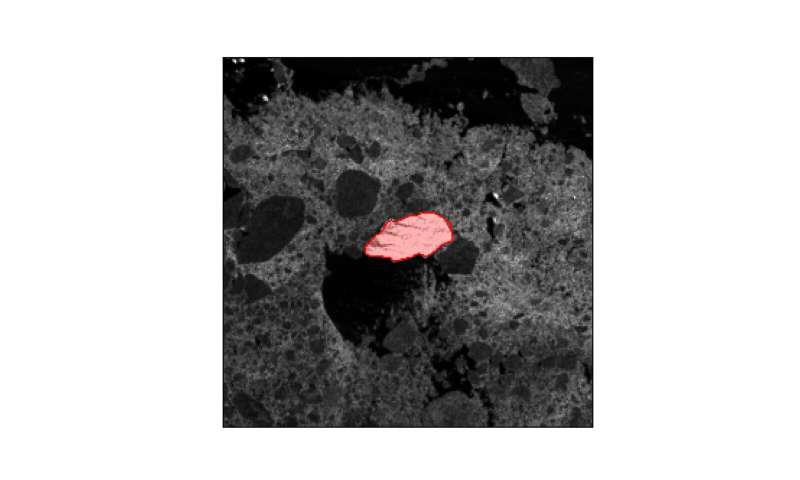
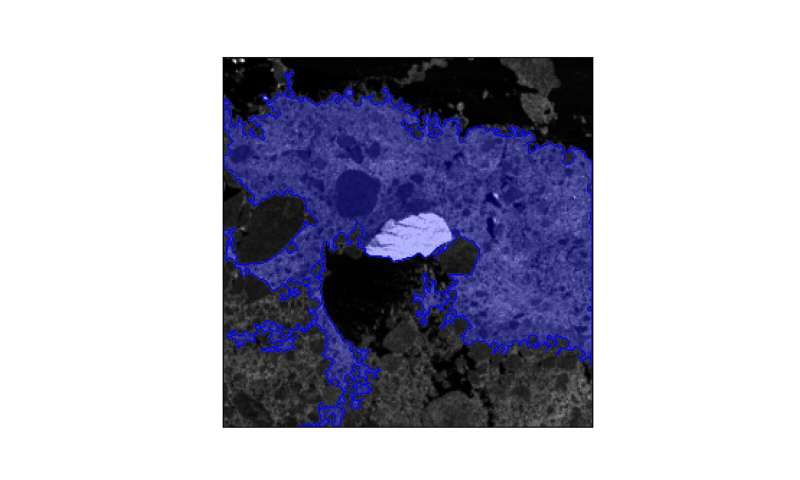
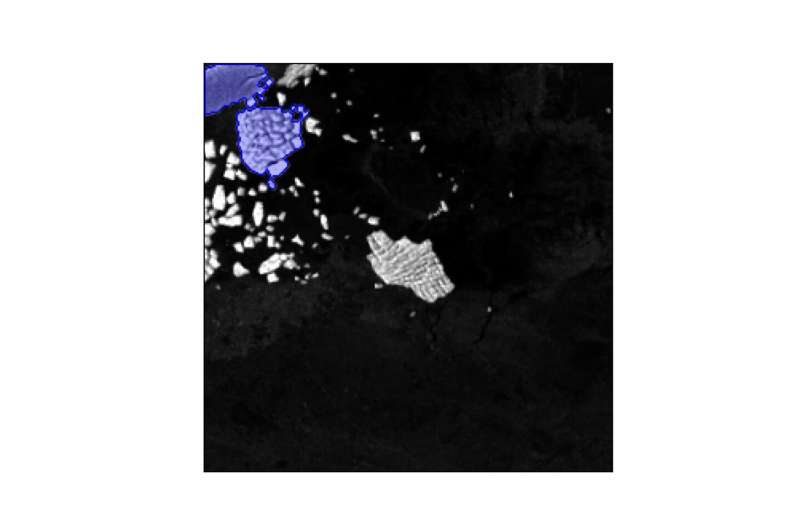
    Image 1 shows the U-net algorithm correctly identifying the iceberg, which is highlighted in red. In comparison, the k-means algorithm has incorrectly identified a cluster of smaller icebergs and ice fragments, shown in blue, as one large iceberg. That is revealed in image 2. Credit: Dr Anne Braakmann-Folgmann and the European Space Agency.

    Scientists have trained an artificial intelligence (AI) system to accurately map—in one-hundredth of a second—the surface area and outline of giant icebergs captured on satellite images. The paper, titled “Mapping the extent of giant Antarctic icebergs with Deep Learning,” is published in The Cryosphere.

    It is a major advance on existing automated systems, which struggle to distinguish icebergs from other features in the image. Manual—or human—interpretation of the image is more accurate, but it can take several minutes to delineate the outline of a single iceberg. If that has to be repeated numerous times, the process quickly becomes time-consuming and laborious.

    Icebergs have a significant impact on the polar environment and monitoring them is critical for both maritime safety and scientific study. They can be extremely large—in some cases the size of small countries—and can pose a risk to passing ships. As they melt, icebergs release nutrients and freshwater into the seas, and this can have an impact on marine ecosystems.

    Dr. Anne Braakmann-Folgmann, who led the study while undertaking doctoral research at the Centre for Polar Observation and Monitoring at the University of Leeds, said, “Icebergs exist in hard-to-reach parts of the world and satellites are not only a fantastic tool to observe where they are, they can help scientists understand the process of how they melt and eventually begin to break apart.

    “Using the new AI system overcomes some of the problems with existing automated approaches, which can struggle to distinguish between icebergs and other ice floating on the sea or even a nearby coastline which are present in the same image.”
    AI can map giant icebergs from satellite images 10,000 times faster than humans
    Image 1 shows the U-net algorithm correctly identifying the iceberg, which is highlighted in red. In comparison, the k-means algorithm has incorrectly identified a cluster of smaller icebergs and ice fragments, shown in blue, as one large iceberg. That is revealed in image 2. Credit: Dr Anne Braakmann-Folgmann and the European Space Agency.

    Neural network

    Dr. Braakmann-Folgmann and her colleagues used an algorithm called U-net—a type of neural network—to “train” a computer to accurately map the outline of icebergs from images taken by Sentinel-1 satellites operated by the European Space Agency.

    As part of the study, the effectiveness of the U-net algorithm was compared to two other state-of-the-art algorithms used to map icebergs. They are known as k-means and Otsu. The algorithms were programmed to identify the biggest iceberg in a series of satellite images.

    • AI can map giant icebergs from satellite images 10,000 times faster than humans
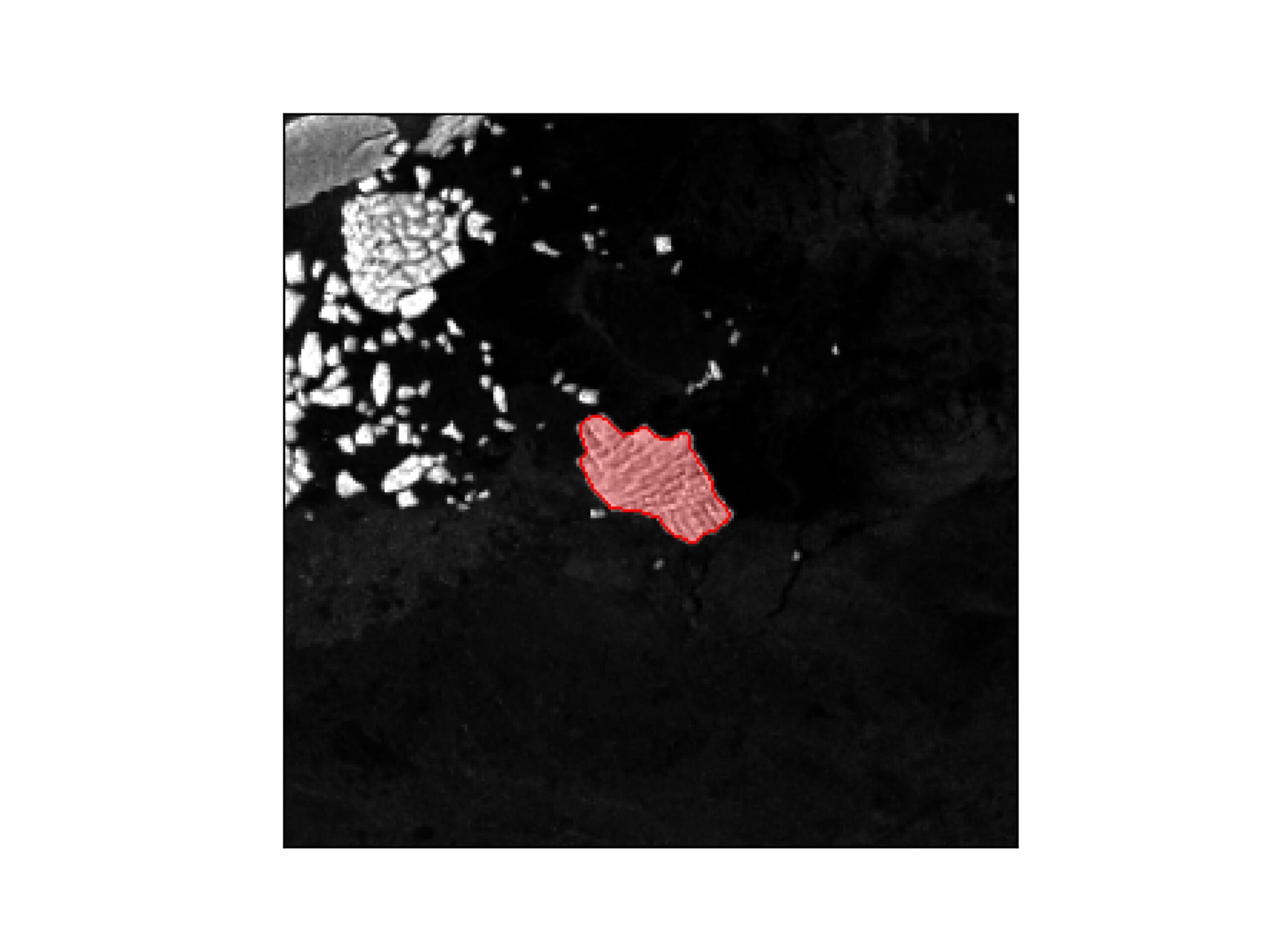
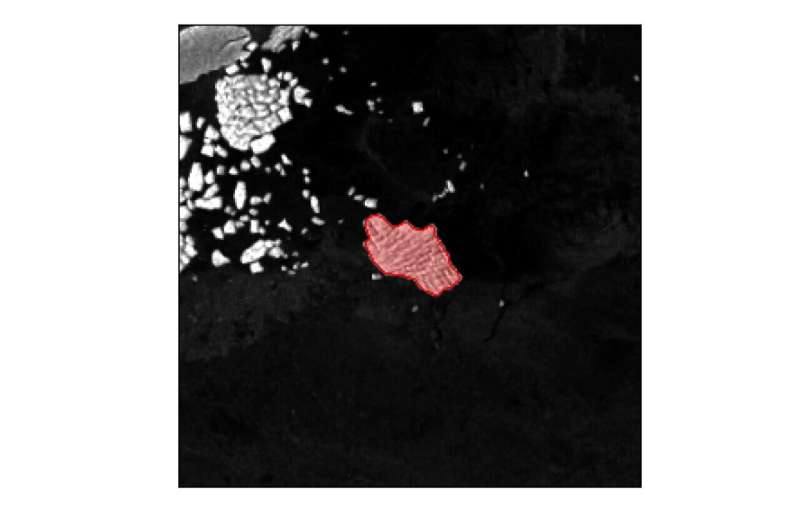
      Image 3 shows the U-net correctly identifying the iceberg, this time surrounded by sea ice. The iceberg is highlighted in red, and the sea ice is seen as a grey structure. However, the k-means algorithm has identified the iceberg and the sea ice as a single iceberg. It is unable to differentiate between the two, despite them being distinct objects, where sea ice is rather flat ice on the sea and an iceberg standing meters above it. That is shown in Image 4. Credit: Dr Anne Braakmann-Folgmann and the European Space Agency
    • AI can map giant icebergs from satellite images 10,000 times faster than humans
      Image 3 shows the U-net correctly identifying the iceberg, this time surrounded by sea ice. The iceberg is highlighted in red, and the sea ice is seen as a grey structure. However, the k-means algorithm has identified the iceberg and the sea ice as a single iceberg. It is unable to differentiate between the two, despite them being distinct objects, where sea ice is rather flat ice on the sea and an iceberg standing meters above it. That is shown in Image 4. Credit: Dr Anne Braakmann-Folgmann and the European Space Agency

    Image 1 shows the U-net algorithm correctly identifying the iceberg, which is highlighted in red. In comparison, the k-means algorithm has incorrectly identified a cluster of smaller icebergs and ice fragments, shown in blue, as one large iceberg. That is revealed in Image 2.

    Image 3 shows the U-net correctly identifying the iceberg, this time surrounded by sea ice. The iceberg is highlighted in red, and the sea ice is seen as a gray structure. However, the k-means algorithm has identified the iceberg and the sea ice as a single iceberg. The algorithm is unable to differentiate between the two, despite them being distinct objects, where sea ice is rather flat ice on the sea and an iceberg stands meters above it. (Shown in Image 4)

    How the algorithm works

    Animation 1 reveals how the algorithm works. It uses an approach designed for manipulating images. By analyzing the pixels in the image, it can determine the boundary or outline of objects, in this case it is identifying the outline of the iceberg.


    This animation (Animation 1) reveals how the algorithm works. By analyzing the pixels in the image, it can determine the boundary or outline of objects, in this case it is identifying the outline of the iceberg. Credit: Dr Anne Braakmann-Folgmann and the European Space Agency

    Animation 2 compares the U-net algorithm with the much slower manual approach.

    Dr. Braakmann-Folgmann, now based at the Arctic University of Norway in Tromsø, said the technology could result in new services to provide information about the shape and size of giant icebergs. Current mapping services show only the midpoint or central location and length of icebergs. Interpretation by this new approach means their outline and area can be calculated.

    She added, “Being able to automatically map iceberg extent with enhanced speed and accuracy paves the way for an operational service providing iceberg outlines on a regular, automated basis. Combining them with measurements of iceberg thickness also enables scientists to monitor where giant icebergs are releasing vast quantities of freshwater into the oceans. There are services that give data on the location of icebergs—but not their outline or area.”


    This animation (Animation 2) compares the U-net algorithm with the much slower manual approach. Credit: Dr Anne Braakmann-Folgmann and the European Space Agency

    Accuracy of the mapping system

    The system has been tested on satellite images of seven icebergs, which were all between the size of the city of Bern—54 km2; and Hong Kong—1,052 km2. For each of these icebergs, up to 46 images were used that covered all seasons from 2014-2020.

    Over a series of tests, U-net outperformed the other two algorithms and was more effective in delineating the outline of an iceberg in images taken when environmental conditions were challenging, such as the image capturing a lot of ice structures.

    On average, the U-net algorithm showed only a 5% lower estimate of the area of an iceberg. In contrast, the k-means and Otsu algorithms returned—on average—figures for iceberg area that were 150% to 170% too large, probably because the algorithms were including sea ice and even nearby coastline in the calculations.

    In machine learning, the F1 score is an evaluation of how well an algorithm performs and ranges from 0 to 1, with values closer to one displaying more precision. U-net achieved an F1 score of 0.84. The two other algorithms both scored 0.62.

    Andrew Shepherd, Professor at the University of Northumbria and one of the co-authors of the study, said, “This study shows that machine learning will enable scientists to monitor remote and inaccessible parts of the world in almost real-time. And with machine learning, the algorithm will become more accurate as it learns from errors in the way it interprets a satellite image.”

    More information:
    Mapping the extent of giant Antarctic icebergs with Deep Learning, The Cryosphere (2023). tc.copernicus.org/articles/17/4675/2023/

    Provided by
    University of Leeds


    Citation:
    New AI system can map giant icebergs from satellite images 10,000 times faster than humans (2023, November 8)
    retrieved 8 November 2023
    from https://phys.org/news/2023-11-ai-giant-icebergs-satellite-images.html

    This document is subject to copyright. Apart from any fair dealing for the purpose of private study or research, no
    part may be reproduced without the written permission. The content is provided for information purposes only.


    Source link

    Featured Science Top News
    Share. Facebook Twitter LinkedIn Email
    Previous ArticleConnectivity scans could serve as brain ‘blueprints’ for adolescents, researchers find
    Next Article Economic Activity of Public Bodies (Overseas Matters) Bill
    bibhuti
    • Website

    Keep Reading

    Uber prices set to soar as ministers introduce VAT crackdown

    Glasgow’s West End cafe raises huge sum for children’s charity

    39-year-old man arrested on suspicion of a total of 14 offences

    Snow and ice yellow weather warning issued in part of Sussex

    M11 J7 southbound access | Southbound | Accident

    Microbiology – NASA

    Add A Comment
    Leave A Reply Cancel Reply

    Editors Picks

    89th Utkala Dibasa Celebration Brings Odisha’s Vibrant Culture to London

    April 8, 2024

    US and EU pledge to foster connections to enhance research on AI safety and risk.

    April 5, 2024

    Holi Celebrations Across Various Locations in Kent Attract a Diverse Range of Community Participation

    March 25, 2024

    Plans for new Bromley tower blocks up to 14-storeys tall refused

    December 4, 2023
    Latest Posts

    Subscribe to News

    Get the latest sports news from NewsSite about world, sports and politics.

    Advertisement

    Recent Posts

    • Riot Opens $500M Stock Offering As Bitcoin Production Falls
    • Uber prices set to soar as ministers introduce VAT crackdown
    • Glasgow’s West End cafe raises huge sum for children’s charity
    • 39-year-old man arrested on suspicion of a total of 14 offences
    • Snow and ice yellow weather warning issued in part of Sussex

    Recent Comments

    1. Register on Anycubic users say their 3D printers were hacked to warn of a security flaw
    2. Pembuatan Akun Binance on Braiins Becomes First Mining Pool To Introduce Lightning Payouts
    3. tadalafil tablets sale on The market is forcing cloud vendors to relax data egress fees
    4. cerebrozen reviews on Kent director of cricket Simon Cook adapting to his new role during the close season
    5. Glycogen Review on The little-known town just 5 miles from Kent border with stunning beaches and only 600 residents
    The News Times Logo
    Facebook X (Twitter) Pinterest Vimeo WhatsApp TikTok Instagram

    News

    • UK News
    • US Politics
    • EU Politics
    • Business
    • Opinions
    • Connections
    • Science

    Company

    • Information
    • Advertising
    • Classified Ads
    • Contact Info
    • Do Not Sell Data
    • GDPR Policy
    • Media Kits

    Services

    • Subscriptions
    • Customer Support
    • Bulk Packages
    • Newsletters
    • Sponsored News
    • Work With Us

    Subscribe to Updates

    Get the latest creative news from FooBar about art, design and business.

    © 2026 The News Times. Designed by The News Times.
    • Privacy Policy
    • Terms
    • Accessibility

    Type above and press Enter to search. Press Esc to cancel.

    Manage Cookie Consent
    To provide the best experiences, we use technologies like cookies to store and/or access device information. Consenting to these technologies will allow us to process data such as browsing behavior or unique IDs on this site. Not consenting or withdrawing consent, may adversely affect certain features and functions.
    Functional Always active
    The technical storage or access is strictly necessary for the legitimate purpose of enabling the use of a specific service explicitly requested by the subscriber or user, or for the sole purpose of carrying out the transmission of a communication over an electronic communications network.
    Preferences
    The technical storage or access is necessary for the legitimate purpose of storing preferences that are not requested by the subscriber or user.
    Statistics
    The technical storage or access that is used exclusively for statistical purposes. The technical storage or access that is used exclusively for anonymous statistical purposes. Without a subpoena, voluntary compliance on the part of your Internet Service Provider, or additional records from a third party, information stored or retrieved for this purpose alone cannot usually be used to identify you.
    Marketing
    The technical storage or access is required to create user profiles to send advertising, or to track the user on a website or across several websites for similar marketing purposes.
    • Manage options
    • Manage services
    • Manage {vendor_count} vendors
    • Read more about these purposes
    View preferences
    • {title}
    • {title}
    • {title}